Structure and Properties of Atomic Nanoclusters
Chapter 12: Assembling of New Materials From Clusters

12.1 General Principles

The assembling of atomic clusters opens the possibility of building materials with novel properties. Two main difficulties are encountered in synthesizing those materials. First of all, there is the production of large quantities of clusters of a specific size. Second, for the assembling to be successful, the clusters have to retain their character. Typical clusters can interact with each other and coalesce to form larger clusters, destroying the original properties. Unlike clusters, molecules do not lose their identity when they form molecular solids. This is because molecules have a high intrinsic stability, that is, they are magic species with a fixed number of atoms and a special composition. One can then expect that the so called magic clusters, with their specially unreactive electronic structure may be good candidates to form the builing blocks of new assembled materials.

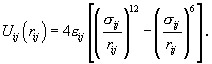
This condition of stability of neighbor clusters against coalescence has been analyzed [1] by studying a cluster dimer (X 13) 2 built from two icosahedral clusters formed by atoms interacting through Lennard-Jones potentials

(12.1)

All the hard-sphere diameters ? ij were assumed to be equal, ? ij = ?, but the depth ? ij of the interaction potential between atoms in the same cluster, , was assumed to be different from the depth between atoms in different clusters of the dimer. Molecular dynamics simulations of the thermal heating of the dimer indicated that the condition

(12.2)

improves the stability of the dimer...

UNLIMITED FREE
ACCESS
TO THE WORLD'S BEST IDEAS

SUBMIT
Already a GlobalSpec user? Log in.

This is embarrasing...

An error occurred while processing the form. Please try again in a few minutes.

Customize Your GlobalSpec Experience

Category: Nanomaterials
Finish!
Privacy Policy

This is embarrasing...

An error occurred while processing the form. Please try again in a few minutes.