1.1 Statement of Electrostatic Problems for Perfect Conductors
1. The basic equations of electrostatics are well known [58]:
| (1.1) | 
|
where E is the electric field, D is the induction, p( x) is the charge distribution, and ? is the dielectric constant of the medium. If the medium is homogeneous and isotropic, then ? is constant; if it is isotropic but unhomogeneous, then ? = ?( x), x = ( x 1, x 2, x 3). In the general case ? = ? ij( x), 1 ? i, j ? 3, is a tensor. The boundary condition on the surface ? of a conductor is of the form
| (1.2) | 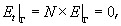
|
where N is the unit outer normal to ?. If ? is the surface charge distribution then
| (1.3) | 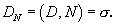
|
The vectors E and D are to be finite and can have discontinuities only on the surfaces of discontinuity of ?( x), i.e., on the surfaces which are the boundaries of domains with different electrical properties (interface surfaces). The boundary conditions on such surfaces are
| (1.4) | 
|
where 1 and 2 stand for the first and second medium, respectively. A perfect conductor in electrostatics is a body with ? = + ?. Let us define an insulator in electrostatics as a body with ? = 0, i.e., on its surface
| (1.5) | 
|
This definition is useful because...


 TABLE OF CONTENTS