In this Appendix we quote a number of results dealing with the Dirac impulse, residence times, step inputs, stability and the root locus.
A.1 The Dirac Impulse
Here we describe the Dirac impulse function (also known as the Dirac delta function).
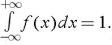
Let us consider a symmetric function which decreases quickly, has its maximal valueat x = 0 and is such that:
In other words, the area under the graph is equal to 1. The functions [1]:
satisfy these conditions. They are depicted in Figure A.1. Let us now consider the following transformations:
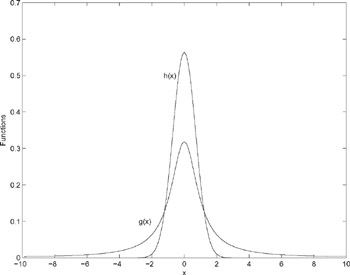 Figure A.1: Surrounding functions of the Dirac impulse
For the function h ( x), the effect of these transformations is shown in Figure A.2.
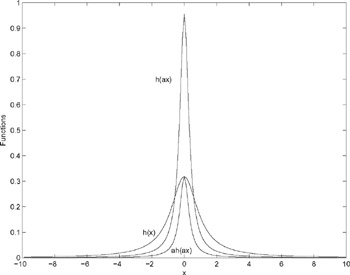 Figure A.2: Effect of the transformations mh( x) and h( mx) on h( x)
In this case the integral (the area between the graphical representation of this function and the x axis) remains unchanged:
A question now arises. What happens when a ? ?? For the function ag ( ax), we obtain:
which decreases indefinitely as a increases. If we now consider the transformed function h ( x), we obtain:
This function also decreases as a increases, but it decreases more quickly than ag ( ax). Therefore, by increasing the parameter a indefinitely, we obtain a function which is equal to zero for all values of x such that x <...

 TABLE OF CONTENTS