Fundamentals of Engineering Examination Review 2001-2002 Edition

Chapter 10: Fluid Mechanics

Gary Crossman

Fluid mechanics is the study of fluids at rest or in motion. The topic is generally divided into two categories: liquids and gases. Liquids are considered to be incompressible, and gases are compressible. The treatment of incompressible fluids and compressible fluids each have their own groups of equations. However, there are times when a gas may be treated as incompressible (or at least uncompressed). For example, the flow of air through a heating duct is one such case. This chapter will concentrate on incompressible fluids.

FLUID PROPERTIES

Thermodynamic properties are important in incompressible fluid mechanics. Those of particular importance are density, specific gravity, specific weight, viscosity and pressure. Temperature is also important but is primarily used in finding other properties such as density and viscosity in tables or graphs.

Density

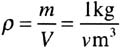
The density, ?, is the mass per unit volume and is the reciprocal of the specific volume, a property used in thermodynamics:


Specific Gravity

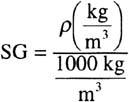
The specific gravity, SG, is defined by the following equation


where 1000 kg/m 3 is the density of water at 4 C.

In many cases the specific gravity of a liquid is known or found from tables and must be converted to density using this equation.

Specific Weight

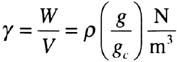
The specific weight, ?, of a fluid is its weight per unit volume and is related to the density as follows:


where g = local acceleration of gravity, , and g c = gravitational constant:


The density...

UNLIMITED FREE
ACCESS
TO THE WORLD'S BEST IDEAS

SUBMIT
Already a GlobalSpec user? Log in.

This is embarrasing...

An error occurred while processing the form. Please try again in a few minutes.

Customize Your GlobalSpec Experience

Category: Hydraulic Oils and Transmission Fluids
Finish!
Privacy Policy

This is embarrasing...

An error occurred while processing the form. Please try again in a few minutes.