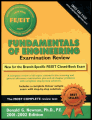
Fundamentals of Engineering Examination Review 2001-2002 Edition
To achieve registration as a Professional Engineer, there are four distinct steps: 1) education, 2) the Fundamentals of Engineering/Engineer-In-Training (FE/EIT) exam, 3) professional experience, and 4) the professional engineer exam. These steps are described in the following sections.
Generally, no college degree is required to be eligible to take the FE/EIT exam. The exact rules vary, but all states allow engineering students to take the FE/EIT exam before they graduate, usually in their senior year. Some states, in fact, have no education requirement at all. One merely need apply and pay the application fee. Perhaps the best time to take the exam is immediately following completion of related coursework. For most engineering students, this will be the end of the senior year. In recent years, 85 95% of the candidates had an engineering degree from an EAC/ABET accredited program.
This eight-hour, multiple-choice examination is known by a variety of names: Fundamentals of Engineering, Engineer-In-Training (EIT.), or Intern Engineer, but no matter what it is called, the exam is the same in all states. It is prepared and graded by the National Council of Examiners for Engineering and Surveying (NCEES).
States that allow engineering seniors to take the FE/EIT exam have no experience requirement. These same states, however, generally will allow other applicants to substitute acceptable experience for coursework. Still other states may allow one to take the FE/EIT exam without any education or experience requirements.