IC Layout Basics: A Practical Guide

This book teaches the basics of IC (Integrated Circuit) layout in jargon-free, plain-English, understandable to those without an EE degree.
 TABLE OF CONTENTS
 Use the formula  to determine the following resistor values.
| 1. |
|
|
| 2. |
|
|
| 3. |
|
|
| 4. |
|
|
| 5. |
|
|
Answers
| 1. | Divide L by W, then multiply by ?. 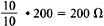 |
| 2. |
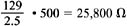 |
| 3. |
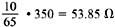 |
| 4. |
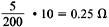 |
| 5. |
 |
If we make and measure a square resistor, we can determine the ohms-per-square of the body material quite easily, especially if the square is very big.
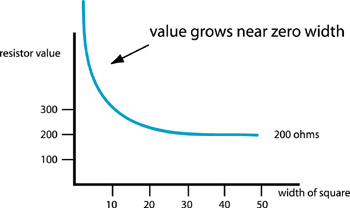
Early engineers made lots of square resistors of different sizes 10, 20, 30, 40 microns wide, for instance. They plotted a graph of square size versus resistor value. The graph was expected to be constant, since they knew that all squares of the same material have the same resistance value.
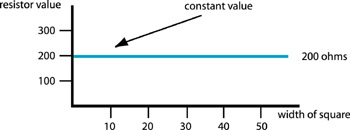
What we see in reality, however, is that the smaller resistors, as measured through their metal contacts, give a measured value that is higher than expected. This discovery was quite surprising.