7.4 Radio Link Control
One RLC task contains several different functional entities. For bearers using the transparent mode service, or the unacknowledged mode (UM) service, there is one transmitting and one receiving entity for each bearer. For bearers using the acknowledged mode (AM) service, there is only one combined transmitting and receiving entity for each bearer.
In general, the RLC layer is in charge of the actual data packet (containing either control or user data) transmission over the air interface. It makes sure that the data to be sent over the radio interface is packed into suitably sized packets. The RLC task maintains a retransmission buffer, performs ciphering, and routes the incoming data packets to the right destination task (RRC, BMC, PDCP, or voice codec).
The transparent mode is used for the BCCH, PCCH, SHCCH, DCCH, DTCH, and CCCH channels. For the CCCH and SHCCH, the transparent mode is used only in the uplink direction. Transparent mode means that very little processing is done to the data in the RLC. It contains transmission and receiver buffers and also, in some cases, segmentation and reassembly functions. Note that no RLC header is added to data units in the transparent mode. See Figure 7.5.
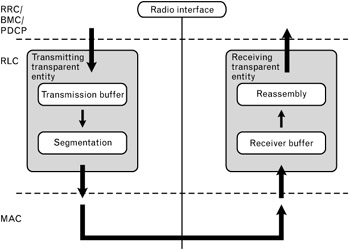 Figure 7.5: Transparent entities in RLC.
 Despite this rather limited functionality, one instance of an RLC transparent entity is needed per direction and per bearer: one for the uplink and one for the downlink.
UM is used for the DCCH, DTCH, CTCH, and the downlink SHCCH and CCCH...


 TABLE OF CONTENTS