Introduction to RF Stealth

Providing a new generation of designers with a firm and proven basis for new developments, this book presents and explains first order methods for the design of active and passive stealth properties.
 TABLE OF CONTENTS
 Antenna RCS is really made up of several contributors. The three major contributors are antenna-mode scattering, antenna-structural scattering, and RCS grating (Bragg) lobes. Of course, antenna RCS is also strongly dependent of polarization for both types of major scattering components. Some antenna types such as dipoles provide very little backscatter for polarizations, which are orthogonal to the dipole axis. Aperture antennas such as horns, slotted arrays, and so forth can look totally reflective for an orthogonal incident polarization unless some provisions have been made to provide an impedance match for the orthogonal illumination. The backscatter is also influenced by the antenna geometry and the type of material from which is it constructed. [4] [7] [16] [19] The antenna is always embedded in something, and the combined RCS is what is most important. A perfectly absorbing antenna in a bad installation may be worse than one "matched" to its surroundings. Summarizing, the essential design considerations are the following:
Structural RCS
Antenna face: shape, orientation, edges
Interface to vehicle
Cavity and internal surfaces
Antenna-mode RCS, i.e., reflections from inside antenna
Radiating elements
Isolation of major internal reflectors
Reduction and cancellation of minor reflectors
Uniformity across array
Grating lobes, i.e., above RF band spikes
Higher operating frequencies
Filtering surfaces (radome or in antenna)
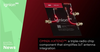
Fig. 6.37 shows the scattering components for a conceptual antenna array. Observe from the figure that an incident RF signal impinges on the aperture and then gives rise to...