5.7 Resonant Accelerometers
There are two basic procedures to sense external acceleration by using resonant sensors. Both procedures are based on detecting shifts in a resonator's natural frequency as produced by changes in stiffness. The change in stiffness can be determined by an additional bending due to acceleration or to the action of an axial force, also produced by acceleration.
When the acceleration produces an additional bending moment on a microcantilever, for instance, which will displace the resonator's tip by a small quantity measured by the angle a, as shown in Fig. 5.59, the bending stiffness is related to that of the original-position resonator as follows:
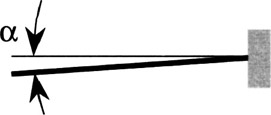 Figure 5.59: Displaced fixed-free microcantilever.
 By assuming that the lumped-parameter mass remains the same, the modified resonant frequency is related to original one as
which confirms that the resonant frequency of the inclined beam is larger than that of the original system. In other words, a slight bending from an external source will alter the resonant frequency.
One solution to sensing external acceleration through modification of the bending stiffness is sketched in Fig. 5.60, where a paddle microbridge is utilized as an acceleration microsensor, as proposed by Ohlckers et al. [27]
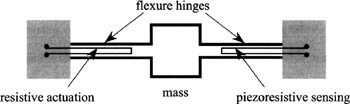 Figure 5.60: Paddle microbridge resonator.
 An acceleration which is applied about a direction perpendicular to the structure's plane will slightly displace the central mass, and thus the stiffness of the supporting flexure hinges will change, together with the bending resonant frequency of the entire structure. The actuation in this design was resistive...


 TABLE OF CONTENTS