Mechanics of Materials

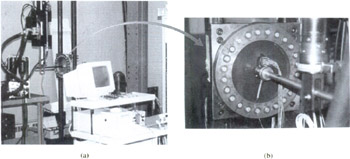
Figure 9.1 shows strain gages attached to the surface of a composite plate on which a bending moment is being applied. Strain gages are the most popular strain-measuring devices. All our stress and strain formulas have been developed in Cartesian coordinates. Thus for the purpose of analysis or experimental verification of our design, we need to transform the strains measured with the strain gages to strains in Cartesian coordinates. In this chapter we study the equations and methods used for strain transformation.
Ideas, definitions, and equations in strain transformation are very similar to those in stress transformation. This similarity will be used in the development of the theory of strain transformation. But there are also several differences. Care must be taken to account for these differences in developing a successful understanding of the strain transformation equations and methods. The major learning objective of this chapter is:
Learn the equations and procedures of relating strains at a point in different coordinate systems.
In the wedge method of stress transformation, the key idea was to convert stresses into forces, that is, to convert a second-order tensor into a vector. The motivation for the conversion was that we know vector arithmetic but are not familiar with tensor arithmetic. We adopt the same strategy here for strain transformation. By multiplying a strain component by the length of a line we obtain deformation, which is a vector...