Modern Optical Engineering: The Design of Optical Systems, Fourth Edition
Chapter 9: Stops, Apertures, Pupils and Diffraction

9.1 Introduction

In every optical system, there are apertures (or stops) which limit the passage of energy through the system. These apertures are the clear diameters of the lenses and diaphragms in the system. One of these apertures will determine the diameter of the cone of energy which the system will accept from an axial point on the object. This is termed the aperture stop, and its size determines the illumination (irradiance) at the image. Another stop may limit the size or angular extent of the object which the system will image. This is called the field stop. The importance of these stops to the photometry (radiometry) and performance of the system cannot be overemphasized.

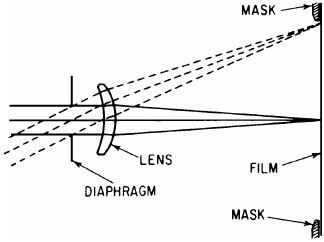
The elements of an inexpensive camera system are sketched in Fig. 9.1 and illustrate both aperture and field stops in their most basic forms. The diaphragm in front of the lens limits the diameter of the bundle of rays that the system can accept and is thus the aperture stop. The mask adjacent to the film determines the angular field coverage of the system and is quite apparently the field stop of the camera.


Figure 9.1: The elements of a simple box camera illustrate the functions of elementary aperture and field stops (the diaphragm and mask, respectively).

Not all systems are as obvious as this, however, and we will now consider more complex arrangements. Because the theory of stops is readily explained by the use of a concrete example, the following discussions will...

UNLIMITED FREE
ACCESS
TO THE WORLD'S BEST IDEAS

SUBMIT
Already a GlobalSpec user? Log in.

This is embarrasing...

An error occurred while processing the form. Please try again in a few minutes.

Customize Your GlobalSpec Experience

Category: Optical Apertures
Finish!
Privacy Policy

This is embarrasing...

An error occurred while processing the form. Please try again in a few minutes.