Process Engineering Equipment Handbook
This is an illustrated guide to the major equipment found in chemical process plants, for engineers charged with operating, specifying and performing basic troubleshooting on the equipment in their environment.
 TABLE OF CONTENTS
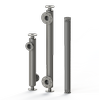
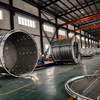
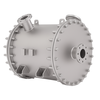
 A heat exchanger basically removes or adds heat to a fluid. The most common types in process plants are shell and tube exchangers. Plate types (consisting of heat-conducting fins), cascade types (single pipe bent back and forth many times), and spiral plate and extended surface types are less common. The working principle behind the heat exchanger is well illustrated in the section on condensers ( see Condensers). A heat exchanger is usually custom designed for a large process plant by the overall contract designer. Builders of items such as condensers and separators generally also make related items such as heat exchangers and will have a catalog on smaller items that can be bought without a custom order.
Some information on different commonly available heater types follows.
A system of high-density polyethylene pipes is buried in the ground or installed in a body of water to exchange heat between the building and earth. An antifreeze solution is circulated through the pipes by low wattage pumps. The plastic pipe wall becomes a heat exchanger between the fluid and the surrounding earth. In the heating mode the liquid in the pipe is cooler than the surrounding earth. In the cooling mode the opposite condition exists.