Process Engineering Equipment Handbook
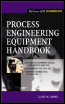
This is an illustrated guide to the major equipment found in chemical process plants, for engineers charged with operating, specifying and performing basic troubleshooting on the equipment in their environment.
 TABLE OF CONTENTS
 The push to improve food quality through irradiation began early in the 20th century, when researchers aimed newly discovered X rays at foodstuffs to preserve them. In the 1950s, the availability of manmade isotopes such as cobalt-60, used to sterilize medical equipment, changed the course of food irradiation. Gamma rays emitted by the isotope were able to destroy pathogens in food as effectively as more expensive technologies such as an electron accelerator. Since then, the technique has been applied to such items as poultry, fruits and vegetables, and spices.
For example, in 1986, a company called SteriGenics began irradiating dry-food ingredients such as pepper, onion powder, and dehydrated vegetable powder at facilities in Tustin, Calif.; Schaumburg, Ill.; Rockaway, N.J.; and Salem, N.J. These plants irradiate approximately 50 million pounds of spices annually. The company was founded in 1979 to sterilize single-use, disposable medical products such as syringes and gowns.
The spices arrive at SteriGenics plant warehouses in bulk form in bags and drums, or sometimes in their final form in boxes. Workers affix dosimeters, such as those made by Far West Technology in Goleta, Calif., on the containers before loading them into metal containers or totes. The totes...