Quantum Transport: Atom to Transistor

Exercises

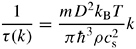
  • E.10.1. Assume that that the electron velocity is ?k/ m and the sound velocity is c s. Evaluate Eqs. (10.2.16a, b) by: (a) converting the summation into an integral; (b) expressing the argument of the delta function in the form


    (c) performing the integral over cos ? to get rid of the delta function and set a finite range to the limits of the integral over ?: ? min < ? < ? max; (d) performing the integral over ?. Show that the lifetime due to acoustic phonon absorption and emission is given by


    (e) What is the angular distribution of the emitted phonons?

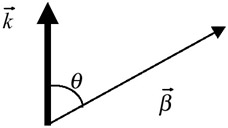
  • E.10.2. Consider an electron in a state in a parabolic band with mass m having an energy E that exceeds the optical phonon energy ? ? 0. Equating the argument of the delta function in Eq. (10.1.13) to zero, obtain an expression relating the magnitude of the wavevector ? of an emitted optical phonon to the angle ? at which it is emitted (measured from as shown in Fig. E.10.2). What is the range of values of ? outside which no optical phonons are emitted?


    Fig. E.10.2

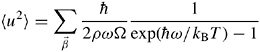
  • E.10.3. The mean squared displacement of an atom due to phonons is given in Eq. (10.4.17) as


    Convert the summation into an integral using periodic boundary conditions and evaluate the integral numerically to plot vs. T

UNLIMITED FREE
ACCESS
TO THE WORLD'S BEST IDEAS

SUBMIT
Already a GlobalSpec user? Log in.

This is embarrasing...

An error occurred while processing the form. Please try again in a few minutes.

Customize Your GlobalSpec Experience

Category: Opacity Sensors and Instruments
Finish!
Privacy Policy

This is embarrasing...

An error occurred while processing the form. Please try again in a few minutes.