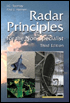
Radar Principles for the Non-Specialist Third Edition
Analyzing the simple pulse in both time and frequency domains
Matched filtering to optimize signal-to-noise ratio
Measuring range with a radar: resolution, accuracy, and ambiguities
The Doppler phenomenon
Measuring range rate with Doppler: resolution, accuracy, and ambiguities
Acceleration measurements: their accuracy and resolution
Measuring angle: resolution and accuracy
Pulse compression: getting good Doppler and good range resolution with the same pulse
Features of FM chirp
Time sidelobes in compressed pulses and weighting functions to mitigate them
Pulse burst waveforms: advantages and disadvantages
Ambiguities and their elimination
Signal processing, basic receiver chain
Integration and Doppler processing digital filters
To make the most out of the minute amounts of energy that return to a radar from targets far away depends on intelligent design of radar waveforms. Of prime importance is to extract the signal from the noise (detection), but the waveform must be carefully designed to yield the information (measurements) needed. An infinite number of waveform designs are possible, but the practical designs number in the thousands. However, the essentials can be grasped with only a few illustrations, beginning simply and building on the specifics.
A simple radar may be used to measure only range and angle. A simple, short pulse is adequate for this kind of measurement. As the radar becomes more sophisticated, its waveforms will increase in complexity. FAA surveillance and approach control radars may have...