Linear Circuit Design Handbook

Chapter 1: The Op Amp

Chapter Introduction

In this chapter we will discuss the basic operation of the op amp, one of the most common linear design building blocks.

In Section 1-1 the basic operation of the op amp will be discussed. We will concentrate on the op amp from the black box point of view. There are a good many texts that describe the internal workings of an op amp, so in this work a more macro view will be taken. There are a couple of times, however, that we will talk about the insides of the op amp. It is unavoidable.

In Section 1-2 the basic specifications will be discussed. Some techniques to compensate for some of the op amps limitations will also be given.

Section 1-3 will discuss how to read a data sheet. The various sections of the data sheet and how to interpret what is written will be discussed.

Section 1-4 will discuss how to select an op amp for a given application.

Section 1-1: Op Amp Operation

Introduction

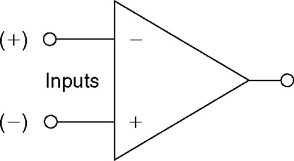
The op amp is one of the basic building blocks of linear design. In its classic form it consists of two input terminals one of which inverts the phase of the signal, the other preserves the phase and an output terminal. The standard symbol for the op amp is given in Figure 1-1. This ignores the power supply terminals, which are obviously required for operation.


Figure 1-1: Standard op amp symbol

The name "op amp" is the standard abbreviation for operational amplifier. This...

UNLIMITED FREE
ACCESS
TO THE WORLD'S BEST IDEAS

SUBMIT
Already a GlobalSpec user? Log in.

This is embarrasing...

An error occurred while processing the form. Please try again in a few minutes.

Customize Your GlobalSpec Experience

Category: Operational Amplifiers
Finish!
Privacy Policy

This is embarrasing...

An error occurred while processing the form. Please try again in a few minutes.