Roll Form Tool Design

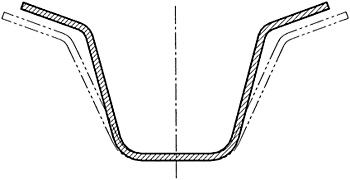
In Fig. 4.36 the product shape of the sixth pass is shown with the incoming product shape of the fifth pass in phantom lines.
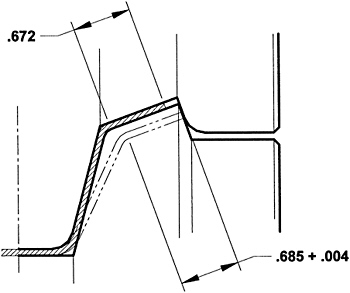
Having kept the shape centralized up to this point in the progression, there is little risk of a tracking problem as the last ten degrees of bend of the .250 radius is completed, so a positive stop for the material edges is no longer needed. With the shoulder detail on the upper roll, as in Fig. 4.37, a good lead-in is provided.
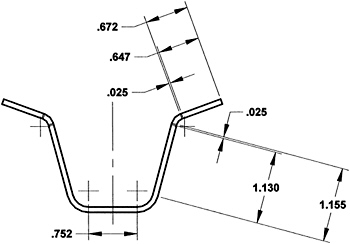
The product shape in the sixth pass is illustrated in Fig. 4.38, together with the bend allowance distribution from the chart in Fig. 4.8:
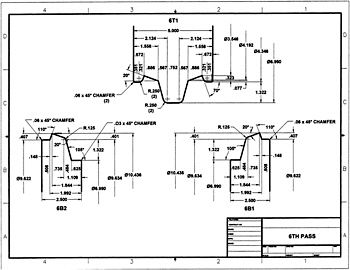
Fig. 4.39 is the detail drawing for the rolls of the sixth pass. The drive diameters of the sixth pass are increased by .030 from the 06.960 in the fifth pass to 06.990 in the sixth pass. All the roll dimensions are based on a material gap of .081, and the material gap and shoulder gap are equal.