Root Cause Analysis Handbook: A Guide to Efficient and Effective Incident Investigation, Third Edition
Identifying root causes is one of the main goals of the incident investigation process, but it is heavily dependent on finding the causal factors. Root cause identification should not be started until the causal factors have been identified. Starting the root cause identification step too early will lead to the identification of invalid root causes and, therefore, invalid recommendations. Remember that causal factors are defined as either equipment performance gaps (EPGs) or front-line personnel performance gaps (FLPPGs), and root causes are the underlying problem that allowed the causal factors to occur.
This section describes the use of ABS Consulting s Root Cause Map to perform root cause identification. Used in conjunction with Appendix E and the detailed Root Cause Map guidance contained on the companion CD (and available for download from ABS Consulting s Web site), these tools will facilitate consistent root cause identification.
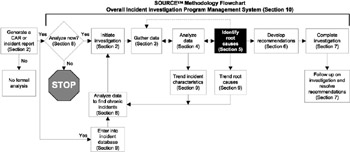
Figure 5.1 shows root cause identification within the context of the overall incident investigation process. This step generally requires less time than most of the other steps.
Virtually every incident can be prevented by developing and implementing appropriate management systems. Even in instances where individual personnel performance issues (i.e., drug abuse, malicious acts, lack of attention, reasoning capabilities) are a cause of an incident, the management systems that are used to select, train, and supervise personnel should be reviewed to determine whether improvements are necessary. In many...