Root Cause Analysis Handbook: A Guide to Efficient and Effective Incident Investigation, Third Edition
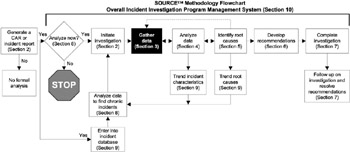
This section addresses methods for gathering and preserving data as well as analyzing the data. Figure 3.1 shows this step within the context of the overall incident investigation process.
The topics covered in this section include:
General data-gathering and preservation issues
Gathering data
Gathering data from people
Physical data
Paper data
Electronic data
Position data
Overall data-collection plan
Application to apparent cause analyses and root cause analyses
Factual information derived from data-gathering activities serves as the basis for all valid conclusions and recommendations from an investigation. Without effective data gathering, the incident cannot be truly defined and investigated. Gathering data usually takes more time than other investigation steps.
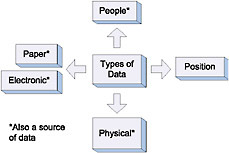
There are five basic types of data as shown in Figure 3.2:
People: Interviews with or written statements from witnesses, participants, etc.
Physical: Parts, chemical samples, personal protective equipment (PPE), structures, raw materials, finished products, etc.
Paper: Hard copies of procedures, policies, administrative controls, drawings, sketches, notes, performance and operational data, analysis results, procurement specifications, loading specifications, logs, paper charts, correspondence, etc.
Electronic: Electronic copies of procedures, policies, administrative controls, drawings, performance and operational data, analysis results, procurement specifications, e-mail, loading specifications, logs, correspondence, etc.
Position: Locations of people and physical data (e.g., valve and switch positions, tank levels)