Smart Electronic Materials: Fundamentals and Applications

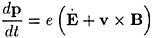
Essentially all smart devices depend upon the electronic properties of materials and how these properties are influenced by external perturbations which may be electromagnetic, or mechanical, or magnetic, etc. The simplest approach to understanding such properties would be to use classical physics. Based on classical physics the general problem could be solved by using Newton s equation
where p is the electron momentum, v the velocity, and E and B are the electrical and magnetic fields, respectively. Additional forces, if present, can be added on the right-hand side of the equation. Similarly, in classical physics, we could use the Maxwell equation to represent properties of electromagnetic waves in solids.
Although classical physics has been successful in describing many of nature s phenomena, it fails completely when it is used to describe electrons in solids. To understand the underlying physical properties that form the basis of modern intelligent information devices, we need to use quantum mechanics, which is a more accurate description of nature than classical physics. According to quantum mechanics, entities that are particles in the classical description behave as waves under certain conditions. To the level needed in device physics, the wave equation that is capable of describing particles is the Schr dinger equation. A second aspect of quantum mechanics says that classical waves sometimes behave as particles. Thus wave energy becomes quantized or appears in discrete steps. Both of these aspects of quantum mechanics are critical to an understanding of solids and their physical properties.