Soil Testing Manual: Procedures, Classification Data, and Sampling Practices

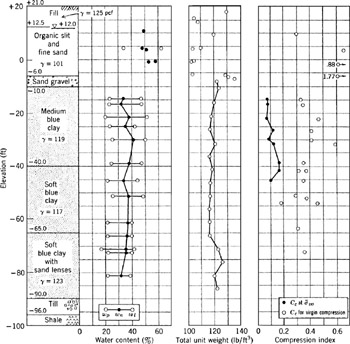
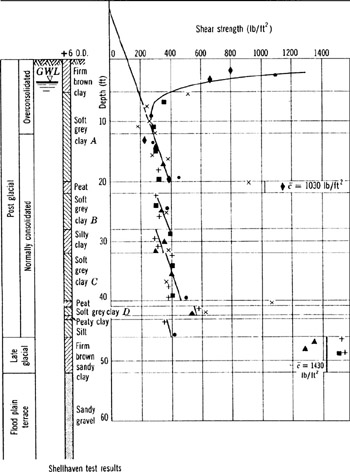
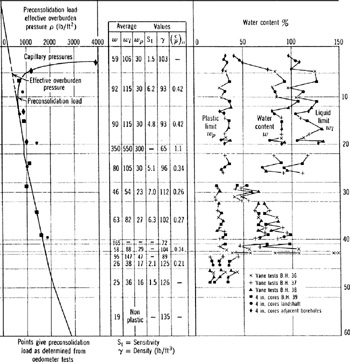
This final chapter presents three examples of subsoil profiles. A subsoil profile is defined as a diagram or cross-section through the ground that shows the nature and the sequence of the various soil and rock layers. The location of the groundwater table is also indicated on the subsoil profile. In addition, the results of soil laboratory tests can be summarized on subsoil profiles.
The development of a subsoil profile is often a required element for geotechnical and foundation engineering analyses. For example, subsoil profiles are used to determine the foundation type (shallow versus deep foundation), to calculate the amount of settlement or heave of the structure, to evaluate the effect of groundwater on the project and develop recommendations for dewatering of underground structures, to perform slope stability analyses for projects having sloping topography, and to prepare site development recommendations.
Figures 15.1 to 15.3 present three examples of subsoil profiles: