Torsional Vibration of Turbomachinery

Including application case studies and in-depth interpretation of computer-generated results, this book offers practical answers to preventing excessive damage, failure and noise due to vibrations in machines.
 TABLE OF CONTENTS
 Sometimes design errors occur such that one or more torsional natural frequencies have inadequate separation margins from the main torsional forcing frequencies of concern. As discussed previously, the frequencies of concern are often 60 and 120 Hz in the case of 60-Hz power generation systems.
There are two main turbomachinery detuning approaches.
1. The first approach, which is often the easiest to apply, is to lower or raise the offending torsional natural frequency, by adding or reducing inertias, respectively, at axial locations which are torsionally responsive in that mode. Examination of the calculated or measured mode shape is helpful in determining the machine locations that have high relative motion. Placement of inertia at an axial location that is at or close to an antinode will have the most effect, whereas placement of inertia at a nodal point will have zero effect. Possibilities for changing inertia include
Adding a flywheel
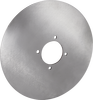
Shrinking a ring on the outside diameter of a coupling
Replacing a rotating component with one of different density having suitable other properties
Replacing a shrunk on component that can be removed easily with one of different size
In each case it is necessary to investigate that no performance or machine interface problems would result from the configuration change. For example, if a component were modified resulting in a weight increase, it would be important to check that mating components can sustain the increase in centrifugal load.
2. The second approach is to change the stiffness of...