Thin Film Materials Technology: Sputtering of Compound Materials

Grove first observed sputtering in a dc gas discharge tube in 1852. He discovered that the cathode surface of the discharge tube was sputtered by energetic ions in the gas discharge, and cathode materials were deposited on the inner wall of the discharge tube.
At that time, sputtering was regarded as an undesired phenomenon since the cathode and grid in the gas discharge tube were destroyed. Today, however, sputtering is widely used for surface cleaning and etching, thin-film deposition, surface and surface layer analysis, and sputter ion sources.
In this chapter, the fundamental concepts of the various sputtering technologies are described. The energetic particles in sputtering may be ions, neutral atoms, neutrons, electrons, or photons. Since most relevant sputtering applications are performed under bombardment with ions, this text deals with that particular process.
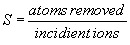
The sputter yield, S, which is the removal rate of surface atoms due to ion bombardment, is defined as the mean number of atoms removed from the surface of a solid per incident ion and is given by
| (3.1) | |
Sputtering is caused by the interactions of incident particles with target surface atoms. The sputter yield will be influenced by the following factors:
Energy of incident particles
Target materials
Incident angles of particles
Crystal structure of the target surface
The sputter yield, S, can be measured by the following methods:
Weight loss of target
Decrease of target thickness
Collection of the sputtered materials
Detection of sputtered particles in flight
The sputter yield...