Commercial Awareness and Business Decision Making Skills

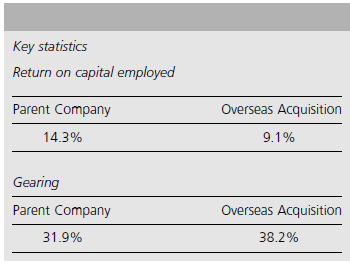
Imagine that your employer has just purchased an overseas company, and in the footnote to the announcement sent to all staff are the following details:

Initially the acquisition appears to be a strange decision by senior management as the overseas investment has higher gearing and a poorer return on capital. Unless the acquisition was made because synergistic effects are expected to accrue in the future it appears as if those in charge have lost the plot!
All is not as it first appears and examination of the accounting policies of the two companies highlights an interesting difference. The overseas operation has a policy of regularly revaluing its properties to their current market value, which is significantly in excess of their original cost. By contrast the parent company does not revalue.
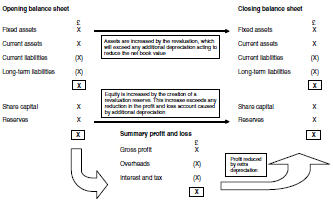
We shall examine the balance sheet and think through the logic of a company increasing the carrying value of its property portfolio:

These consequences can be summarized as follow (Figure 11.1).
If the accounting policies of the acquired company are brought into line with those of the parent company the value of assets and equity will fall as the carrying value of the asset...