
Powder / Solid Particles Particle Analyzers
Last Updated: April 1, 2025
Description
Powder/Solid Particles Particle Analyzers are devices designed to measure and analyze the size, shape, and distribution of particles within a given sample. These analyzers provide critical data that help in understanding the physical properties of the particles, which can be essential for quality control, research, and development in various industries.
Working Principle
Particle analyzers operate using several techniques, including light blockage, diffraction, scattering, sedimentation, and sieving. In the light blockage method, a sample is passed between a laser light source and a detector, and the shadows cast by the particles are measured. Diffraction or scattering techniques, such as low-angle light laser scattering (LALLS), are non-destructive and non-intrusive, making them preferred in many industries. These methods are useful because they provide precise measurements of particle size and distribution, which are crucial for ensuring product quality and performance.
Applications
Particle analyzers are used in a wide range of industries. In the pharmaceutical industry, they are employed to ensure the consistency and efficacy of drug formulations by analyzing the size and shape of active ingredients. In the paint and ceramics industries, sedimentation or centrifugal separation methods are used to analyze particle sizes to ensure the quality and durability of the final products. Sieving techniques are commonly used in mining and food processing to separate particles into size bands.
Advantages over other Particle Analyzers
Particle analyzers using LALLS are advantageous because they are non-destructive and non-intrusive, allowing for the analysis of delicate samples without altering them. This makes them suitable for a wide range of applications where maintaining the integrity of the sample is crucial. Additionally, these analyzers can handle a broad range of particle sizes and provide high-resolution measurements, which are essential for detailed analysis.
Limitations
Some particle analyzers, such as those using sedimentation or centrifugal separation, have a limited range and are not suitable for emulsions or very dense materials that settle too quickly. Sieving methods, while inexpensive, are only suitable for larger particles and may not provide the precision needed for smaller particle analysis.
Considerations
When selecting a particle analyzer, it is important to consider the initial costs, which can vary significantly depending on the technology and capabilities of the device. Operating expenses, including maintenance and replacement costs, should also be evaluated. The durability and accuracy of the analyzer are critical factors, especially in industries where precise measurements are essential. Additionally, the choice between wet and dry sample dispersion modes can impact the analysis, particularly for fragile or soluble particles.

from Phenom-World BV
The Phenom desktop SEM with ParticleMetric software allows easy generation and analysis of SEM images. The integrated ParticleMetric software allows the user to gather morphology and particle size data for many submicron particle applications. The fully automated measurements of ParticleMetric allow... [See More]
- Sample Type: Powder / Solid
- Measuring Range: 0.1000 to 100
- Measurement Type: Size; Shape
- Technology: Microscopy / Image Analysis

from Malvern Instruments, Inc.
Malvern's newest sensor specifically designed to measure larger particles up to 2.5 mm in many processes including, chemicals and food products all types of granulates. [See More]
- Sample Type: Aerosol Droplets (Liquid in Gas); Powder / Solid; Emulsion
- Measuring Range: 50 to 2500
- Measurement Type: Size
- Technology: Spatial Filter Velocimetry

from Micromeritics
Widely accepted as a primary particle characterization technique, the electrical sensing zone method is recognized as a highly effective method of counting and sizing a wide variety of organic and inorganic materials.Unlike other measurement techniques, the electrical sensing zone method can analyze... [See More]
- Sample Type: Powder / Solid; Emulsion
- Measuring Range: 0.4000 to 240
- Measurement Type: Size; Count
- Technology: Electrazone Sensing

from Fritsch GmbH - Milling and Sizing
The ANALYSETTE 22 NanoTec with its especially wide measuring range of 0.01 – 2100 µm is the ideal, universally applicable Laser Particle Sizer for efficient particle size analysis down into the nano range – in production and quality control as well as in research and development. [See More]
- Sample Type: Powder / Solid; Emulsion
- Measuring Range: 0.0100 to 2100
- Measurement Type: Size
- Technology: Diffraction / Laser Diffraction (LALLS)
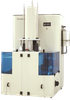
from Quantachrome Instruments
The PoreMaster ® GT Series —. fully automated, high-performance mercury porosimeters that offer two high-pressure and two low-pressure analysis ports to meet the pore size measurement needs of the busiest laboratories. In addition to "two samples in a single loading, " (patented)... [See More]
- Sample Type: Powder / Solid
- Measuring Range: 0.0036 to 10.66
- Measurement Type: Size
- Technology: Mercury Intrusion

from AMETEK Brookfield
The Brookfield PFT Powder Flow Tester delivers quick and easy analysis of powder flow behavior in industrial processing equipment. It is ideal for manufacturers who process powders daily and want to minimize or eliminate downtime and expense that can occur when hoppers discharge erratically or fail... [See More]
- Sample Type: Powder / Solid
- Measuring Range: ? to 2000
- Measurement Type: Specialty / Other; Powder Flow
- Sample Temperature: -4 to 248

from Anton Paar
Use the SurPASS ™ 3 electrokinetic analyzer in surface analysis to investigate the zeta potential of macroscopic solids based on a streaming potential and streaming current measurement. The zeta potential is related to the surface charge at a solid/liquid interface and is a powerful indicator... [See More]
- Sample Type: Powder / Solid
- Sample Temperature: 50 to 104
- Measurement Type: Zeta Potential
- Display & Special Features: Benchtop; PC Interface / Networkable; SPC

from Shimadzu Scientific Instruments, Inc.
The SALD-31010 is designed for measurement of coarse or dense particles with a variety of sampling options for both wet and dry samples. It seamlessly covers a wide measuring range from 0.05 to 3,000 µm using a single measurement principle, a single optical system, and a single light source. A... [See More]
- Sample Type: Powder / Solid; Emulsion
- Measuring Range: 0.0500 to 3000
- Measurement Type: Size
- Technology: Diffraction / Laser Diffraction (LALLS)

from Kett US
This portable device allows for quick quality and color assessment of rice. The grains are placed in the tray and light is reflected through the color filter. Product flaws may be easily detected. The RN500 provides an automated version of this unit [See More]
- Sample Type: Powder / Solid
- Technology: Microscopy / Image Analysis
- Measurement Type: Shape; Specialty / Other; Color Defects
- Display & Special Features: Benchtop; Handheld
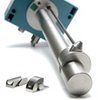
from Malvern Instruments, Inc.
Malvern's newest sensor specifically designed to measure larger particles in many processes dealing with granulates, such as the chemical and food product industries, among others. The sensor can be specifically modified to suit the process and material conditions by means of various accessories... [See More]
- Sample Type: Aerosol Droplets (Liquid in Gas); Powder / Solid; Emulsion
- Measuring Range: 50 to 2500
- Measurement Type: Size
- Technology: Spatial Filter Velocimetry
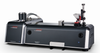
from Fritsch GmbH - Milling and Sizing
The FRITSCH ANALYSETTE 28 ImageSizer for dry and wet measurement is the ideal Particle Sizer for all applications that require accurate and reproducible measuring results for both particle shape and size. The optical process of Dynamic Image Analysis provides results for a wide measuring range,... [See More]
- Sample Type: Powder / Solid
- Measuring Range: 20 to 20000
- Measurement Type: Size; Shape
- Technology: Microscopy / Image Analysis
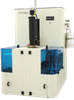
from Quantachrome Instruments
The PoreMaster series consists of three automatic mercury intrusion porosimeters offering new concepts in automated pore size analysis.The PoreMaster 33 porosimeter achieves a maximum pressure of 33,000 psia for pore size measurements in the range from over 1100* micron to 0.0064 micron pore... [See More]
- Sample Type: Powder / Solid
- Measuring Range: 0.0036 to 10.66
- Measurement Type: Size
- Technology: Mercury Intrusion
from Malvern Instruments, Inc.
The Mastersizer 2000 particle size analyzer has been developed to meet industry's growing need for global comparability of results, traceability, regulatory compliance, and efficiency in the laboratory. In introducing the Mastersizer 2000 particle size analyzer, Malvern has advanced particle size... [See More]
- Sample Type: Powder / Solid; Emulsion
- Measuring Range: 0.0200 to 2000
- Measurement Type: Size
- Technology: Diffraction / Laser Diffraction (LALLS)
from Fritsch GmbH - Milling and Sizing
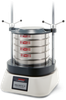
Particularly suitable for particle size analysis and portioning of coarse-grained materials. Areas of application. The ANALYSETTE 18 is used for particle size analysis and portioning of coarse-grained materials. The maximum input quantity of 15 kg for the material to be sieved and the sieve stack... [See More]
- Sample Type: Powder / Solid; Emulsion
- Measuring Range: 20 to 125000
- Measurement Type: Size
- Technology: Sieving
from Quantachrome Instruments
The new QUADRASORB evo ™ Gas Sorption Surface Area and Pore Size Analyzer has been designed for flexibility, performance, accuracy, and modularity. It will adapt to your lab ’s evolving material characterization needs, both through the day, and over the years. If you start an analysis in... [See More]
- Sample Type: Powder / Solid
- Display & Special Features: Benchtop; PC Interface / Networkable; SPC
- Measurement Type: Size