
Metallic Rocker Switches
Last Updated: April 1, 2025
Description
Metallic rocker switches are devices used to control the flow of electricity in a circuit. They feature a rocking mechanism that allows the user to toggle the switch between on and off positions. These switches are typically encased in a metal housing, providing a robust and durable exterior.
Working Principle
Metallic rocker switches operate by using a pivoting mechanism that rocks back and forth to open or close an electrical circuit. When the switch is pressed on one side, it completes the circuit, allowing current to flow. Pressing the opposite side breaks the circuit, stopping the flow of electricity. This simple yet effective mechanism makes rocker switches highly reliable and easy to use. Their utility lies in their ability to provide a clear visual and tactile indication of the switch's status, which is crucial in many applications.
Applications
Metallic rocker switches are used in a variety of applications due to their durability and ease of use. Specific examples include computer hardware, where they may be used to control power supplies, and in battery chargers. They are also found in instrumentation panels, household appliances, telecommunications equipment, medical devices, and industrial machinery .
Advantages over other Rocker Switches
Metallic rocker switches offer several advantages over their non-metallic counterparts. The metal housing provides enhanced durability and resistance to environmental factors, making them suitable for use in harsh conditions. This robustness can lead to a longer lifespan and reduced maintenance needs compared to switches made from less durable materials.
Limitations
One limitation of metallic rocker switches is their potential for higher initial costs compared to plastic switches. The metal construction, while offering durability, can also make them heavier, which might not be ideal for all applications. Additionally, the metal housing may not be suitable for applications requiring non-conductive materials.
Considerations
When selecting metallic rocker switches, several factors should be considered. Initial costs may be higher due to the materials used, but this can be offset by their durability and reduced maintenance needs over time. Operating expenses are generally low, as these switches require minimal energy to operate. Durability is a significant advantage, with metal housings providing resistance to wear and environmental factors. However, the weight and conductivity of metal should be considered in applications where these factors are critical. Replacement and maintenance costs are typically low, given the switch's robust construction and long lifespan.
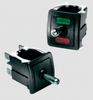
from OTTO Controls
The K4 series snap-in toggle switches are rugged, high performance sealed switches designed for use under severe conditions found in marine, appliance, heavy equipment and industrial control applications. They are totally sealed so the switch can withstand direct water spray and submersion, even... [See More]
- Actuator Material: Metal
- Maintained Contact Switch Function: Three Position (Center OFF); Three Position (No Center OFF)
- Switch Function: Momentary
- Momentary Contact Switch Function: Momentary OFF; Three Position Momentary (Center OFF); Three Position Momentary (Center NEUTRAL)
from Trigon Components, Inc.
SERIES. SWM. DESCRIPTION. Micro Switch. RATING. 0.1A, 6VDC, 5A @ 125VAC. WITHSTAND VOLTAGE. 250 to 1000VAC. WORKING TEMPERATURE. -15 °C to +85 Deg C. PACKAGE. TH [See More]
- Actuator Material: Metal
- Switch Function: Momentary
- Rocker Actuator: Micro Switch
- Momentary Contact Switch Function: Momentary ON

from Grayhill, Inc.
Grayhill Tact Switches are momentary pushbuttons designed for cost-effective user interface switching. They are mounted to a printed circuit board and typically actuated by a decorative keycap. The ultraminiature and lightweight structure of these tact switches make them suitable for high density... [See More]
- Actuator Material: Metal
- Length / Diameter: 1.16
- Rocker Actuator: Rocker
- Width: 0.2750
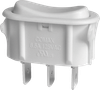
from C&K Components
Features/Benefits. Various designs up to 16 amps. Heavy duty and extended life cycles. SPST, SPDT and DPST options. Different symbols available. Typical Applications. Household appliances. Industrial equipment. Audio & visual equipment. Telecommunication. Office equipment [See More]
- Actuator Material: Metal
- Switch Function: Maintained
- Rocker Actuator: Rocker
- Maintained Contact Switch Function: Three Position (Center OFF)