
Conveyor Pneumatic Clutches
Last Updated: April 1, 2025
Description
Conveyor pneumatic clutches are devices that transfer power within a conveyor system using compressed air or other gases as the operating fluid. These clutches engage and disengage power transmission, allowing for controlled movement and stopping of conveyor components without interrupting the operation of the driving engine.
Working Principle
Pneumatic clutches operate by using compressed air to engage and disengage the clutch mechanism. When engaged, the clutch transfers power from the engine to the conveyor system, allowing it to move materials. The disengagement stops the power transfer while the engine continues to run. This mechanism is particularly useful because it provides accurate torque control and does not generate heat during extended periods of engagement, making it efficient and reliable for continuous operations.
Applications
Conveyor pneumatic clutches are commonly used in systems where precise control of material movement is required. Specific examples include conveyor drives in manufacturing plants, where they help in the smooth and efficient transport of goods along production lines. They are also used in pump motor drives, where they facilitate the controlled movement of fluids in industrial processes.
Advantages over other Pneumatic Clutches
Pneumatic clutches offer several advantages over other types of clutches. They provide more accurate torque control compared to mechanical clutches, which is crucial for applications requiring precision. Additionally, they can transmit higher torques than similarly sized electric clutches, making them suitable for heavy-duty applications. Their ability to direct air across clutch plates for cooling further enhances their thermal capacity, reducing the risk of overheating during prolonged use.
Limitations
One limitation of pneumatic clutches is that they do not achieve the same torque levels as hydraulic clutches. This can be a drawback in applications requiring extremely high torque. Additionally, the reliance on compressed air means that any issues with the air supply can affect the clutch's performance.
Considerations
When considering the use of conveyor pneumatic clutches, it is important to evaluate initial costs, which can be higher due to the need for a compressed air system. Operating expenses may also include the cost of maintaining the air supply system. However, pneumatic clutches are generally low maintenance and durable, offering long-term reliability. Accuracy in torque control is a significant advantage, but users should also consider the potential costs associated with replacement and maintenance of the clutch components over time.
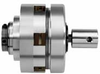
from Mach III Clutch, Inc.
Operation. Industrial friction clutch engages with air pressure, spring released when air is exhausted. Torque is linear in response to air pressure applied. Mounting. End of Shaft. Friction clutch slides on shaft and is fixed with set screws and a customer supplied key. No anti-rotation arm... [See More]
- Application: Industrial; Conveyor; Power Transmission
- Pneumatic Pressure: 80
- Torque: 0.0 to 46.2
- Spring Assistance: Spring Return/Disengage

from Mach III Clutch, Inc.
Operation. Friction type heavy duty clutch engages with air pressure, spring released when air is exhausted. Torque is linear in response to air pressure applied. Mounting. End Shaft. Heavy duty clutch slides on shaft and is fixed with set screws and a customer supplied key. No anti-rotation arm... [See More]
- Application: Industrial; Conveyor; Power Transmission
- Pneumatic Pressure: 80
- Torque: 0.0 to 390.8
- Spring Assistance: Spring Return/Disengage

from Mach III Clutch, Inc.
Operation. Friction clutch engages with air pressure, spring released when air is exhausted. Torque is linear in response to air pressure applied. Mounting. End Shaft. Clutch slides on shaft and is fixed with set screws and a customer supplied key. No anti-rotation arm required. Designed for... [See More]
- Application: Industrial; Conveyor; Power Transmission
- Pneumatic Pressure: 80
- Torque: 0.0 to 46.2
- Spring Assistance: Spring Return/Disengage
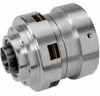
from Mach III Clutch, Inc.
Operation. Industrial friction clutch engages with air pressure, spring released when air is exhausted. Torque is linear in response to air pressure applied. Mounting. Through/Mid Shaft or End Shaft. Friction clutch slides on shaft and is fixed with set screws and a customer supplied key. [See More]
- Application: Industrial; Conveyor; Power Transmission
- Pneumatic Pressure: 80
- Torque: 0.0 to 46.2
- Spring Assistance: Spring Return/Disengage
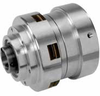
from Mach III Clutch, Inc.
Operation. Friction clutch engages with air pressure, spring released when air is exhausted. Torque is linear in response to air pressure applied. Mounting. Through/Mid Shaft or End of Shaft. Clutch slides on shaft and is fixed with set screws and a customer supplied key. Anti-rotation arm required... [See More]
- Application: Industrial; Conveyor; Power Transmission
- Pneumatic Pressure: 80
- Torque: 0.0 to 46.2
- Spring Assistance: Spring Return/Disengage
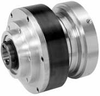
from Mach III Clutch, Inc.
Operation. Friction type heavy duty clutch engages with air pressure, spring released when air is exhausted. Torque is linear in response to air pressure applied. Mounting. Through/Mid Shaft or End of Shaft. Heavy duty clutch slides on the shaft and is fixed with set screws and a customer supplied... [See More]
- Application: Industrial; Conveyor; Power Transmission
- Pneumatic Pressure: 80
- Torque: 0.0 to 276.7
- Spring Assistance: Spring Return/Disengage