
Shaft - Pulley / Gear / Sprocket Pneumatic Clutches
Last Updated: April 1, 2025
Description
Shaft - Pulley / Gear / Sprocket Pneumatic Clutches are devices that transfer power from one part of a power transmission driveline to another using compressed air or other gas as an operating fluid. These clutches engage to transfer power from an engine to down-train devices such as transmissions and drive wheels, and disengage to stop the power transfer while allowing the engine to continue turning.
Working Principle
Pneumatic clutches operate by using compressed air to engage and disengage the clutch mechanism. When engaged, the clutch transfers power from the engine to the driveline components, such as gears or sprockets, enabling motion. The use of compressed air allows for precise control over the engagement process, which is beneficial for applications requiring accurate torque control. Pneumatic clutches are particularly useful due to their superior thermal capacity, as they do not generate heat during extended periods of engagement. Additionally, they can be designed to direct air across the clutch plates for cooling, enhancing their efficiency and longevity.
Applications
Pneumatic clutches are commonly used in various industrial and automotive applications. They are often found in larger, heavier vehicles like buses, where they are used in conjunction with pneumatic brakes to provide reduced braking distances. These clutches are also utilized in conveyor drives and pump motor drives, as well as in systems requiring web tension control, automation, or robotics.
Advantages over other Pneumatic Clutches
Pneumatic clutches offer several advantages over other types of clutches. They provide more accurate torque control compared to mechanical clutches, thanks to the simplicity of their design. Air-actuated clutches can transmit higher torques than similar-sized electric or mechanical clutches, although they do not quite match the torque achievable by hydraulic clutches. The lightweight and relatively low maintenance nature of pneumatic clutches make them an attractive option for many applications.
Limitations
One limitation of pneumatic clutches is that they may not achieve the same torque levels as hydraulic clutches. Additionally, the requirement for a compressed air supply can be a constraint in certain environments or applications where such infrastructure is not readily available.
Considerations
When considering the use of pneumatic clutches, it is important to evaluate factors such as initial costs, operating expenses, and maintenance requirements. Pneumatic clutches generally have lower maintenance costs due to their simple design and the cleanliness of compressed air as an operating fluid. However, the need for a reliable compressed air supply can add to the initial setup costs. Durability and accuracy are typically high, but regular maintenance is necessary to ensure optimal performance and longevity.
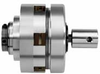
from Mach III Clutch, Inc.
Operation. Industrial friction clutch engages with air pressure, spring released when air is exhausted. Torque is linear in response to air pressure applied. Mounting. End of Shaft. Friction clutch slides on shaft and is fixed with set screws and a customer supplied key. No anti-rotation arm... [See More]
- Mounting: Shaft - VPulley
- Pneumatic Pressure: 80
- Torque: 0.0 to 46.2
- Spring Assistance: Spring Return/Disengage

from Mach III Clutch, Inc.
Operation. Friction type heavy duty clutch engages with air pressure, spring released when air is exhausted. Torque is linear in response to air pressure applied. Mounting. End Shaft. Heavy duty clutch slides on shaft and is fixed with set screws and a customer supplied key. No anti-rotation arm... [See More]
- Mounting: Shaft - VPulley
- Pneumatic Pressure: 80
- Torque: 0.0 to 390.8
- Spring Assistance: Spring Return/Disengage

from Mach III Clutch, Inc.
Operation. Friction clutch engages with air pressure, spring released when air is exhausted. Torque is linear in response to air pressure applied. Mounting. End Shaft. Clutch slides on shaft and is fixed with set screws and a customer supplied key. No anti-rotation arm required. Designed for... [See More]
- Mounting: Shaft - VPulley
- Pneumatic Pressure: 80
- Torque: 0.0 to 46.2
- Spring Assistance: Spring Return/Disengage

from Mach III Clutch, Inc.
Operation. Friction clutch engages with air pressure and is designed for continous slip. Clutch is spring released when air is exhausted. Torque is linear in response to air pressure applied. Mounting. Through/Mid Shaft or End of Shaft. Anti-rotation arm required to prevent rotation of the air... [See More]
- Mounting: Through; Shaft - VPulley
- Pneumatic Pressure: 80
- Torque: 0.0 to 5.5
- Spring Assistance: Spring Return/Disengage
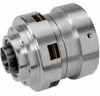
from Mach III Clutch, Inc.
Operation. Industrial friction clutch engages with air pressure, spring released when air is exhausted. Torque is linear in response to air pressure applied. Mounting. Through/Mid Shaft or End Shaft. Friction clutch slides on shaft and is fixed with set screws and a customer supplied key. [See More]
- Mounting: Through; Shaft - VPulley
- Pneumatic Pressure: 80
- Torque: 0.0 to 46.2
- Spring Assistance: Spring Return/Disengage
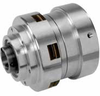
from Mach III Clutch, Inc.
Operation. Friction clutch engages with air pressure, spring released when air is exhausted. Torque is linear in response to air pressure applied. Mounting. Through/Mid Shaft or End of Shaft. Clutch slides on shaft and is fixed with set screws and a customer supplied key. Anti-rotation arm required... [See More]
- Mounting: Through; Shaft - VPulley
- Pneumatic Pressure: 80
- Torque: 0.0 to 46.2
- Spring Assistance: Spring Return/Disengage
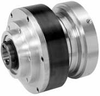
from Mach III Clutch, Inc.
Operation. Friction type heavy duty clutch engages with air pressure, spring released when air is exhausted. Torque is linear in response to air pressure applied. Mounting. Through/Mid Shaft or End of Shaft. Heavy duty clutch slides on the shaft and is fixed with set screws and a customer supplied... [See More]
- Mounting: Through; Shaft - VPulley
- Pneumatic Pressure: 80
- Torque: 0.0 to 276.7
- Spring Assistance: Spring Return/Disengage