
Portable Serial Interfaces
Last Updated: April 1, 2025
Description
Portable serial interfaces are devices that facilitate communication between various electronic components by transmitting data in a serial format. These interfaces are designed to be compact and easily transportable, allowing them to be used in a variety of settings without the need for a permanent installation. They typically support multiple serial protocols, enabling them to connect with a wide range of devices.
Working Principle
Portable serial interfaces operate by converting data into a serial format, which is then transmitted over a single channel. This method of data transmission is efficient and reduces the complexity of wiring compared to parallel interfaces. The interfaces often include transceivers and connectors that are selected based on specific requirements, and they are designed using CAD software to ensure precision and reliability. The simplicity and versatility of serial communication make these interfaces particularly useful for connecting devices that require low- to medium-speed data rates.
Applications
Portable serial interfaces are widely used in various industries due to their adaptability and ease of use. In computing and data storage, they are employed to connect peripherals such as keyboards, mice, and printers to computers. In industrial automation, interfaces like RS-485 are used to connect programmable logic controllers (PLCs) and gather data from sensors. They are also utilized in medical applications to link embedded PC boards with other equipment for data analysis and display.
Advantages over other Serial Interfaces
One of the main advantages of portable serial interfaces is their ability to support multiple protocols, such as RS232, RS422, and RS485, which allows them to be used in diverse applications. They also offer greater noise immunity and can transmit data over longer distances at higher baud rates compared to some other interfaces. Additionally, the hot-pluggable nature of interfaces like USB allows for easy connection and disconnection without risking damage to the devices.
Limitations
Despite their versatility, portable serial interfaces have limitations. They typically support lower data transfer rates compared to parallel interfaces, which can be a drawback in applications requiring high-speed data transmission. Additionally, the complexity of manufacturing these interfaces, which involves multiple engineering disciplines, can increase production costs.
Considerations
When selecting a portable serial interface, several factors should be considered. Initial costs can vary depending on the complexity of the interface and the specific protocols it supports. Operating expenses may include power consumption and potential licensing fees for certain technologies. Durability is crucial, especially in industrial settings, where interfaces may be exposed to harsh conditions. Accuracy in data transmission is essential to ensure reliable communication between devices. Finally, replacement and maintenance costs should be evaluated, as these can impact the long-term affordability of the interface.
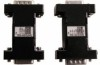
from American Portwell Technology Inc.
Self powered DB9 RS-232 to DB9 RS-422 Serial Data Converter [See More]
- Form Factor: Portable
- Network / Bus: USB
- Serial Protocol: RS232; RS422
- Connector: DB9
from Sena Technologies
Software-free configuration support using DIP-Switch and pairing button [See More]
- Form Factor: Portable; Self-Contained
- Network / Bus: Bluetooth
- Serial Protocol: RS232
- Data Rate: 230

from Moxa Inc.
The TCF-90 is a compact media converter that transmits RS-232 signals over optical fiber. Power is derived from either the serial port or an external power source. The TCF-90 extends RS-232 transmission up to 5 km with multi-mode fiber, or up to 40 km with single-mode fiber. A pair of TCF-90... [See More]
- Form Factor: Portable
- Data Rate: 115
- Serial Protocol: RS232
- Number of Ports: 1

from American Portwell Technology Inc.
Self powered DB9 RS-232 to DB9 RS-485 Serial Data Converter [See More]
- Form Factor: Portable
- Network / Bus: USB
- Serial Protocol: RS232; RS485
- Connector: DB9

from American Portwell Technology Inc.
USB to single DB9 RS-232 with included cable [See More]
- Form Factor: Portable
- Network / Bus: USB
- Serial Protocol: RS232
- Number of Ports: 1