
USB Serial Interfaces
Last Updated: April 1, 2025
Description
USB Serial Interfaces are a type of communication protocol used to connect various electronic devices to computers. They facilitate data exchange between devices such as keyboards, mice, printers, and external storage devices by providing a standardized connection interface. USB interfaces are known for their ability to support multiple devices through a single port, offering a high-speed data transfer rate and the convenience of plug-and-play functionality.
Working Principle
USB Serial Interfaces operate by using a high-speed serial communication protocol that allows for the transfer of data between devices and a host computer. The USB protocol manages data flow control, ensuring efficient communication without the need for additional drivers in many cases. USB interfaces are designed to be hot-pluggable, meaning devices can be connected or disconnected without needing to power down the system. This feature, along with automatic device recognition and configuration, makes USB interfaces particularly user-friendly. The protocol also supports power delivery to connected devices, eliminating the need for separate power sources for many peripherals.
Applications
USB Serial Interfaces are widely used in various applications due to their versatility and ease of use. In computing, they are commonly employed to connect peripherals such as keyboards, mice, and printers to personal computers. In data storage, USB interfaces facilitate the transfer of data between computers and external storage devices like external hard drives. Additionally, USB interfaces are used in industrial automation and control systems to connect programmable logic controllers (PLCs) and gather data from sensors.
Advantages over other Serial Interfaces
USB Serial Interfaces offer several advantages over other serial communication standards like RS-232 and RS-485. One significant advantage is their ability to support up to 127 devices on a single bus, thanks to the use of hubs, which is a substantial improvement over the limited device support of older standards. USB interfaces also provide higher data transfer rates, with speeds up to 480 Mbps, compared to the slower rates of RS-232. Furthermore, USB's plug-and-play capability and automatic configuration make it more convenient for users, reducing the complexity of setup and maintenance.
Limitations
Despite their advantages, USB Serial Interfaces have some limitations. The maximum cable length for USB connections is typically limited to five meters, which can be restrictive in applications requiring longer distances. Additionally, while USB interfaces are suitable for many consumer electronics and computing applications, they may not be ideal for environments with high electromagnetic interference or where robust industrial-grade connections are necessary.
Considerations
When considering the use of USB Serial Interfaces, several factors should be taken into account. Initial costs are generally low due to the widespread availability and standardization of USB components. Operating expenses are also minimal, as USB devices typically do not require additional power sources. However, durability can be a concern in industrial settings, where more rugged interfaces might be necessary. Accuracy is generally high for consumer applications, but for precision industrial tasks, other interfaces might be preferred. Replacement and maintenance costs are typically low, given the plug-and-play nature and widespread support for USB devices.
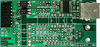
from Laurel Electronics LLC
Features. Suitable for all 1/8 DIN Laureate DPMs, counters, timers & remote displays. USB Type-B connector for plug-and-play connection to a PC USB port. Allows multiple meters to be connected to a PC via a hub. Data rates selectable up to 9600 baud. Powered by instrument. Isolated from meter... [See More]
- Network / Bus: USB
- Connector: RJ-45
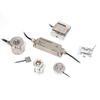
from Mark-10 Corporation
Connect strain gage –based load cells, force sensors, and torque sensors to a PC or USB hub using the Model MF100 USB Sensor Interface and MESUR ®Flex configuration software. MESUR ®Flex supports a wide range of applications in weighing, force, and torque measurement. It accommodates... [See More]
- Network / Bus: USB
- Number of Ports: 1
- Serial Protocol: USB
- Agency Approvals: CE Conformity; UKCA
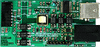
from Laurel Electronics LLC
Features. Suitable for all 1/8 DIN Laureate DPMs, counters, timers & remote displays. Connects host meter to a computer via USB 2.0 and to a bus with up to 31 Laureate instruments. Includes USB Type-B connector to PC plus RJ11 jack to RS485 bus. Selectable baud rates to 9600. Powered by USB... [See More]
- Network / Bus: USB
- Connector: RJ-11
- Serial Protocol: RS485

from Define Instruments
What it does: Required to program the following: any Zen, Javelin, Twin Link, Sentry, Merlin, Pathfinder or TM Series transmitter. The reusable Bridge Key and communications kit is compatible with all USB-programmable Define Instruments products. It contains the hardware required for PC connection... [See More]
- Network / Bus: USB
- Agency Approvals: CE Conformity
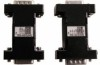
from American Portwell Technology Inc.
Self powered DB9 RS-232 to DB9 RS-422 Serial Data Converter [See More]
- Network / Bus: USB
- Connector: DB9
- Serial Protocol: RS232; RS422
- Form Factor: Portable
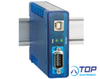
from TOP-electronics USA
Interface USB < > 20mA Industry, Bus Powered Product properties: Industry-compatible design on account of noise immunity in accordance with EN 61000-6-2 Galvanic isolation with an insulation voltage of min. 1 kV Power supply via USB Housing for top-hat-rail installation Active/passive mode for... [See More]
- Network / Bus: USB

from American Portwell Technology Inc.
Self powered DB9 RS-232 to DB9 RS-485 Serial Data Converter [See More]
- Network / Bus: USB
- Connector: DB9
- Serial Protocol: RS232; RS485
- Form Factor: Portable
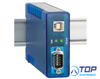
from TOP-electronics USA
W &T 38211, Interface USB/RS232/RS422/RS485 Industry 1kV isolation with overvoltage protection. Product properties: Bi-directional conversion of USB into RS232, RS422 or RS485 interface USB 2.0 Full Speed Device (12 Mbit/s). Power supply via USB Compatible with RS485 2-wire and 4-wire bus... [See More]
- Network / Bus: USB
- Serial Protocol: RS232; RS422; RS485