
Indicators Serial Interfaces
Last Updated: April 1, 2025
Description
Indicators Serial Interfaces are communication systems that facilitate the exchange of data between devices by transmitting information in a sequential manner. These interfaces are designed to convert parallel data from a device into a serial format for transmission and then back into parallel form at the receiving end. They are integral to connecting various types of equipment, allowing for efficient data transfer over long distances with minimal wiring.
Working Principle
Indicators Serial Interfaces operate by converting data from a parallel format into a serial stream of bits. This conversion is essential for transmitting data over a single communication line, which reduces the complexity and cost of wiring. The process involves a system clock that synchronizes the transmission of bits, ensuring that data is sent and received accurately. Serial interfaces are useful because they allow for data transmission over long distances without significant loss of signal integrity, making them ideal for applications where devices are spread out over a large area.
Applications
Serial interfaces are widely used in various industries due to their versatility and cost-effectiveness. In computing and data storage, they connect peripherals such as keyboards, mice, and printers to computers, often using USB connections. In industrial automation, interfaces like RS-485 connect programmable logic controllers (PLCs) and gather data from numerous sensors, sending it to a central system for processing. These interfaces are also crucial in controlling industrial machinery, ensuring efficient and reliable operation.
Advantages over other Serial Interfaces
One of the primary advantages of certain serial interfaces, such as RS-485, is their ability to support multi-point communication, allowing multiple devices to communicate over the same data line. This feature is particularly beneficial in industrial settings where numerous devices need to be interconnected. Additionally, interfaces like RS-422 and RS-485 use differential signaling, which provides noise immunity and maintains signal integrity over long distances, a significant advantage over interfaces that do not offer this feature.
Limitations
Despite their advantages, serial interfaces have limitations. For instance, they generally offer lower data transfer rates compared to parallel interfaces, which can be a drawback in applications requiring high-speed data transmission. Additionally, the complexity of implementing error-checking mechanisms and ensuring data integrity can increase the cost and complexity of the system.
Considerations
When selecting a serial interface, several factors should be considered. Initial costs can vary depending on the complexity of the interface and the specific requirements of the application. Operating expenses may include maintenance and potential upgrades to ensure compatibility with new devices. Durability is another consideration, as interfaces used in industrial environments must withstand harsh conditions. Accuracy in data transmission is crucial, particularly in applications where precise data is essential. Finally, replacement and maintenance costs should be factored into the decision-making process, as these can impact the long-term viability of the chosen interface.

from Yaskawa America, Inc. - Motion Division
Features. Easy Web Insterface. Every VIPA SLIO E/IP and Modbus TCP Fieldbus module has a web interface for displaying diagnostic information and status of attached modules. A simple connection of your network allows remote access to your VIPA SLIO modules. High Speed Backpland Bus. Achieve reaction... [See More]
- Features: Indicators
- Data Rate: 0.1500 to 115
- Serial Protocol: RS232
- Connector: Terminal Module

from ProSoft Technology, Inc.
The MVI56-GSC module is a single slot, backplane compatible solution for the Rockwell Automation ControlLogix platform. This module has two powerful and fully configurable ASCII communication ports, each supporting the sending and receiving of large ASCII character strings. With the implementation... [See More]
- Features: Indicators
- Network / Bus: ControlLogix
- Serial Protocol: RS232; RS422; RS485; RS232/422/485
- Data Rate: 115

from RFID, Inc.
There are a multitude of Interfaces, some of which incorporate their own Reader in a single pcb or housing. Each incorporate just about every protocol specification available including protocols of RS232, RS422, RS485, hex or bcd parallel outputs, all baud rates to 9600, modes of operation ranging... [See More]
- Features: Indicators
- Connector: DB25; 6-Pin Circular DIN, 5-Pin Circular DIN
- Serial Protocol: RS232; RS422
- Operating Temperature: -40 to 55

from Opto 22
Addressable RS232 Interface 120 VAC [See More]
- Features: Indicators
- Network / Bus: Multidrop Network
- Serial Protocol: RS232
- Data Rate: 38.4
from Connect Tech Inc.
Frees devices from a physical PC connection [See More]
- Features: Indicators
- Network / Bus: BACnet; DNP3; 10Base-T; Modbus; 100Base-TX
- Serial Protocol: RS232
- Data Rate: 461

from Radicom Research, Inc.
Radicom's RB8762 embedded Bluetooth module series use as simple as a Serial interface to add state of the art data Bluetooth V4.2 wireless operation to any system. The R88762 Bluetooth Module integrates an ARM processor, RF, baseband, ADC, and 256KB embedded flash memory. Featuring a self-contained... [See More]
- Features: Indicators
- Form Factor: PCB
- Network / Bus: Bluetooth
- Agency Approvals: FCC; CE Conformity; RoHS

from Keller America, Inc.
Interface converter with Binder socket 712/2-pin: • Visual status and configuration display (LED). • galvanic isolation. • Total length: 1,75 m. • Software CD and USB connection cable included in the scope of delivery [See More]
- Features: Indicators

from Moxa Inc.
The TCF-90 is a compact media converter that transmits RS-232 signals over optical fiber. Power is derived from either the serial port or an external power source. The TCF-90 extends RS-232 transmission up to 5 km with multi-mode fiber, or up to 40 km with single-mode fiber. A pair of TCF-90... [See More]
- Features: Indicators
- Data Rate: 115
- Serial Protocol: RS232
- Number of Ports: 1
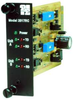
from Patton Electronics Co.
The Model 2017RC is an async device that operates bi-directionally in full- or half-duplex modes.The Model 2017RC occupies one slot of the 1000R/16 front-load rack. It has dual independent converters that enable two async DTE RS-232 devices to communicate with two 20-mA current loop devices over two... [See More]
- Features: Indicators
- Data Rate: 115
- Serial Protocol: RS232
- Connector: RJ-11; RJ-45

from ProSoft Technology, Inc.
The inRAx Modbus Master/Slave Communications module is designed to allow ControlLogix processors to interface easily with Modbus protocol-compatible devices and hosts. The MVI56-MCM module acts as an input/output module between the Modbus network and the Rockwell Automation backplane. The data... [See More]
- Features: Indicators
- Network / Bus: Modbus
- Serial Protocol: RS232; RS422; RS485; RS232/422/485
- Number of Ports: 2

from Opto 22
Addressable RS232 Interface 220 VAC [See More]
- Features: Indicators
- Network / Bus: Multidrop Network
- Serial Protocol: RS485
- Data Rate: 38.4

from Radicom Research, Inc.
Radicom LSDB8900 industrial WiFi/LAN to Serial/USB/BLE product line is an all new wireless to wire gateway solution. With built-in powerful CPU to process all necessary functions and features, the LSDB8900 series product line is a perfect solution for remote data communication through WiFi/Ethernet... [See More]
- Features: Indicators
- Network / Bus: 10/100Base-T; USB (optional feature)
- Serial Protocol: RS232; RS422; RS485; RS232/422/485
- Data Rate: 922

from Opto 22
Addressable RS232 Interface DC [See More]
- Features: Indicators
- Network / Bus: Multidrop Network
- Serial Protocol: RS232
- Data Rate: 38.4