
Can be Coupled with Fourier-Transform Infrared Spectrometer Calorimeters and Thermal Analyzers
Last Updated: April 1, 2025
Description
Fourier-Transform Infrared Spectrometer Calorimeters and Thermal Analyzers are sophisticated instruments designed to measure and analyze the thermal properties of materials. These devices are capable of detecting changes in heat flow associated with material transitions, such as melting, crystallization, or chemical reactions, by utilizing the principles of Fourier-transform infrared spectroscopy.
Working Principle
The working principle of these instruments involves the use of a Fourier-transform infrared spectrometer, which relies on the creation of interference in a beam of light. A source light beam is split into two parts, and a continually varying phase difference is introduced into one of the beams. These beams are then recombined, and the interference signal is measured and recorded as an interferogram. The Fourier transform of this interferogram provides the spectrum of the detected light, allowing for the analysis of the material's thermal properties. This method is particularly useful because it records all wavelengths simultaneously, offering high efficiency and resolution, and it avoids the stray light problems associated with dispersive spectrometers .
Applications
Unfortunately, specific applications for Fourier-Transform Infrared Spectrometer Calorimeters and Thermal Analyzers are not detailed in the provided documents. However, these instruments are generally used in fields requiring precise thermal analysis, such as materials science, chemistry, and pharmaceuticals.
Advantages over other Calorimeters and Thermal Analyzers
Fourier-transform infrared spectrometers offer several advantages over other types of calorimeters and thermal analyzers. They achieve much higher signal-to-noise ratios in comparable scanning times and can cover wide spectral ranges with a single scan, allowing for kinetic time-resolved measurements. Additionally, they provide higher resolution without sacrificing energy throughput or signal-to-noise ratios .
Limitations
The documents do not provide specific limitations for Fourier-Transform Infrared Spectrometer Calorimeters and Thermal Analyzers. However, general limitations of Fourier-transform spectrometers include potentially higher costs and lower data acquisition rates compared to other types of spectrometers .
Considerations
When considering the use of Fourier-Transform Infrared Spectrometer Calorimeters and Thermal Analyzers, it is important to evaluate factors such as initial costs, operating expenses, durability, accuracy, and maintenance costs. Fourier-transform spectrometers are typically more expensive but offer high spectral resolution and a wide spectral range. The operating environment, including temperature and humidity, should also be considered to ensure optimal performance .

from Linseis Inc.
The Differential Thermal Analysis is the most common thermal analysis method due to its wide range of information provided. The Linseis high temperature DTA PT 1600 is designed to deliver highest calorimetric sensitivity, short time constants and a condensation free sample chamber. These features... [See More]
- Thermal Analyzer Type: Differential Thermal Analysis
- Features: Cooling (optional feature); Programmable Heating; Atmosphere Control; Temperature Control; Coupled with a Mass Spectrometer; Coupled with a FTIR Spectrometer
- Temperature Range: -150 to 2400
- Remote Interface: Computer Interface; Special requirements such as modem, RF transmitter, etc.; Application Software Included.

from Linseis Inc.
The Linseis TGA PT1600 for thermogravimetric applications is a toploading Thermobalance, which offers a highly userfriendly design. Even at a sample weight of up to 5/25g the tara is done electronically. The specially designed furnaces allow fast heating and cooling rates as well as a highly precise... [See More]
- Thermal Analyzer Type: Thermal Gravimetric Analyzer
- Features: Programmable Heating; Atmosphere Control; Temperature Control; Coupled with a Mass Spectrometer; Coupled with a FTIR Spectrometer
- Temperature Range: -150 to 2400
- Remote Interface: Computer Interface; Special requirements such as modem, RF transmitter, etc.; Application Software Included.
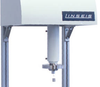
from Linseis Inc.
With the magnetic suspension balance LINSEIS MSB PT 1, gravimetric measurements in a wide temperature and pressure range and under aggressive media can be done. Such a magnetic suspension balance consist of a balance for recording the measurement values, a suspension coupling which carries the... [See More]
- Thermal Analyzer Type: Thermal Gravimetric Analyzer
- Temperature Range: -196 to 2400
- Calorimeter Type: Differential Scanning Calorimeter
- Features: Programmable Heating; Temperature Control; Coupled with a Mass Spectrometer; Coupled with a FTIR Spectrometer