
Differential Scanning Calorimeter (DSC) Calorimeters and Thermal Analyzers
Last Updated: April 1, 2025
Description
A Differential Scanning Calorimeter (DSC) is an analytical instrument used to measure the heat flow associated with phase transitions and chemical reactions in a material as a function of temperature. It provides quantitative data on the heat absorbed or released by a sample, allowing for the determination of specific thermal properties.
Working Principle
The working principle of a DSC involves heating a sample and a reference material at a controlled rate while measuring the difference in heat flow between them. This differential technique allows for the detection of endothermic and exothermic processes, such as melting, crystallization, and sublimation. The DSC is useful because it provides precise measurements of heat flow, which are critical for understanding the thermal behavior of materials. The technique relies on maintaining equivalent temperatures for the sample and reference materials, and any deviation in heat flow is recorded as a function of temperature or time .
Applications
DSC is widely used in the analysis of glasses, where it measures glass transformation and fictive temperatures, as well as crystallization kinetics. It is also employed in determining nucleation rates versus temperature curves in glass science laboratories . Additionally, DSC is used to study dehydration and decomposition processes in various compounds, such as metal carboxylates and hydrates .
Advantages over other Calorimeters and Thermal Analyzers
DSC offers several advantages over other calorimeters and thermal analyzers. It provides a direct measurement of heat flow, which is more precise than methods that only measure temperature differences, such as Differential Thermal Analysis (DTA) . The ability to measure both endothermic and exothermic processes simultaneously makes DSC a versatile tool for thermal analysis .
Limitations
One limitation of DSC is that it requires careful calibration and baseline correction to ensure accurate measurements. The technique may also be limited by the thermal conductivity of the sample, which can affect the accuracy of heat flow measurements .
Considerations
When considering the use of a DSC, it is important to evaluate the initial costs of the instrument, which can be significant. Operating expenses include the cost of consumables and maintenance, which can vary depending on the complexity of the instrument. Durability and accuracy are critical factors, as they affect the reliability of the data obtained. Regular calibration and maintenance are necessary to ensure the instrument's performance remains optimal over time .

from Hitachi High-Tech America
Our DSC (differential scanning calorimeters) are widely used for material characterization; eg melting point, glass transition, crystallization. The NEXTA DSC Series is used both in quality control and R&D across a wide range of industries, including polymers, pharma, chemical, oil and gas, food and... [See More]
- Calorimeter Type: Differential Scanning Calorimeter
- Accuracy: 0.0400
- Temperature Range: 150 to 725
- Response Time: 0.0500
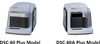
from Shimadzu Scientific Instruments, Inc.
High-Performance Differential Scanning Calorimetry Measurements. Robust heat-flux differential scanning calorimeters, the DSC-60 Plus series finds applications in research and development and quality control environments for characterization of polymers, pharmaceuticals, foods, etc. The DSC-60 Plus... [See More]
- Calorimeter Type: Differential Scanning Calorimeter; Heat-flux Differential Scanning
- Temperature Range: -140 to 600
- Properties Measured: Temperature
- Features: Cooling; Programmable Heating; Temperature Control
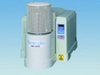
from Rigaku Corporation
A compact furnace features the fastest ever cooling rate. The DSC 8230 cools from 400 ° to 50 ° in less than 4 minutes (with a cooling fan unit). This rapid cooling ability —coupled with the quick gas substitution offered by the compact furnace —leads to a drastic reduction in... [See More]
- Calorimeter Type: Differential Scanning Calorimeter
- Calorimeter Performance Specs: Heat Gain/Loss
- Temperature Range: -150 to 1500
- Features: Cooling; Temperature Control
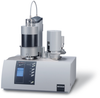
from NETZSCH-Gerätebau GmbH
DSC 404 F1 Pegasus ® - High-Temperature DSC. The new DSC 404 F1 Pegasus ®, High-Temperature Differential Scanning Calorimeter, is designed for the exact determination of specific heat of high-performance materials at high temperatures. Determination of thermodynamic properties of ceramics... [See More]
- Calorimeter Type: Differential Scanning Calorimeter
- Temperature Range: -150 to 2000
- Properties Measured: Thermodynamic Properties of Ceramics and Metallic High Performance Materials
- Features: Temperature Control
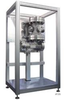
from Linseis Inc.
Thermogravimetry is a technique in which the mass of the sample is monitored against time or temperature while the temperature of the sample, in a specified atmosphere, is programmed. This technique serves the determination of material compositions. Simultaneous TGA-DTA/DSC measures both heat flow... [See More]
- Calorimeter Type: Differential Scanning Calorimeter
- Temperature Range: -170 to 1800
- Thermal Analyzer Type: Thermal Gravimetric Analyzer
- Features: Programmable Heating; Atmosphere Control; Temperature Control

from NETZSCH-Gerätebau GmbH
DSC 404 F3 Pegasus ® - High-Temperature DSC. The DSC 404 F3 Pegasus ®, High-Temperature Differential Scanning Calorimeter, is part of the economical NETZSCH F3-product line, which is specially tailored to the requirements of comparative material characterization and quality control. The DSC... [See More]
- Calorimeter Type: Differential Scanning Calorimeter
- Temperature Range: -150 to 2000
- Properties Measured: Thermodynamic Properties of Ceramics and Metallic
- Features: Temperature Control
from Linseis Inc.
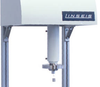
With the magnetic suspension balance LINSEIS MSB PT 1, gravimetric measurements in a wide temperature and pressure range and under aggressive media can be done. Such a magnetic suspension balance consist of a balance for recording the measurement values, a suspension coupling which carries the... [See More]
- Calorimeter Type: Differential Scanning Calorimeter
- Temperature Range: -196 to 2400
- Thermal Analyzer Type: Thermal Gravimetric Analyzer
- Features: Programmable Heating; Temperature Control; Coupled with a Mass Spectrometer; Coupled with a FTIR Spectrometer

from NETZSCH-Gerätebau GmbH
DSC 200 F3 Maia ® - Differential Scanning Calorimeter. The DSC 200 F3 Maia ®, Differential Scanning Calorimeter, combines the advantages of modern technology, high sensitivity and a robust, easy-to-operate work horse. Using liquid nitrogen, the temperature range extends from -170 °C to... [See More]
- Calorimeter Type: Differential Scanning Calorimeter
- Features: Cooling; Atmosphere Control; Temperature Control
- Temperature Range: -170 to 600
- User Interface: Digital
from Linseis Inc.
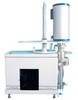
The LINSEIS L81-I (Simultaneous Thermal Analysis) is designed as a top loading Thermobalance, providing excellent drift stability, a robust design and highest TG and DSC/DTA reproducibility. All measuring systems are easily user exchangeable to ensure quick and simple system handling. The broad... [See More]
- Calorimeter Type: Differential Scanning Calorimeter
- Temperature Range: -150 to 1000
- Thermal Analyzer Type: Differential Thermal Analysis; Thermal Gravimetric Analyzer
- Features: Programmable Heating; Atmosphere Control; Temperature Control; Coupled with a Mass Spectrometer (optional feature); Coupled with a FTIR Spectrometer (optional feature)