
Analog Front Panel Calorimeters and Thermal Analyzers
Last Updated: April 1, 2025
Description
Analog Front Panel Calorimeters and Thermal Analyzers are instruments designed to measure the heat of chemical reactions or physical changes as well as heat capacity. These devices provide critical data on thermal properties by quantifying the energy changes associated with temperature variations in a sample.
Working Principle
These instruments operate by detecting and measuring the heat flow associated with thermal transitions in a sample. The principle involves comparing the temperature difference between a sample and a reference under controlled conditions. This allows for the detection of endothermic and exothermic processes, such as phase transitions and chemical reactions, which are crucial for understanding material properties and behaviors.
Applications
Analog Front Panel Calorimeters and Thermal Analyzers are widely used in various industries. In the pharmaceutical industry, they are employed to study the stability and compatibility of drug compounds. In the food industry, these devices help in analyzing the thermal properties of food products, which is essential for quality control and product development. They are also used in the cement industry to monitor the hydration process and in mineralogical research to study phase transitions in minerals.
Advantages over other Calorimeters and Thermal Analyzers
One of the key advantages of these instruments is their ability to provide highly accurate readings by eliminating condensation issues through fully heated sensor assemblies. This ensures that contaminants do not condense and affect the accuracy of the measurements. Additionally, their design allows for fast response times by reducing sample transport delivery times, as sensors can be mounted close to the sample tap points.
Limitations
A limitation of these devices is that they may require frequent calibration to maintain accuracy, especially if experimental conditions change frequently. This can increase the time and effort needed for maintenance and operation.
Considerations
When considering the use of Analog Front Panel Calorimeters and Thermal Analyzers, it is important to factor in the initial costs, which can be significant due to the advanced technology and precision engineering involved. Operating expenses may also be high, particularly if frequent calibrations are necessary. However, the durability and accuracy of these instruments can justify the investment, as they provide reliable data critical for various industrial applications. Maintenance costs should also be considered, as regular servicing may be required to ensure optimal performance.

from NETZSCH-Gerätebau GmbH
ARC ® 244 - Accelerating Rate Calorimeter. The Accelerating Rate Calorimeter 244 (ARC ® 244), formerly known as TIAX ARC 3000, is designed to safely measure the amount and rate of heat release associated with the processing or storage of chemicals. This information is vital in developing and... [See More]
- User Interface: Analog
- Temperature Range: 20 to 500
- Calorimeter Type: Accelerating Rate Calorimeter
- Remote Interface: Computer Interface
from Linseis Inc.
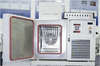
Features. 8 measuring systems operate simultaneously. temperature range -40 °C up to +160 °C. sample dimensions 4 x 10 x 80mm. measuring sensor LVDT. 32 Bit Software running in Microsoft ® operating environment. Description. The Linseis dilatometer L75/120LT was developed to measure the... [See More]
- User Interface: Analog
- Properties Measured: Expansion Of Polymer Samples
- Thermal Analyzer Type: Dilatometer
- Temperature Range: -40 to 160

from NETZSCH-Gerätebau GmbH
More reliable data and a wider range of application due to the fastest tracking rate up to 200 K/min. Patented VariPhi ® technology can realize low phi test even with a small and safe sample size. Effective detection of both exothermic and endothermic transitions and sample Cp can be achieved by... [See More]
- User Interface: Analog
- Temperature Range: 20 to 650
- Calorimeter Type: Accelerating Rate Calorimeter
- Remote Interface: Computer Interface

from Linseis Inc.
Unmatched resolution and absolute accuracy is now possible due to the development of the Linseis Laser Dilatometer of the Pico-series. As the name indicates already the resolution goes up to Picometers (0,3 nm = 300 Picometer). That means resolutions can be obtained which are up to a factor 33,33... [See More]
- User Interface: Analog
- Properties Measured: Expansion
- Thermal Analyzer Type: Dilatometer
- Temperature Range: 20 to 1000

from NETZSCH-Gerätebau GmbH
APTAC ® 264 - Automatic Pressure Tracking Adiabatic Calorimeter. APTAC ® 264 takes the testing of chemical reactivity a step forward by enabling the user to acquire much faster temperature and pressure rise data than did the earlier designs. The instrument can function as: High-performance... [See More]
- User Interface: Analog
- Temperature Range: 20 to 500
- Calorimeter Type: Accelerating Rate Calorimeter
- Features: Temperature Control

from Linseis Inc.
The main application field for the LINSEIS L76 Dilatometer series is the CTE measurement of ceramics, brick, tile, porcelain and building materials. Furthermore it is widely used for quality control purposes in ceramics and in metal industries. Thanks to the fact we started to develop and build... [See More]
- User Interface: Analog
- Properties Measured: CTE, Tg, Length vs Temperature
- Thermal Analyzer Type: Dilatometer
- Temperature Range: 20 to 1600
from NETZSCH-Gerätebau GmbH
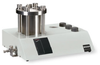
DSC 204 HP Phoenix ® - High-pressure DSC. Numerous physical processes and chemical reactions are influenced by the surrounding gas pressure. In practise it is therefore often necessary to conduct DSC measurements under an increased pressure. With the high-pressure Differential Scanning... [See More]
- User Interface: Analog
- Temperature Range: -150 to 600
- Calorimeter Type: Differential Scanning Calorimeter
- Features: Cooling
from Linseis Inc.
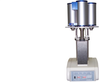
The LINSEIS L75 PT Quattro Dilatometer is a very unique instrument, which was developed for customers which have to deal with a large amount of samples. The Quattro Dilatometer is built up with four separate dilatometer measuring sensors, which can measure simultaneously either four separate samples... [See More]
- User Interface: Analog
- Properties Measured: 3 Differential Measurements
- Thermal Analyzer Type: Dilatometer
- Temperature Range: -180 to 2800