
Analog Meter Calorimeters and Thermal Analyzers
Last Updated: April 1, 2025
Description
Analog Meter Calorimeters and Thermal Analyzers are instruments designed to measure the heat of chemical reactions or physical changes, as well as heat capacity. These devices provide critical data for understanding thermal properties by quantifying the amount of heat involved in various processes.
Working Principle
Calorimetry, the principle behind these devices, involves measuring the heat exchanged in thermodynamic systems. The heat is typically measured in joules, the SI unit for energy, heat, and work. Most calorimetry is conducted at constant pressure, allowing the measured heat to reflect changes in enthalpy. This method is essential for understanding energy exchanges in chemical reactions and physical transformations, making these devices invaluable for scientific and industrial applications.
Applications
Analog Meter Calorimeters and Thermal Analyzers are used in a variety of applications, including the measurement of phase transitions, dehydration, decomposition, and solid-state reactions. They are particularly useful in industries such as pharmaceuticals, where precise thermal analysis is crucial for product development and quality control.
Advantages over other Calorimeters and Thermal Analyzers
While specific advantages of analog meter calorimeters over other types are not detailed in the provided documents, analog devices generally offer robustness due to their simple construction. They are often more cost-effective compared to digital counterparts and can be suitable for both AC and DC circuits, providing versatility in various settings.
Limitations
Analog Meter Calorimeters and Thermal Analyzers may face limitations such as errors due to temperature and frequency variations. Additionally, they might be less precise than digital instruments, which can affect the accuracy of measurements in sensitive applications.
Considerations
When considering the use of Analog Meter Calorimeters and Thermal Analyzers, factors such as initial costs, operating expenses, and maintenance should be evaluated. Analog devices typically have lower initial costs and are durable due to their simple construction. However, they may require more frequent calibration to maintain accuracy, potentially increasing maintenance costs over time.
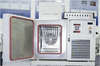
from Linseis Inc.
Features. 8 measuring systems operate simultaneously. temperature range -40 °C up to +160 °C. sample dimensions 4 x 10 x 80mm. measuring sensor LVDT. 32 Bit Software running in Microsoft ® operating environment. Description. The Linseis dilatometer L75/120LT was developed to measure the... [See More]
- Display: Analog; Video
- Properties Measured: Expansion Of Polymer Samples
- Thermal Analyzer Type: Dilatometer
- Temperature Range: -40 to 160

from Linseis Inc.
Unmatched resolution and absolute accuracy is now possible due to the development of the Linseis Laser Dilatometer of the Pico-series. As the name indicates already the resolution goes up to Picometers (0,3 nm = 300 Picometer). That means resolutions can be obtained which are up to a factor 33,33... [See More]
- Display: Analog
- Properties Measured: Expansion
- Thermal Analyzer Type: Dilatometer
- Temperature Range: 20 to 1000
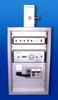
from Linseis Inc.
The Quenching/Deformation Dilatometer L78 RITA is especially suitable for the determination of TTT, CHT and CCT diagrams. The special induction furnace enables heating and cooling speeds in excess of 2500 °C/s. The system complies with ASTM A1033. General Information: This practice is based upon... [See More]
- Display: Analog; Video
- Properties Measured: Rapid Induction Thermal Analysis
- Thermal Analyzer Type: Dilatometer
- Temperature Range: -150 to 2000