
Digital Readout Calorimeters and Thermal Analyzers
Last Updated: April 1, 2025
Description
Digital Readout Calorimeters and Thermal Analyzers are sophisticated instruments designed to measure and analyze the heat flow and thermal properties of materials. These devices provide precise digital readouts of thermal data, allowing for accurate monitoring and recording of temperature changes and heat flow in various samples.
Working Principle
Digital Readout Calorimeters and Thermal Analyzers operate by measuring the heat flow into or out of a sample as it undergoes temperature changes. This is typically achieved through differential techniques, where the heat flow is compared between a sample and a reference under controlled conditions. The digital readout feature allows for continuous monitoring and recording of temperature and heat flow data, which is crucial for understanding the thermal behavior of materials. These instruments are useful because they provide detailed insights into the thermal properties of materials, which are essential for quality control, research, and development in various industries.
Applications
Digital Readout Calorimeters and Thermal Analyzers are used in a wide range of applications. In the pharmaceutical industry, they are employed to study the thermal stability and compatibility of drug compounds. They are also used in materials science to analyze phase transitions, decomposition, and other thermal events in polymers, metals, and ceramics. Additionally, these instruments are valuable in the food industry for assessing the thermal properties of food products, which can impact processing and storage conditions.
Advantages over other Calorimeters and Thermal Analyzers
One of the main advantages of Digital Readout Calorimeters and Thermal Analyzers is their ability to provide precise and continuous digital data, which enhances the accuracy and reliability of thermal measurements. This digital capability allows for better data analysis and interpretation compared to traditional analog systems. Furthermore, the integration of advanced features such as programmable settings and data storage enhances their functionality and ease of use.
Limitations
Despite their advantages, Digital Readout Calorimeters and Thermal Analyzers have limitations. They can be expensive to purchase and maintain, which may be a barrier for smaller laboratories or companies. Additionally, the complexity of these instruments requires skilled operators to ensure accurate measurements and data interpretation. The sensitivity of these devices may also be affected by environmental conditions, necessitating careful calibration and maintenance.
Considerations
When considering the purchase and use of Digital Readout Calorimeters and Thermal Analyzers, it is important to evaluate the initial costs, which can be significant. Operating expenses, including calibration and maintenance, should also be factored into the decision-making process. The durability and accuracy of these instruments are critical for ensuring reliable results, so investing in high-quality equipment and regular maintenance is essential. Replacement and maintenance costs should be anticipated, as these can impact the long-term cost-effectiveness of the instruments.

from Hitachi High-Tech America
Our DSC (differential scanning calorimeters) are widely used for material characterization; eg melting point, glass transition, crystallization. The NEXTA DSC Series is used both in quality control and R&D across a wide range of industries, including polymers, pharma, chemical, oil and gas, food and... [See More]
- Display: Digital
- Temperature Range: 150 to 725
- Calorimeter Type: Differential Scanning Calorimeter
- Accuracy: 0.0400

from Linseis Inc.
The LINSEIS Heat Flow Meter provides a rapid and easy to use instrument to determine the thermal conductivity properties of low thermal conductivity insulation materials as well as all other materials with a high level of accuracy. The instrument is designed per ASTM C518, JIS A1412, ISO 8301 and... [See More]
- Display: Digital
- Properties Measured: Thermal Conductivity, Thermal Resistance
- Thermal Analyzer Type: Thermal Conductivity
- Temperature Range: 0 to 40

from Shimadzu Scientific Instruments, Inc.
The DTG-60 Series features an integrated balance assembly, providing high sensitivity and excellent stability over a wide dynamic mass range. In addition, the built-in cooling fan and low-mass furnace allow very efficient cooling times, increasing sample throughput.Included in the DTG-60 series:... [See More]
- Display: Digital
- Properties Measured: Melting Point, Temperature, Weight
- Thermal Analyzer Type: Differential Thermal Analysis
- Temperature Range: 25 to 1100

from COSA Xentaur Corporation
COSA Xentaur introduces one of the first commercially available portable Optical Gas Calorimeters. After extensive development work, this instrument proudes the fastest spot check response in the industry; T90=15 seconds for Natural Gas and LPG. The new CV PRO ™ Optical Gas Calorimeter is... [See More]
- Display: Digital
- Temperature Range: -10 to 40
- Calorimeter Type: Interferometry Calorimeter
- Response Time: 0.2500

from Hot Disk AB
The Hot Disk TPS 500 S Thermal Constants Analyser combines the flexibility of the powerful TPS 2500 S with the slim design and ease of use characterizing the basic TPS 500. It quickly and accurately measures thermal conductivity (0.03 to 200 W/m/K), thermal diffusivity (0.02 to 100 mm2/s) and... [See More]
- Display: Digital
- Properties Measured: Thermal Diffusivity
- Thermal Analyzer Type: Thermal Conductivity
- Temperature Range: -100 to 300
from Rigaku Corporation
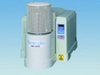
A compact furnace features the fastest ever cooling rate. The DSC 8230 cools from 400 ° to 50 ° in less than 4 minutes (with a cooling fan unit). This rapid cooling ability —coupled with the quick gas substitution offered by the compact furnace —leads to a drastic reduction in... [See More]
- Display: Digital
- Temperature Range: -150 to 1500
- Calorimeter Type: Differential Scanning Calorimeter
- Calorimeter Performance Specs: Heat Gain/Loss
from CSC Scientific Company, Inc.
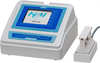
The thermal conductivity of various samples such as block form or sheet in manufacturing, construction, handcraft, soil or food industry is possible to measure by placing a probe on the surface of sample with the uniform temperature. Thermal insulating material of fiber or foamed plastic. Plastic,... [See More]
- Display: Digital
- Remote Interface: Computer Interface
- Thermal Analyzer Type: Thermal Conductivity
from Linseis Inc.
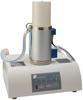
Information of the thermo physical properties of materials and heat transfer optimization of final products is becoming more and more vital for industrial applications. Over the past few decades, the flash method has developed into the most commonly used technique for the measurement of the thermal... [See More]
- Display: Digital
- Properties Measured: Thermal Conductivity And Diffusivity
- Thermal Analyzer Type: Thermal Conductivity
- Temperature Range: -125 to 2800
from Shimadzu Scientific Instruments, Inc.
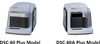
High-Performance Differential Scanning Calorimetry Measurements. Robust heat-flux differential scanning calorimeters, the DSC-60 Plus series finds applications in research and development and quality control environments for characterization of polymers, pharmaceuticals, foods, etc. The DSC-60 Plus... [See More]
- Display: Digital
- Properties Measured: Temperature
- Calorimeter Type: Differential Scanning Calorimeter; Heat-flux Differential Scanning
- Temperature Range: -140 to 600

from Hot Disk AB
The affordable Hot Disk TPS 1500 is the ideal instrument for testing and measuring thermal conductivity (0.01 to 400 W/m/K) of building materials, insulation materials or any other type of large bulk samples. The TPS 1500 shares the sterling quality, robustness and operative simplicity of the... [See More]
- Display: Digital
- Properties Measured: Thermal Diffusivity
- Thermal Analyzer Type: Thermal Conductivity
- Temperature Range: -253 to 1000

from Rigaku Corporation
The design emphasis for the Thermo Plus TG-DTA series is on compactness and functionality. The basic unit is modular in design to allow flexible installation in various environments. The balance mechanism employs a triple-coil system for more precise differential compensation. These expert systems... [See More]
- Display: Digital
- Temperature Range: ? to 1500
- Thermal Analyzer Type: Differential Thermal Analysis; Thermal Gravimetric Analyzer
- Thermal Analyzer Performance Specs: Weight
from Linseis Inc.
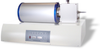
The LSR - 3 can simultaneous measure both Seebeck coefficient and electric resistance (Resistivity). Prism and cylindrical samples with a length between 6 to 22mm can be analyzed. Wires and Foils can be analyzed with a unique measurement adapter. Three different exchangeable furnaces cover the... [See More]
- Display: Digital
- Properties Measured: Seebeck Coefficient/Electric Resistance
- Thermal Analyzer Type: Seebeck Coefficient/Electric Resistance
- Temperature Range: -100 to 1100

from Shimadzu Scientific Instruments, Inc.
High-Temperature Calorimetry Measurements. Use the DTA-50 when calorimetry measurements above the DSC-60 Plus series temperature limit of 600 °C are required, such as for characterizing glass or ceramics. The DTA-50 has a range of 0.2 to 1,000 µV and a maximum temperature of 1,500 °C. [See More]
- Display: Digital
- Temperature Range: ? to 1500
- Thermal Analyzer Type: Differential Thermal Analysis
- Features: Programmable Heating
from Hot Disk AB
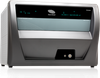
The Hot Disk TPS 2500 S is the flagship instrument in the system portfolio of Hot Disk AB. This general-purpose R &D instrument is designed for precision analysis of thermal transport properties - including thermal conductivity (0.005 to 1800 W/m/K), thermal diffusivity (0.1 to 1200 mm2/s) and... [See More]
- Display: Digital
- Properties Measured: Thermal Diffusivity
- Thermal Analyzer Type: Thermal Conductivity
- Temperature Range: -253 to 1000

from Rigaku Corporation
For characterization of catalyst material, it is needed to examine the adsorption state by detecting components to be desorbed when a reaction gas is circulated through a sample with heat applied. Required also is to check the oxidation and reduction characteristics of the sample and look into the... [See More]
- Display: Digital
- Thermal Analyzer Performance Specs: Thermal Stability
- Thermal Analyzer Type: Temp. Programmed Desorption Analyzer
- User Interface: Digital
from Linseis Inc.
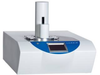
NEW Linseis TGA PT1000 for thermogravimetric applications is a toploading Thermobalance, which offers a highly userfriendly design. Even at a sample weight of up to 5g the tara is done electronically. The specially designed furnaces allow fast heating and cooling rates from 0.01 up to 150 °C/min... [See More]
- Display: Digital
- Temperature Range: 20 to 1100
- Thermal Analyzer Type: Thermal Gravimetric Analyzer
- Features: Cooling; Programmable Heating; Atmosphere Control; Temperature Control; Coupled with a Mass Spectrometer (optional feature); Coupled with a FTIR Spectrometer (optional feature)

from Shimadzu Scientific Instruments, Inc.
These analyzers feature an advanced thermo-balance design for outstanding vibration resistance and stable, high-sensitivity measurements. With a weight readability of 0.1 µg, the TGA-50 series can quantify the smallest of weight changes, while a wide variety of sample cells is available to satisfy a... [See More]
- Display: Digital
- Properties Measured: Weight
- Thermal Analyzer Type: Thermal Gravimetric Analyzer
- Temperature Range: 25 to 1000

from Rigaku Corporation
Highly sensitive gas detection and accurate measurement of the sample temperature can be performed by this analytical system. The evolved gas when a sample is heated in a high vacuum is measured by mass spectrometry (MS). Details can be learned through identification of what was adsorbed to the... [See More]
- Display: Digital
- Thermal Analyzer Performance Specs: Thermal Stability
- Thermal Analyzer Type: Temp. Programmed Desorption Analyzer
- Features: Coupled with a Mass Spectrometer