
Thermal Gravimetric Analyzer (TGA) Calorimeters and Thermal Analyzers
Last Updated: April 1, 2025
Description
A Thermal Gravimetric Analyzer (TGA) is a sophisticated instrument designed to measure changes in the mass of a sample as it is subjected to controlled temperature variations. This process is conducted in a controlled atmosphere, allowing for precise monitoring of mass changes due to thermal events such as decomposition, oxidation, or evaporation.
Working Principle
The TGA operates by placing a sample in a small pan connected to a highly sensitive microbalance. As the temperature is gradually increased, the sample undergoes various thermal processes that result in a change in mass. The microbalance continuously records these mass changes as a function of temperature. This data is crucial for understanding the thermal stability and composition of materials. The utility of TGA lies in its ability to provide detailed insights into the thermal and oxidative stability of materials, as well as their compositional analysis.
Applications
Thermal Gravimetric Analyzers are widely used in various fields for specific applications. For instance, in the polymer industry, TGA is employed to determine the thermal stability and composition of polymers. In the pharmaceutical sector, it helps in analyzing the thermal decomposition of drugs. Additionally, TGA is used in the study of materials like ceramics and metals to assess their thermal behavior and stability.
Advantages over other Calorimeters and Thermal Analyzers
TGA offers distinct advantages over other types of calorimeters and thermal analyzers. It provides direct measurement of mass changes, which is crucial for compositional analysis and understanding thermal stability. Unlike differential thermal analyzers, which measure temperature differences, TGA directly correlates mass loss with temperature, offering more precise insights into decomposition and evaporation processes.
Limitations
One of the limitations of TGA is its inability to provide information on the heat flow associated with thermal events, which is something differential scanning calorimetry (DSC) can offer. Additionally, TGA requires careful calibration and maintenance to ensure accuracy, and the results can be influenced by the sample's physical form and the atmosphere in which the analysis is conducted.
Considerations
When considering the use of a TGA, several factors should be taken into account. The initial cost of acquiring a TGA can be significant, and ongoing operating expenses include maintenance and calibration to ensure accuracy. The durability of the instrument depends on the quality of its components and the frequency of use. Accuracy is paramount, and regular calibration is necessary to maintain it. Replacement and maintenance costs can vary, but they are essential to ensure the longevity and reliability of the instrument.

from Shimadzu Scientific Instruments, Inc.
These analyzers feature an advanced thermo-balance design for outstanding vibration resistance and stable, high-sensitivity measurements. With a weight readability of 0.1 µg, the TGA-50 series can quantify the smallest of weight changes, while a wide variety of sample cells is available to satisfy a... [See More]
- Thermal Analyzer Type: Thermal Gravimetric Analyzer
- Temperature Range: 25 to 1000
- Properties Measured: Weight
- Accuracy: 1.00E-3

from LECO Corporation
Thermogravimetric analysis is the basic analysis in many industries to determine material weight loss as a function of temperature in a controlled environment. To meet the needs of these industries, the TGA701 Thermogravimetric Analyzer was designed for increased reliability and functionality. [See More]
- Thermal Analyzer Type: Thermal Gravimetric Analyzer
- Display: None
- Remote Interface: Computer Interface; Application Software Included.

from NETZSCH-Gerätebau GmbH
TG 449 F1 Jupiter ® - Thermo-Nanobalance (TGA - Thermogravimetric Analyzer). The TG 449 F1 Jupiter ® is number one among thermo-nanobalances because of the concept of a vacuum-tight instrument design and the successful combination of the highest resolution and unsurpassed long-term... [See More]
- Thermal Analyzer Type: Thermal Gravimetric Analyzer
- Temperature Range: -150 to 2400
- Properties Measured: Thermal Stability and Composition
- Features: Cooling; Temperature Control

from Rigaku Corporation
The design emphasis for the Thermo Plus TG-DTA series is on compactness and functionality. The basic unit is modular in design to allow flexible installation in various environments. The balance mechanism employs a triple-coil system for more precise differential compensation. These expert systems... [See More]
- Thermal Analyzer Type: Differential Thermal Analysis; Thermal Gravimetric Analyzer
- Thermal Analyzer Performance Specs: Weight
- Temperature Range: ? to 1500
- Features: Cooling; Temperature Control

from Linseis Inc.
The Linseis TGA PT1600 for thermogravimetric applications is a toploading Thermobalance, which offers a highly userfriendly design. Even at a sample weight of up to 5/25g the tara is done electronically. The specially designed furnaces allow fast heating and cooling rates as well as a highly precise... [See More]
- Thermal Analyzer Type: Thermal Gravimetric Analyzer
- Features: Programmable Heating; Atmosphere Control; Temperature Control; Coupled with a Mass Spectrometer; Coupled with a FTIR Spectrometer
- Temperature Range: -150 to 2400
- Remote Interface: Computer Interface; Special requirements such as modem, RF transmitter, etc.; Application Software Included.

from Hitachi High-Tech America
The Hitachi NEXTA STA (simultaneous thermogravimetric analyzer) measures DSC and TGA simultaneously in a single unit. STA is used for evaluating thermal resistance, decomposition temperature, and quantitative analysis of components by TGA analysis data, and is also used for DSC testing, Cp testing... [See More]
- Thermal Analyzer Type: Thermal Gravimetric Analyzer
- Remote Interface: Computer Interface; Application Software Included. (optional feature)
- Temperature Range: 25 to 1100

from NETZSCH-Gerätebau GmbH
TG 209 F3 Tarsus - Thermo-Microbalance (TGA - Thermogravimetric Analyzer). Together with the DSC 200 F3 Maia ®, the new thermo-microbalance, TG 209 F3 Tarsus ®, represents a cost-effective overall concept, tailored not only to the quality assurance of polymers, but also to routine... [See More]
- Thermal Analyzer Type: Thermal Gravimetric Analyzer
- Temperature Range: 20 to 1000
- Properties Measured: Thermal Stability and Composition
- Features: Cooling; Temperature Control

from Rigaku Corporation
This unique hybrid evolved gas analyzer system makes it practical to obtain information on not only a change of mass of a substance taking place at time of heating but also a chemical reaction difficult to decide on by traditional thermal analysis alone. Moreover, this information set can be... [See More]
- Thermal Analyzer Type: Differential Thermal Analysis; Thermal Gravimetric Analyzer
- Features: Coupled with a Mass Spectrometer; Coupled with a Gas Chromatograph
- Thermal Analyzer Performance Specs: Thermal Stability
- Remote Interface: Computer Interface; Application Software Included.
from Linseis Inc.
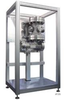
Thermogravimetry is a technique in which the mass of the sample is monitored against time or temperature while the temperature of the sample, in a specified atmosphere, is programmed. This technique serves the determination of material compositions. Simultaneous TGA-DTA/DSC measures both heat flow... [See More]
- Thermal Analyzer Type: Thermal Gravimetric Analyzer
- Temperature Range: -170 to 1800
- Calorimeter Type: Differential Scanning Calorimeter
- Features: Programmable Heating; Atmosphere Control; Temperature Control

from Hitachi High-Tech America
The Hitachi NEXTA STA (simultaneous thermogravimetric analyzer) measures DSC and TGA simultaneously in a single unit. STA is used for evaluating thermal resistance, decomposition temperature, and quantitative analysis of components by TGA analysis data, and is also used for DSC testing, Cp testing... [See More]
- Thermal Analyzer Type: Thermal Gravimetric Analyzer
- Remote Interface: Computer Interface; Application Software Included. (optional feature)
- Temperature Range: 25 to 1000

from NETZSCH-Gerätebau GmbH
TG 209 F1 Libra ® - Thermo-Microbalance (Thermogravimetric Analyzer). Faster and more comprehensive characterization of materials. Based on over 50 years of experience in thermogravimetry, NETZSCH has developed the thermobalance TG 209 F1 Libra ®. This instrument allows for analyses to be... [See More]
- Thermal Analyzer Type: Thermal Gravimetric Analyzer
- Temperature Range: 10 to 1100
- Properties Measured: Thermal Stability and Composition
- Features: Cooling; Temperature Control
from Linseis Inc.
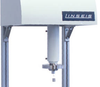
With the magnetic suspension balance LINSEIS MSB PT 1, gravimetric measurements in a wide temperature and pressure range and under aggressive media can be done. Such a magnetic suspension balance consist of a balance for recording the measurement values, a suspension coupling which carries the... [See More]
- Thermal Analyzer Type: Thermal Gravimetric Analyzer
- Temperature Range: -196 to 2400
- Calorimeter Type: Differential Scanning Calorimeter
- Features: Programmable Heating; Temperature Control; Coupled with a Mass Spectrometer; Coupled with a FTIR Spectrometer