
Atmosphere Control Calorimeters and Thermal Analyzers
Last Updated: April 1, 2025
Description
Atmosphere Control Calorimeters and Thermal Analyzers are specialized instruments designed to measure specific physical properties of materials as a function of temperature. These devices are capable of analyzing the energy absorbed or evolved during phase transitions or chemical reactions, and they can assess physical changes resulting from temperature variations. They are equipped to operate in various environments, including vacuum, inert, or controlled gas compositions, and can handle a wide range of temperatures.
Working Principle
The working principle of these instruments involves measuring the energy changes associated with phase transitions or chemical reactions. For instance, differential thermal analysis measures the temperature difference between a sample and a reference as heat is applied, which is sensitive to endothermic and exothermic processes. These devices often use infrared or specific gravity analysis to determine the composition of gases, which is crucial for accurate measurements. The ability to control the atmosphere allows for precise analysis of materials under specific conditions, making these instruments highly useful for understanding material properties and behaviors.
Applications
Atmosphere Control Calorimeters and Thermal Analyzers are used in a variety of applications. They are essential in environmental measurements, where they can determine vapor pressure, thermal stability, and flammability. In compositional analysis, they help in creating phase diagrams and analyzing polymer systems. These instruments are also crucial in product reliability assessments, providing data on heat capacity, polymer cures, and glass transitions. Additionally, they are used in chemical reaction studies to follow heats of reaction and other dynamic properties of materials.
Advantages over other Calorimeters and Thermal Analyzers
These instruments offer several advantages over other types of calorimeters and thermal analyzers. For example, the use of fully heated sensor assemblies prevents condensation, which can lead to inaccurate readings due to line clogging or corrosion. This design ensures high accuracy and fast response times by reducing sample transport delivery times. Furthermore, their ability to operate in various controlled atmospheres allows for more precise and versatile measurements.
Limitations
One limitation of these instruments is their sensitivity to temperature conditions. For instance, lower-priced calorimeters may require a temperature-controlled shelter, which can be costly. Additionally, some models may not measure certain gases, such as hydrogen, which is critical for accurate reporting of the net heating value of vent gases.
Considerations
When considering the purchase and operation of Atmosphere Control Calorimeters and Thermal Analyzers, several factors should be taken into account. Initial costs can vary significantly depending on the model and its capabilities. Operating expenses may include the need for a temperature-controlled environment for certain models. Durability and accuracy are generally high, but maintenance costs can be a factor, especially if the instruments are used in harsh environments. Replacement and maintenance costs should also be considered, as these can impact the long-term cost-effectiveness of the instruments.

from Shimadzu Scientific Instruments, Inc.
The DTG-60 Series features an integrated balance assembly, providing high sensitivity and excellent stability over a wide dynamic mass range. In addition, the built-in cooling fan and low-mass furnace allow very efficient cooling times, increasing sample throughput.Included in the DTG-60 series:... [See More]
- Thermal Analyzer Type: Differential Thermal Analysis
- Temperature Range: 25 to 1100
- Properties Measured: Melting Point, Temperature, Weight
- Accuracy: 1.00E-3

from NETZSCH-Gerätebau GmbH
DIL 402 CD - Vacuum-tight, horizontal pushrod dilatometer. Are higher sample throughput, direct comparison of samples, and online calibration of expansion measurements important requirements for you? With the new dilatometer DIL 402 CD we handle these tasks perfectly with our unique, new instrument... [See More]
- Thermal Analyzer Type: Dilatometer
- Temperature Range: -180 to 2000
- Properties Measured: Thermal Expansion Measurements
- Features: Cooling; Atmosphere Control; Temperature Control

from Hitachi High-Tech America
The Hitachi TMA (Thermo mechanical Analyzer) is used for evaluating expansion or shrinkage of samples across a wide temperature range. These parameters are essential to design engineers, and our TMA7100 & TMA7300 analyzers are also used for quality assurance or outgoing inspection to ensure a... [See More]
- Thermal Analyzer Type: Dynamic Mechanical Analyzer (optional feature); Thermal Mechanical Analyzer
- Features: Cooling; Atmosphere Control
- Temperature Range: -170 to 600
- Remote Interface: Computer Interface; Application Software Included.
from Linseis Inc.
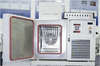
Features. 8 measuring systems operate simultaneously. temperature range -40 °C up to +160 °C. sample dimensions 4 x 10 x 80mm. measuring sensor LVDT. 32 Bit Software running in Microsoft ® operating environment. Description. The Linseis dilatometer L75/120LT was developed to measure the... [See More]
- Thermal Analyzer Type: Dilatometer
- Temperature Range: -40 to 160
- Properties Measured: Expansion Of Polymer Samples
- Thermal Analyzer Performance Specs: Samples Length: 80-100mm

from NETZSCH-Gerätebau GmbH
DIL 402 C - Vacuum-tight, horizontal pushrod dilatometer. When it comes to determination of the linear thermal expansion in solids, liquids, powders and pastes as well as ceramic fibers, the DIL 402 C vacuum-tight pushrod dilatometer leaves no measurement problem unsolved. The perfect design of the... [See More]
- Thermal Analyzer Type: Dilatometer
- Temperature Range: -180 to 2000
- Properties Measured: Thermal Expansion Measurements
- Features: Cooling; Atmosphere Control; Temperature Control

from Linseis Inc.
The Differential Thermal Analysis is the most common thermal analysis method due to its wide range of information provided. The Linseis high temperature DTA PT 1600 is designed to deliver highest calorimetric sensitivity, short time constants and a condensation free sample chamber. These features... [See More]
- Thermal Analyzer Type: Differential Thermal Analysis
- Features: Cooling (optional feature); Programmable Heating; Atmosphere Control; Temperature Control; Coupled with a Mass Spectrometer; Coupled with a FTIR Spectrometer
- Temperature Range: -150 to 2400
- Remote Interface: Computer Interface; Special requirements such as modem, RF transmitter, etc.; Application Software Included.

from NETZSCH-Gerätebau GmbH
DIL 402 PC - Horizontal pushrod dilatometer. The newly developed DIL 402 PC dilatometer combines easy operation, high adaptability to different applications and outstanding performance in one instrument. The optimized design of the measurement system with inductive transducer offers a high degree of... [See More]
- Thermal Analyzer Type: Dilatometer
- Temperature Range: -180 to 2800
- Properties Measured: Thermal Expansion Measurements
- Features: Cooling; Atmosphere Control; Temperature Control

from Linseis Inc.
The Linseis TGA PT1600 for thermogravimetric applications is a toploading Thermobalance, which offers a highly userfriendly design. Even at a sample weight of up to 5/25g the tara is done electronically. The specially designed furnaces allow fast heating and cooling rates as well as a highly precise... [See More]
- Thermal Analyzer Type: Thermal Gravimetric Analyzer
- Features: Programmable Heating; Atmosphere Control; Temperature Control; Coupled with a Mass Spectrometer; Coupled with a FTIR Spectrometer
- Temperature Range: -150 to 2400
- Remote Interface: Computer Interface; Special requirements such as modem, RF transmitter, etc.; Application Software Included.

from NETZSCH-Gerätebau GmbH
DIL 402 E/7 Pyro - Vacuum-tight, horizontal pushrod dilatometer. The DIL 402 E dilatometer can be operated to 2400 °C or 2800 °C with the appropriate graphite furnace; optical pyrometers are applied for temperature measurement and control. In this mode, high-temperature resistant samples are... [See More]
- Thermal Analyzer Type: Dilatometer
- Temperature Range: -180 to 2800
- Properties Measured: Thermal Expansion Measurements
- Features: Cooling; Atmosphere Control; Temperature Control

from Linseis Inc.
Unmatched resolution and absolute accuracy is now possible due to the development of the Linseis Laser Dilatometer of the Pico-series. As the name indicates already the resolution goes up to Picometers (0,3 nm = 300 Picometer). That means resolutions can be obtained which are up to a factor 33,33... [See More]
- Thermal Analyzer Type: Dilatometer
- Temperature Range: 20 to 1000
- Properties Measured: Expansion
- Thermal Analyzer Performance Specs: Non Contact Measurement, Theoretically an Indefinite Resolution

from NETZSCH-Gerätebau GmbH
DSC 200 F3 Maia ® - Differential Scanning Calorimeter. The DSC 200 F3 Maia ®, Differential Scanning Calorimeter, combines the advantages of modern technology, high sensitivity and a robust, easy-to-operate work horse. Using liquid nitrogen, the temperature range extends from -170 °C to... [See More]
- Calorimeter Type: Differential Scanning Calorimeter
- Features: Cooling; Atmosphere Control; Temperature Control
- Temperature Range: -170 to 600
- User Interface: Digital

from Linseis Inc.
The Linseis high-pressure dilatometer L75/HP enables completely new applications in thermal analysis. The system can measure expansions (length changes) in the temperature range from RT up to 1100/1400/1800 °C and in the pressure range up to 100/150 bar. This device is the world's only available... [See More]
- Thermal Analyzer Type: Dilatometer
- Thermal Analyzer Performance Specs: Capable of Measurements Up to 1800C and 150 bar
- Temperature Range: 20 to 1800
- Features: Programmable Heating; Atmosphere Control; Temperature Control
from Linseis Inc.
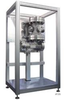
Thermogravimetry is a technique in which the mass of the sample is monitored against time or temperature while the temperature of the sample, in a specified atmosphere, is programmed. This technique serves the determination of material compositions. Simultaneous TGA-DTA/DSC measures both heat flow... [See More]
- Thermal Analyzer Type: Thermal Gravimetric Analyzer
- Temperature Range: -170 to 1800
- Calorimeter Type: Differential Scanning Calorimeter
- Features: Programmable Heating; Atmosphere Control; Temperature Control