
Optical Linear Encoders
Last Updated: April 1, 2025
Description
Optical linear encoders are devices that provide precise position information by detecting the position of a scale with precision graduations. These encoders are designed to deliver highly accurate feedback on position, speed, and direction, which is crucial for motion control in various industrial applications.
Working Principle
Optical linear encoders operate by sensing position from precision graduations, or position codes, etched on a linear scale. The system typically includes a light source, a light detector, a code wheel or scale, and a signal processor. The optical sensors detect the graduations on the scale, and this information is processed to provide real-time feedback on the position. The non-contacting nature of optical encoders, which use optical components instead of mechanical brushes or wipers, often results in longer life and higher reliability. This makes them particularly useful for applications requiring high precision and durability.
Applications
Optical linear encoders are used in a wide range of applications where precise motion control is essential. Specific examples include CNC machines, where they ensure accurate tool positioning, and manufacturing equipment, where they help maintain precise control over production processes. They are also employed in spacecraft for navigation and control, as well as in food production machinery to ensure consistent product quality.
Advantages over other Linear Encoders
One of the primary advantages of optical linear encoders over other types is their non-contacting design, which typically results in a longer lifespan and reduced maintenance needs. The use of optical components allows for high precision and accuracy, which is crucial in applications requiring exact position feedback. Additionally, optical encoders can provide highly selectable levels of real-time feedback, making them adaptable to both simple and complex applications.
Limitations
A significant limitation of optical linear encoders is their sensitivity to environmental conditions, such as temperature changes, which can affect the accuracy due to the temperature-sensitive coefficient of expansion of the scale materials. This can limit their length and the environments in which they can be effectively used.
Considerations
When considering optical linear encoders, it is important to evaluate initial costs, which can be higher due to the precision components involved. Operating expenses may be lower compared to contacting types due to reduced maintenance needs. Durability is generally high, but accuracy can be affected by environmental factors, necessitating careful consideration of the operating environment. Replacement and maintenance costs are typically lower due to the non-contacting nature of the encoders, which reduces wear and tear.
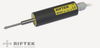
from RIFTEK EUROPE Sp. z.o.o.
Wide temperature range. IP57. Absolute Linear Position Sensors (Absolute Linear Encoders) are designed for measuring and checking displacements, dimensions, run-outs, surface profiles and deformations of engineered objects. Riftek ’s absolute linear encoder series includes two models: RF251... [See More]
- Linear Encoder Technology: Optical
- Resolution: 1.00E-4 to 0.0100
- Measurement Range: 0.1181 to 0.9843
- Operating Temperature: -40 to 122

from Gurley Precision Instruments
The Model LA24 Absolute Linear Encoder offers measuring lengths up to 3240mm, SSI or BiSS serial interfaces and is accurate to ±3 μm/m. [See More]
- Linear Encoder Technology: Optical
- Resolution: 1.00E-4 to 1.00E-3
- Measurement Range: 128
- Linear Encoder Speed: 2000

from Renishaw
An enclosed optical encoder houses the encoder's electronics and optics within a sealed unit that is attached to a readhead body. Both the sealed optical unit and the encoder's scale are further protected within a sealed enclosure. This design provides high resistance to the ingress of liquids and... [See More]
- Linear Encoder Technology: Optical

from Ametek Solartron Metrology
Solartron Metrology linear encoders are highly accurate optical gauges designed for use in applications where consistent sub-micron measurement is required. Accuracy is maintained along the entire measurement range. The Linear Encoders are available with both the iBox for TTL output and Orbit ®... [See More]
- Linear Encoder Technology: Optical
- Accuracy: 0.4000
- Measurement Range: 0.4724 to 0.9843
- Resolution: 5.00E-5
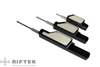
from RIFTEK EUROPE Sp. z.o.o.
Built display option. Batteries powered. Absolute Linear Position Sensors (Absolute Linear Encoders) are designed for measuring and checking displacements, dimensions, run-outs, surface profiles and deformations of engineered objects. Riftek ’s absolute linear encoder series includes two... [See More]
- Linear Encoder Technology: Optical
- Resolution: 1.00E-4 to 0.0100
- Measurement Range: 0.5906 to 2.17
- Operating Temperature: 14 to 122

from Gurley Precision Instruments
The Model LR18 Incremental Linear Encoder offers measuring lengths up to 2040mm and is accurate to ±3 μm/m. [See More]
- Linear Encoder Technology: Optical
- Resolution: 1.00E-4 to 0.0050
- Measurement Range: 80.32
- Linear Encoder Speed: 1000

from Renishaw
An optical encoder is an electromechanical device which produces an electrical signal output proportional to the linear displacement of a linear guide or the angular position of an input shaft. Open encoders are exposed and feature no external integrated enclosure. The advantages of open optical... [See More]
- Linear Encoder Technology: Optical
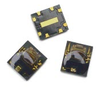
from Broadcom Inc.
The AEDR-850x encoder is the smallest 3 channel optical encoder in the world with digital outputs employing reflective technology for motion control purposes. The encoder is designed to operate over -20 ° C to 85 ° C temperature range and therefore is suitable for both commercial and... [See More]
- Linear Encoder Technology: Optical
- Encoder Reading: Incremental
- Operating Temperature: -4 to 185
- Incremental Encoder Signal: Pulse & Direction
from RSF Electronics, Inc.
Compact highly integrated design, extremely flat design, high resolution [See More]
- Linear Encoder Technology: Optical
- Linear Encoder Speed: 8000
- Resolution: 1.00E-4
- Operating Temperature: 32 to 131
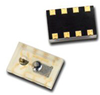
from Broadcom Inc.
The AEDR-8320 series is one of the smallest optical encoder employing reflective technology for motion control purposes. The encoder combines an emitter and a detector in a single surface mount leadless package. When used with a codewheel or linear codestrip, the encoder translates rotary or linear... [See More]
- Linear Encoder Technology: Optical
- Operating Temperature: 14 to 158
- Accuracy: 5 to 12.5
- Encoder Reading: Incremental

from Broadcom Inc.
The AEDR-8400 series is the smallest optical encoder employing reflective technology for motion control purposes. The encoder combines an emitter and a detector in a single surface mount leadless package. When used with a codewheel or linear codestrip, the encoder translates rotary or linear motion... [See More]
- Linear Encoder Technology: Optical
- Encoder Reading: Incremental
- Operating Temperature: -4 to 185
- Incremental Encoder Signal: Digital

from Broadcom Inc.
The HEDS-9700 series is a high performance, low cost, optical incremental encoder module. When operated in conjunction with either a codewheel or codestrip, this module detects rotary or linear position. The module consists of a lensed LED source and a detector IC enclosed in a small C-shaped... [See More]
- Linear Encoder Technology: Optical
- Operating Temperature: 59 to 113
- Accuracy: 0.0 to 12
- Encoder Reading: Incremental