
Four Color Sensors
Description
Four Color Sensors are devices designed to detect and differentiate between various colors by analyzing the light reflected from an object. They are capable of recognizing multiple colors and shades, providing precise color identification and differentiation.
Working Principle
Four Color Sensors operate by shining a light onto the object being monitored and measuring the reflected light. This reflected light is then refracted into its spectral components, similar to how the human eye perceives color. The sensors often use white light LEDs as a light source, and the reflected spectrum is analyzed to determine the color. This method allows for accurate color recognition, making these sensors useful for tasks requiring precise color differentiation.
Applications
Four Color Sensors are widely used in applications such as true color recognition and color mark detection. In true color recognition, they can be employed in sorting or matching modes, where they activate an output when an object matches a set color or is identical to a stored color within a tolerance. These sensors are also used in quality control processes in industries like plastics production, where precise color matching is crucial for product consistency.
Advantages over other Color Sensors
Four Color Sensors offer enhanced accuracy in color recognition due to their ability to refract light into its spectral components. This allows for more precise differentiation between colors and shades compared to simpler color sensors that may only detect basic color changes. Their use of white light LEDs and advanced filtering techniques provides a higher level of detail in color detection.
Limitations
One limitation of Four Color Sensors is their dependency on consistent lighting conditions. Variations in ambient light can affect the accuracy of color detection, requiring controlled environments for optimal performance. Additionally, these sensors may have difficulty distinguishing colors on highly reflective or transparent surfaces.
Considerations
When considering Four Color Sensors, it is important to evaluate initial costs, which can be higher due to their advanced technology and precision capabilities. Operating expenses may include the need for controlled lighting environments to ensure accuracy. Durability is generally high, but regular maintenance and calibration may be necessary to maintain performance. Replacement and maintenance costs should also be factored into the overall investment, as these can vary depending on the specific application and usage conditions.
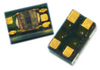
from Capella Microsystems, Inc.
Color Sensor. Color Sensor. Capella's Color Sensor (RGB sensor, RGBS) is an integrated RGB light sensing solution that can report both ambient Lux and Color Temperature. It incorporates photodiodes, amplifiers and analog/digital circuits into a single chip by a CMOS process. Adoption of Capella... [See More]
- Number Of Colors Detected: 4
- Color Types Detected: RGB (Visible)
- Application Type: True Color Recognition
- Input Voltage: DC input; 2.5V to 3.6V | 2.7V to 5.5V

from Baumer Ltd.
The sensing distance (Sn) of the capacitive sensor may be adjusted by means of a inbuilt potentiometer. [See More]
- Number Of Colors Detected: 4
- Color Types Detected: RGB (Visible)
- Application Type: True Color Recognition
- Sensing Range: 40

from EMX Industries, Inc.
Verify the presence of targets that can be differentiated by color, faster and with greater control. A ColorMax-1000 ™ color sensor lets your machine see up to 15 colors and RGB intensity. What's more, innovative technology improves sensitivity and speed, so you can maximize the pace of... [See More]
- Number Of Colors Detected: 4
- Color Types Detected: RGB (Visible)
- Application Type: True Color Recognition; Color Mark Detection; Color Verification
- Sensing Range: 50
from Optex FA
Palm size All-In-One color vision camera 16 outputs (serial) [See More]
- Number Of Colors Detected: 1; 2; 3; 4; 16
- Color Types Detected: RGB (Visible)
- Application Type: True Color Recognition; Color Sorting / Pattern Match
- Sensing Range: 240

from CARLO GAVAZZI Automation Components
The Colour Sensor is a fibre optic amplifier made specifically for recognition of 1 or 1 to 4 colours. Teaching of the colours is easily performed by means of the “Teach-in ” function. Each colour has a separate output which can be delayed up to 5 sec by means of the built-in timer. The... [See More]
- Number Of Colors Detected: 4
- Color Types Detected: RGB (Visible)
- Application Type: True Color Recognition
- Sensing Range: 60

from Banner Engineering Corp.
Overview. Detects the most difficult color mark contrasts, including 20% yellow on white. Features two lens positions and a choice of sensing image orientations. Available with a green, blue, red or white LED. Offers easy push-button setup with remote programming capability for R55 Expert models. [See More]
- Number Of Colors Detected: 4
- Color Types Detected: RGB (Visible)
- Application Type: Color Mark Detection
- Light Source: LEDs

from Banner Engineering Corp.
Delivers outstanding color contrast sensitivity. Reliably detects 16 levels of grayscale at up to 10,000 actuations per second. Available in two fiber types: economical plastic for repeated flexing and glass for harsh conditions. Offers choice of models with an infrared (glass only) or visible... [See More]
- Number Of Colors Detected: 4
- Color Types Detected: RGB (Visible)
- Application Type: Color Mark Detection
- Light Source: Fiber Optic