
Selectable Output Options Color Sensors
Description
Selectable Output Options Color Sensors are devices designed to detect and differentiate colors by analyzing the light reflected from objects. These sensors are capable of distinguishing between various colors and shades, providing output signals based on the detected color. They are equipped with features that allow users to select different output options, enhancing their versatility in various applications.
Working Principle
Color sensors operate by shining light onto an object and measuring the reflected light. The reflected light is then refracted into its spectral components, similar to how the human eye perceives color. This process involves using filters that allow only specific parts of the spectrum to pass through. The sensors typically use a white light LED as the illumination source, which is directed onto the object via fiber optics. By analyzing the reflected spectrum, the sensors can accurately recognize and measure colors, making them useful for tasks that require precise color differentiation.
Applications
Color sensors are widely used in applications such as true color recognition and color mark detection. In true color recognition, they are employed to "see" different colors or distinguish between shades, which is crucial in sorting or matching tasks. For example, in the production process, they can ensure the correct color shade is maintained across numerous batches, which is vital for quality control. Additionally, they are used to monitor the presence of adhesive beading, sort parts, or determine active ingredients in various manufacturing processes.
Advantages over other Color Sensors
Color sensors offer more precision than conventional switching sensors, making them a cost-effective solution for applications requiring high accuracy. Their ability to detect and measure colors with greater precision allows for improved quality control and process monitoring, which can lead to better product consistency and reduced waste.
Limitations
One limitation of color sensors is their dependency on the illumination source. The accuracy of color detection can be affected by changes in lighting conditions, which may require calibration or adjustment to maintain performance. Additionally, the sensors may struggle with detecting colors on highly reflective or transparent surfaces, which can lead to inaccuracies.
Considerations
When considering the use of selectable output options color sensors, it is important to evaluate factors such as initial costs, operating expenses, and maintenance requirements. While these sensors can offer high accuracy and durability, they may require regular calibration to ensure consistent performance. Replacement and maintenance costs should also be considered, as these can impact the overall cost-effectiveness of the sensors in long-term applications.
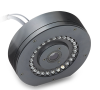
from Micro-Epsilon Group
The ACS2 circular sensor is used for measurement of structured and highly reflective surfaces as well as lustrous metals. In the sensor, 24 lighting optics are arranged in a circular fashion around the receiving optics, providing continuous lighting that allows measurements to be carried out... [See More]
- Application Type: Inline color measurement
- Sensing Range: 29
- Color Types Detected: RGB (Visible)
- Reference Distance: 28
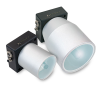
from Micro-Epsilon Group
The colorSENSOR OT sensors are ideal for color determination from a large distance according to the True Color method. The OT series consists of sensor types with different working distances and spot sizes. The sensor housing of the OT3 color sensors includes the detector, the evaluation unit and... [See More]
- Application Type: True Color Recognition
- Sensing Range: 500
- Color Types Detected: RGB (Visible)
- Reference Distance: 200
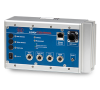
from Micro-Epsilon Group
The colorCONTROL ACS7000 inline color measuring system recognizes colors not just by comparing them to reference values, but also by using their coordinates in the respective color space to ensure unique identification. Due to its very high measurement speeds, the colorCONTROL ACS7000 is suitable... [See More]
- Application Type: Inline color measurement
- Number of Colors in Memory: 15
- Color Types Detected: RGB (Visible)
- Light Source: LEDs
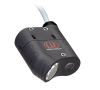
from Micro-Epsilon Group
The standard sensor ACS1 is used for common measuring tasks. The transmitter and the receiver inside the sensor are arranged at an angle of 30°/0° or 45°/0° to each other, producing a working distance of 50 mm or 38 mm. An optionally available adapter permits applying the 30°/0° sensor even in... [See More]
- Application Type: Inline color measurement
- Sensing Range: 52
- Color Types Detected: RGB (Visible)
- Reference Distance: 50
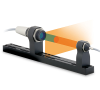
from Micro-Epsilon Group
The ACS3 transmission sensor is applied for measurements of self-luminous objects and transparent objects such as film, glass and Plexiglas®. The color of self-luminous objects can be detected as well, for which only the receiver unit is required. Measuring transparent objects requires a transmitter... [See More]
- Application Type: Inline color measurement
- Sensing Range: 200
- Color Types Detected: RGB (Visible)
- Reference Distance: 100
from Micro-Epsilon Group
The colorSENSOR CFO250 is a high-performance controller for precise color recognition in industrial measurement tasks. Color evaluation is performed internally based on taught colors and the result is output via the digital switching outputs at a speed of up to 30 KHz. Using a simplified 3-byte... [See More]
- Application Type: True Color Recognition
- Number Of Colors Detected: 3
- Color Types Detected: RGB (Visible)
- Number of Colors in Memory: 320
from Micro-Epsilon Group
The colorSENSOR CFO100 is a powerful controller for precise color recognition in industrial measurement tasks. The controller is distinguished by high color accuracy, state-of-the-art interfaces and intuitive operation. Using a modulated high-power white light LED, a white light spot is projected... [See More]
- Application Type: True Color Recognition
- Number Of Colors Detected: 3
- Color Types Detected: RGB (Visible)
- Number of Colors in Memory: 256

from EMX Industries, Inc.
Verify the presence of targets that can be differentiated by color, faster and with greater control. A ColorMax-1000 ™ color sensor lets your machine see up to 15 colors and RGB intensity. What's more, innovative technology improves sensitivity and speed, so you can maximize the pace of... [See More]
- Application Type: True Color Recognition; Color Mark Detection; Color Verification
- Number Of Colors Detected: 1
- Color Types Detected: RGB (Visible)
- Sensing Range: 100
from Optex FA
FO amp 10-turn Grn LED M8QD IP66 NPN [See More]
- Application Type: Color Mark Detection
- Light Source: LEDs; Fiber Optic; Green LED
- Sensing Range: 40
- Output Options: Digital (NPN, PNP)

from Takex America, Inc.
True RGB LED with fiber optic color detection sensors, utilizing sequential spectrum modulation. Features: Three different teaching methods: Manual- stationary work. Continuous- translate part under test through field to average out wavy or uneven colored parts. Auto Teach- on actual production line... [See More]
- Application Type: True Color Recognition
- Number Of Colors Detected: 1
- Color Types Detected: RGB (Visible)
- Sensing Range: 33

from EMX Industries, Inc.
Increase process throughput with high-speed, accurate and reliable contrast differentiation. The CNTX ™ combines small spot size and fast response to achieve high-speed contrast differentiation of both neutral and color targets. The sensor provides numerical display of 50 gray-scale levels. [See More]
- Application Type: True Color Recognition; Color Mark Detection
- Sensing Range: 28
- Color Types Detected: RGB (Visible); UV
- Light Source: LEDs