
Pulse Color Sensors
Description
Pulse Color Sensors are devices designed to detect and measure the color of an object by analyzing the light reflected from it. These sensors are capable of distinguishing between different colors and shades, providing precise color recognition and measurement capabilities.
Working Principle
Pulse Color Sensors operate by illuminating a target object with a light source, typically a white light LED. The reflected light from the object is then captured and analyzed by the sensor. The sensor uses filters or other optical components to separate the reflected light into its spectral components, similar to how the human eye perceives color. This allows the sensor to accurately determine the color of the object. The ability to detect subtle differences in color makes these sensors particularly useful in applications where color is the only distinguishing feature.
Applications
Pulse Color Sensors are widely used in various industrial applications. For example, they can be employed in quality control processes to ensure that products meet specific color standards. In the packaging industry, these sensors can be used to verify the color of labels or packaging materials. Another specific application is in the identification of container contents by the color of their caps, which is particularly useful in automated sorting systems.
Advantages over other Color Sensors
Pulse Color Sensors offer several advantages over traditional color sensors. They provide high resolution and accuracy in color detection, which is crucial in applications requiring precise color matching. The integration of high gain amplifiers in some models enhances their ability to distinguish between similar shades, offering superior performance in color-to-color or shade-to-shade applications. Additionally, the use of individual channel monitors provides visual feedback, increasing user confidence in the sensor's performance.
Limitations
One limitation of Pulse Color Sensors is their inability to resolve all similar shades of the same color. While they can distinguish many shades, there are instances where subtle differences may not be detected. This limitation can affect applications requiring extremely precise color differentiation.
Considerations
When considering the use of Pulse Color Sensors, several factors should be taken into account. Initial costs can vary depending on the complexity and capabilities of the sensor. Operating expenses are generally low, but it is important to consider the cost of replacement parts and maintenance. Durability and accuracy are key factors, as these sensors need to withstand industrial environments while providing reliable performance. Regular calibration and maintenance may be required to ensure continued accuracy and functionality.
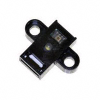
from DigiKey
COLOR SENSOR FREQ BOX [See More]
- Output Options: Pulse Train
- Operating Temperature: -40 to 158

from DigiKey
"Color Sensor Auto Power Down 8-SOIC (0.154"", 3.90mm Width)" [See More]
- Output Options: Pulse Train
- Operating Temperature: -40 to 185
from Optex FA
Palm size All-In-One color vision camera 8 memory banks [See More]
- Output Options: Pulse Train; Digital (NPN, PNP)
- Color Types Detected: RGB (Visible)
- Application Type: True Color Recognition; Color Area Sensor
- Number Of Colors Detected: 1; 16