
Timing Options Color Sensors
Description
Timing Options Color Sensors are specialized devices designed to detect and measure color by analyzing the light reflected from an object. These sensors are capable of distinguishing between different colors and shades, providing precise color recognition and measurement capabilities.
Working Principle
Timing Options Color Sensors operate by illuminating a specimen with a light source, often a white light LED, and then analyzing the reflected light. The reflected light is refracted into its spectral components, similar to how the human eye perceives color. This process allows the sensor to detect the reflected intensity spectrum in the visible wavelength range, which is crucial for accurate color recognition. The sensors often use filters to isolate specific parts of the spectrum, enhancing their ability to differentiate between colors and shades. This capability makes them useful in applications where color is the only distinguishing feature.
Applications
Color sensors are widely used in various applications, including true color recognition and color mark detection. For instance, they can be employed in quality control processes to ensure consistent color matching in production batches. In the packaging industry, they might be used to verify the color of labels or caps, ensuring that products are correctly sorted and packaged. Another application is in the automotive industry, where color sensors help in detecting the presence of adhesive beading or sorting parts based on color.
Advantages over other Color Sensors
Timing Options Color Sensors offer several advantages over conventional switching sensors. They provide higher precision in color detection, making them more cost-effective for applications requiring detailed color analysis. Their ability to resolve color-to-color and shade-to-shade differences enhances their utility in complex object sensing tasks, such as identifying the contents of a container by the color of its cap.
Limitations
One limitation of Timing Options Color Sensors is their inability to resolve all similar shades of the same color. While they can distinguish between many shades, there are instances where subtle differences may not be detected. This limitation can affect applications requiring extremely fine color differentiation.
Considerations
When considering the use of Timing Options Color Sensors, several factors should be taken into account. Initial costs can vary depending on the complexity and capabilities of the sensor. Operating expenses may include the cost of maintaining the light source and ensuring the sensor's calibration remains accurate. Durability is generally high, but the sensors may require periodic maintenance to ensure optimal performance. Accuracy is a key advantage, but users should be aware of the limitations in resolving similar shades. Replacement and maintenance costs should also be considered, as these can impact the overall cost-effectiveness of the sensor in long-term applications.
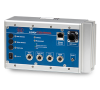
from Micro-Epsilon Group
The colorCONTROL ACS7000 inline color measuring system recognizes colors not just by comparing them to reference values, but also by using their coordinates in the respective color space to ensure unique identification. Due to its very high measurement speeds, the colorCONTROL ACS7000 is suitable... [See More]
- Application Type: Inline color measurement
- Number of Colors in Memory: 15
- Color Types Detected: RGB (Visible)
- Light Source: LEDs
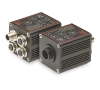
from Micro-Epsilon Group
The colorSENSOR CFO250 is a high-performance controller for precise color recognition in industrial measurement tasks. Color evaluation is performed internally based on taught colors and the result is output via the digital switching outputs at a speed of up to 30 KHz. Using a simplified 3-byte... [See More]
- Application Type: True Color Recognition
- Number Of Colors Detected: 3
- Color Types Detected: RGB (Visible)
- Number of Colors in Memory: 320

from EMX Industries, Inc.
Verify the presence of targets that can be differentiated by color, faster and with greater control. A ColorMax-1000 ™ color sensor lets your machine see up to 15 colors and RGB intensity. What's more, innovative technology improves sensitivity and speed, so you can maximize the pace of... [See More]
- Application Type: True Color Recognition; Color Mark Detection; Color Verification
- Number Of Colors Detected: 1
- Color Types Detected: RGB (Visible)
- Sensing Range: 100
from Optex FA
Palm size All-In-One color vision camera 8 memory banks [See More]
- Application Type: True Color Recognition; Color Area Sensor
- Number Of Colors Detected: 1; 16
- Color Types Detected: RGB (Visible)
- Sensing Range: 240

from KEYENCE
KEYENCE RGB Digital Sensor: CZ Series. •. Color differentiating sensors. •. Separate RGB light sources for high-precision differentiation. •. Utilizes the world's first hybrid structure to improve overall performance: A fiber optic transmitter and light receiving circuit built into... [See More]
- Application Type: Color Mark Detection
- Number Of Colors Detected: 8
- Color Types Detected: RGB (Visible)
- Number of Colors in Memory: 8

from EMX Industries, Inc.
Increase process throughput with high-speed, accurate and reliable contrast differentiation. The CNTX ™ combines small spot size and fast response to achieve high-speed contrast differentiation of both neutral and color targets. The sensor provides numerical display of 50 gray-scale levels. [See More]
- Application Type: True Color Recognition; Color Mark Detection
- Sensing Range: 28
- Color Types Detected: RGB (Visible); UV
- Light Source: LEDs