
Custom / OEM Gage Thickness Gages
Description
Custom/OEM Gage Thickness Gages are precision instruments designed to measure the thickness of various materials. These gages are tailored to meet specific requirements, providing accurate and reliable thickness measurements for a wide range of materials, including metals, plastics, and composites. They are essential tools in quality control and manufacturing processes, ensuring that materials meet specified thickness standards.
Working Principle
Custom/OEM Gage Thickness Gages operate using various measurement techniques, such as laser triangulation, ultrasonic testing, and optical methods. For instance, laser triangulation sensors measure thickness by emitting a laser beam onto the material's surface and calculating the distance based on the reflected light. Ultrasonic gages use sound waves to determine thickness by measuring the time it takes for the waves to travel through the material and reflect back. These gages are useful because they provide non-contact, precise measurements, which are crucial for maintaining quality and consistency in production processes.
Applications
Custom/OEM Gage Thickness Gages are used in numerous industries for specific applications. For example, in the automotive industry, they measure the thickness of metal sheets used in car bodies to ensure structural integrity. In the electronics industry, they are used to measure the thickness of circuit boards and components. Additionally, in the aerospace sector, these gages help in assessing the thickness of composite materials used in aircraft construction, ensuring safety and performance standards are met.
Advantages over other Thickness Gages
Custom/OEM Gage Thickness Gages offer several advantages over standard thickness gages. They can be tailored to specific measurement needs, providing higher accuracy and precision for particular materials or applications. For instance, laser triangulation sensors can measure a wide range of thicknesses from 2 mm to 25 mm with high precision, making them suitable for diverse industrial applications. Additionally, these gages often include features like automatic calibration and temperature compensation, enhancing their reliability and ease of use in varying environmental conditions.
Limitations
Despite their advantages, Custom/OEM Gage Thickness Gages have limitations. They may require specific setup and calibration for different materials, which can be time-consuming. Additionally, the initial cost of these customized gages can be higher compared to standard models, which might be a consideration for smaller operations or those with limited budgets. Furthermore, their performance can be affected by surface conditions and material properties, necessitating careful handling and maintenance.
Considerations
When selecting Custom/OEM Gage Thickness Gages, several factors should be considered. The initial cost can be significant, but it is often justified by the increased accuracy and customization they offer. Operating expenses may include regular calibration and maintenance to ensure continued precision. Durability is another important factor, as these gages are often used in industrial environments where they may be exposed to harsh conditions. Accuracy is paramount, and users should ensure that the gages are suitable for the specific materials and thickness ranges they intend to measure. Replacement and maintenance costs should also be factored into the decision-making process, as these can impact the overall cost of ownership over time.
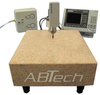
from ABTech, Inc.
ABTech ’s standard thickness gages include Heidenhain Metro probes, Gage-Chek DRO ®, Granite plate, stainless steel probe stands and probe actuator control box. These thickness gages allow the user to accurately measure thickness down to 1 micron without having to hold the part or using... [See More]
- Thickness Gauge Application: Material Thickness
from Edmunds Gages
From modified catalog gage to fully automatic, computerized gaging systems [See More]
- Gaging Technology: Electronic (optional feature)