
Steam Evaporators
Last Updated: February 12, 2025
Description
Steam evaporators are devices designed to remove a solvent, typically water, from a solution by vaporizing it. They are used to concentrate nonvolatile solutes, usually solids, by evaporating the solvent. The process involves heating the solution to its boiling point, causing the solvent to vaporize and leave behind a more concentrated solution.
Working Principle
Steam evaporators operate by using heat to vaporize the solvent in a solution. The heat is typically provided by steam, which transfers energy to the solution, raising its temperature to the boiling point. The vaporized solvent is then removed, leaving behind a concentrated solution. This process is efficient for separating solvents from solutes due to the predictable nature of steam, which provides consistent heat transfer. The use of steam is advantageous because it is readily available and can be easily controlled to achieve the desired evaporation rate.
Applications
Steam evaporators are utilized in a wide range of industries. In the food processing industry, they are used to concentrate juices and dairy products. In the chemical industry, they are employed for the concentration of solutions and recovery of solvents. Pharmaceutical companies use steam evaporators for the concentration of active ingredients and the recovery of solvents in drug manufacturing. Additionally, they are used in wastewater treatment to reduce the volume of waste by removing water.
Advantages over other Evaporators
Steam evaporators offer several advantages over other types of evaporators. They provide quick heat-up times and predictable heat transfer, which is beneficial for processes requiring consistent evaporation rates. The use of steam as a heating medium is also advantageous because it is widely available and cost-effective. Furthermore, steam evaporators can be designed to handle large volumes of solution, making them suitable for industrial applications.
Limitations
Despite their advantages, steam evaporators have some limitations. They do not offer precise temperature control, which can lead to uneven heat distribution and potential overheating of the product. This can result in product degradation or burn-on, particularly in solutions with high viscosity or fouling tendencies. Additionally, steam systems require components such as steam traps, which can add complexity and maintenance requirements to the system.
Considerations
When considering the use of steam evaporators, several factors should be taken into account. Initial costs can vary depending on the size and complexity of the system. Operating expenses are influenced by the cost of steam and the efficiency of the evaporator. Durability is an important consideration, as steam systems can be subject to wear and corrosion. Accuracy in maintaining consistent evaporation rates is crucial for product quality. Replacement and maintenance costs should also be considered, as steam systems may require regular maintenance to ensure optimal performance.
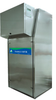
from Samsco Corporation
Energy is the single largest component of operating costs in many wastewater treatment systems, and particularly is this so with distillation, where it generally accounts for 50-70% of total operating costs. The Samsco EnviroStill MVR Evaporator uses metal plate heat exchange technology, which... [See More]
- Power Source: Electric; Steam
- Type: Plate; Thermal; Vacuum; Mechanical Vapor Recompression
- Application: Distillation; Waste Water Treatment
- Operating Temp: 48.89 to 79.44
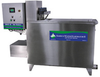
from Samsco Corporation
The SWE-II uses a system design that provides consistent operation, minimal cleanout, high efficiency and ease of maintenance. [See More]
- Power Source: Steam
- Type: Thermal
- Application: Distillation (optional feature); Waste Water Treatment
- Evaporation Rate: 144