
Last Updated: November 6, 2024 Reviewed by: Scott Orlosky, consulting engineer
Description
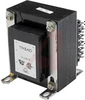
A 230V to 115V transformer is a device designed to convert electrical energy from a higher voltage level (230V) to a lower voltage level (115V). This type of transformer is commonly used in applications where equipment designed for 115V operation needs to be powered from a 230V supply. The transformer consists of a ferromagnetic core with two windings: the primary winding connected to the 230V source and the secondary winding providing the 115V output.
Working Principle
The working principle of a 230V to 115V transformer is based on electromagnetic induction. When alternating current (AC) flows through the primary winding, it creates a varying magnetic field in the core. This varying magnetic field induces a voltage in the secondary winding. The voltage ratio between the primary and secondary windings is determined by the ratio of the number of turns in each winding, as described by the equation:
latex
\frac{V_s}{V_p} = \frac{N_s}{N_p}
where ( V_s ) is the secondary voltage (115V), ( V_p ) is the primary voltage (230V), ( N_s ) is the number of turns in the secondary winding, and ( N_p ) is the number of turns in the primary winding.
Applications
230V to 115V transformers are widely used in various applications. They are essential in regions where the standard voltage supply is 230V, but the equipment or devices are designed to operate at 115V. Common applications include powering household appliances, electronic devices, and industrial equipment that require a 115V input. They are also used in international travel adapters to allow travelers to use their 115V devices in countries with a 230V supply.
Advantages
One of the primary advantages of using a 230V to 115V transformer is the ability to safely and efficiently operate 115V equipment in regions with a 230V power supply. This eliminates the need to replace or modify existing equipment. Additionally, transformers provide electrical isolation between the primary and secondary circuits, enhancing safety by reducing the risk of electric shock.
Limitations
Despite their advantages, 230V to 115V transformers have some limitations. They can be bulky and heavy, especially for higher power ratings, making them less portable. Transformers also generate heat during operation, which can affect their efficiency and longevity. Moreover, they are designed for specific voltage conversions and cannot be easily adjusted for different voltage levels without replacing the transformer or using additional equipment.
Considerations
When selecting a 230V to 115V transformer, several factors need to be considered. The power rating (expressed in volt-amperes, VA) should match or exceed the power requirements of the connected equipment to avoid overloading the transformer. The operating frequency range should be compatible with the local power supply frequency (typically 50Hz or 60Hz). Additionally, features such as current limiting protection and flameproof construction may be important for specific applications, especially in industrial or hazardous environments.
-
Supplier: Newark, An Avnet Company
Description: TRANSFORMER, 1KVA, 230V TO 115V; Voltage Function:Step-Down; Input Voltage:115V, 230V; Output Voltage:115V; Power Rating:1kVA; Output Current:-; Isolation Voltage:2kV; Transformer Mounting:Panel Mount; Product Range:175F Series RoHS Compliant:
-
Supplier: Newark, An Avnet Company
Description: TRANSFORMER, 500VA, 115V TO 230V; Voltage Function:Step-Up; Input Voltage:115V; Output Voltage:230V; Power Rating:500VA; Output Current:-; Isolation Voltage:2kV; Transformer Mounting:Chassis Mount; Product Range:176D Series RoHS Compliant: Yes
-
Supplier: Newark, An Avnet Company
Description: TRANSFORMER, 100VA, 230V TO 115V; Voltage Function:Step-Down; Input Voltage:115V, 230V; Output Voltage:115V; Power Rating:100VA; Output Current:-; Isolation Voltage:2kV; Transformer Mounting:Panel Mount; Product Range:175A Series RoHS
-
-
Supplier: Newark, An Avnet Company
Description: TRANSFORMER, 300VA, 115V TO 230V; Voltage Function:Step-Up; Input Voltage:115V; Output Voltage:230V; Power Rating:300VA; Output Current:-; Isolation Voltage:2kV; Transformer Mounting:Chassis Mount; Product Range:176C Series RoHS Compliant: Yes
-
Supplier: Dongguan Yili Electronics Co., Ltd.
Description: This kind of transformer is a low-frequency power transformer designed for printed circuit board applications. Split bobbin construction enables high isolation primary to secondary, low capacitive coupling to minimize line noise.
- Maximum Primary Voltage Rating: 115 to 240 volts
- Maximum Secondary Voltage Rating: 5 to 120 volts
- Power Rating (VA): 0.3 to 36 VA
- Features: Other
-
Supplier: Dongguan Yili Electronics Co., Ltd.
Description: This kind of transformer is a low-frequency power transformer designed for printed circuit board applications. Split bobbin construction enables high isolation primary to secondary, low capacitive coupling to minimize line noise.
- Maximum Primary Voltage Rating: 115 to 240 volts
- Maximum Secondary Voltage Rating: 5 to 120 volts
- Power Rating (VA): 0.3 to 36 VA
- Features: Other
-
Supplier: Dongguan Yili Electronics Co., Ltd.
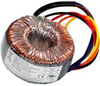
Description: Our toroidal transformers coiled around with a donut-shaped core are used in a wide range of electronic and electrical equipment. Toroidal transformers provide better flexibility, efficiency, and compactness than traditional laminated transformers. Encapsulated version is
- Maximum Primary Voltage Rating: 115 to 230 volts
- Maximum Secondary Voltage Rating: 6 to 45 volts
- Other Transformer Types / Applications: Industrial Control Transformer
- Category: Signal / RF Transformer
-
Supplier: Dongguan Yili Electronics Co., Ltd.
Description: Our encapsulated transformers have their windings and core covered with epoxy resin in an enclosure to reduce noise and are impervious to water, moisture, and dust. They are available in a wide variety of primary and secondary voltage combinations.
- Maximum Primary Voltage Rating: 115 to 230 volts
- Maximum Secondary Voltage Rating: 6 to 24 volts
- Category: Signal / RF Transformer
-
Supplier: Gilson Company, Inc.
Description: Transformers, Step-Down are for changing 220-230V, 50/60Hz current to 110-115V. Housed in black metal case with 3-wire cord and receptacle. Transformers change voltage only. Use of transformers with motor-operated equipment should be limited to
-
Supplier: Allied Electronics, Inc.
Description: TRIAD Magnetics chassis mount world Series transformers are designed to meet U.S. and international standards including CSA, IEC, VDE and UL Requirements. The transformers consist of a dual bobbin design positioned inside an insulating shroud, and constructed with UL Approved
-
Supplier: Allied Electronics, Inc.
Description: TRIAD toroidal chassis mount World Series transformers from Triad Magnetics are designed to meet most International Safety Agencies. The toroidal construction inherently helps reduce stray fields, increases efficiency and minimizes size compared to traditional EI
-
Supplier: Allied Electronics, Inc.
Description: Auto transformers have one winding that is tapped to achieve specific output voltage. They provide no electrical isolation in a circuit. Auto transformers are typically smaller than their isolation equivalent. Isolation transformers have two separate windings with an
-
Supplier: Allied Electronics, Inc.
Description: Features: Dual Primary 115/230 VAC 50/60 Hz Operation Dual Secondaries for Series or Parallel Connections Hi-Pot Test of 4,000 VRMS Chassis Mount 5 Different VA Sizes to Choose From Dual Bobbin Construction Dual Use Terminals (Solder Lug or Quick Connect) cUL US Recognized TÜV Type Approved
-
Supplier: Airlink Transformers
Description: SU4000 - 230V Portable Tool Transformers 4000VA 110v to 230v stepdown transformer with 2 x 16A Blue socket transformer Converts 110v to 230v To operate 230v tools on a building site Manufactured to BSEN61558 Housed in
- Maximum Primary Voltage Rating: 110 volts
- Maximum Secondary Voltage Rating: 230 volts
- Maximum Secondary Current Rating: 16 amps
- Power Rating (VA): 4,000 VA
-
Supplier: EDCOR Electronics Corporation
Description: Design Mathematically designed to produce the specified voltage(s) when loaded. Primary (Input) Designed for 115V or 230V, 50/60Hz. Secondary (Output) This transformer has multiple voltage windings, two 340V at 400mA, 230V at 200mA, and 200V at 200mA. Magnet Wire
- Maximum Primary Voltage Rating: 115 to 230 volts
- Maximum Secondary Voltage Rating: 340 volts
- Standards: RoHS Compliant
-
Supplier: Shenzhen Xingkerong Technology Co., Ltd
Description: Home // All Collections // Transformer // Custom Transform Auto Transformers Electrical Power 380v to 220v
- Maximum Primary Voltage Rating: 1,000 volts
- Maximum Secondary Voltage Rating: 1,000 volts
- Power Rating (VA): 1,000,000 VA
- Operating Frequency Range: 50 to 60 Hz
-
Supplier: Triad Magnetics
Description: Triad chassis mount power transformers provide maximum performance when integrated into full wave center tap or bridge type circuits with silicon or selenium rectifiers. The secondary voltages are selected by primary taps. The secondaries of the Series F-90 transformers may be
- Maximum Primary Voltage Rating: 115 volts
- Operating Frequency Range: 50 to 60 Hz
- Features: AC
- Mounting: Chassis Mount
-
Supplier: Hammond Manufacturing Company Inc.
Description: (solder lug or quick connect) C UL US recognized (E207860) TUV Type Approved CE certified to IEC 950 (Approved to EN 60-742 Safety Isolating Transformers) A connection sheet can be downloaded here. NOTE: Products produced after January 1st, 2021 will no longer have a TUV Label,
- Maximum Secondary Voltage Rating: 115 volts
- Power Rating (VA): 43 VA
- Other Transformer Types / Applications: Electronics Transformer, Isolation Transformer, Power Transformer
- Category: Power / Power System / Distribution Transformer
-
Supplier: Shenzhen Xingkerong Technology Co., Ltd
Description: Home // All Collections // Transformer // 500KVA 800KVA 750 KVA 630KVA 400KVA Dry Transformer 400KW Step up Down Transformer 380V 400V 415V 440V to 380V 400V 440V 415V
- Maximum Primary Voltage Rating: 1,000 volts
- Maximum Secondary Voltage Rating: 1,000 volts
- Power Rating (VA): 800,000 VA
- Operating Frequency Range: 50 to 60 Hz
-
Supplier: Block USA, Inc.
Description: Rated input voltage 230 Vac Rated output voltage 115 and 230 Vac Rated power 3150 - 8000 VA Insulation class B Maximum ambient temperature 40 °C Efficiency up to 97 % Degree of protection IP 00 Isolating transformer for supply of medical rooms to: VDE 0570 Part 2-15, VDE 0100
- Maximum Primary Voltage Rating: 230 volts
- Maximum Secondary Voltage Rating: 115 to 230 volts
- Power Rating (VA): 6,300 VA
- Operating Frequency Range: 50 to 60 Hz
-
Supplier: Belimo Americas
Description: 24 V transformer (120V to 24V) for PS-100.
-
Description: All Acme Drive Isolation Transformers (DITs) above 7.5kVA are wound with strip windings to ensure the lowest possible eddy current losses. All our DITs use a three leg wound core. This superior design has very low losses and quiet operation. Both of these features combine to
- Maximum Primary Voltage Rating: 575 volts
- Maximum Secondary Voltage Rating: 133 to 230 volts
- Power Rating (VA): 7.5 to 220 VA
- Features: AC, Other
-
Supplier: Tripp Lite by Eaton
Description: surge conditions. Transformer filtering provides continuous common-mode noise rejection with no wearable parts. The IS600HGDV reduces 6000V IEEE 587 Category A and B ring wave and combination wave test surges to only 0.5V common mode. Components connect to six C13 outlets with
- Operating Frequency Range: 50 to 60 Hz
- Maximum Primary Voltage Rating: 115 to 230 volts
- Maximum Secondary Voltage Rating: 115 to 230 volts
- Operating Temperature: 0 to 40 C
-
Supplier: Tripp Lite by Eaton
Description: surge conditions. Transformer filtering provides continuous common-mode noise rejection with no wearable parts. The IS1000HGDV reduces 6000V IEEE 587 Category A and B ring wave and combination wave test surges to only 0.5V common mode. Components connect to eight C13 outlets
- Operating Frequency Range: 50 to 60 Hz
- Maximum Primary Voltage Rating: 115 to 230 volts
- Maximum Secondary Voltage Rating: 115 to 230 volts
- Operating Temperature: 0 to 40 C
-
Supplier: Tripp Lite by Eaton
Description: surge conditions. Transformer filtering provides continuous common-mode noise rejection with no wearable parts. The IS300HGDV reduces 6000V IEEE 587 Category A and B ring wave and combination wave test surges to only 0.5V common mode. Components connect to four C13 outlets with
- Operating Frequency Range: 50 to 60 Hz
- Maximum Primary Voltage Rating: 115 to 230 volts
- Maximum Secondary Voltage Rating: 115 to 230 volts
- Operating Temperature: 0 to 40 C
-
Supplier: Shenzhen Xingkerong Technology Co., Ltd
Description: Home // All Collections // Transformer // UL Buck-Boost Transformer 480v Delta to 277v Single/Three Phase ANSI Power Transformer for North American Business and Industry
- Maximum Primary Voltage Rating: 1,000 volts
- Maximum Secondary Voltage Rating: 1,000 volts
- Power Rating (VA): 70,000 VA
- Operating Frequency Range: 50 to 60 Hz
-
Supplier: Larson Electronics LLC
Description: allowing users to use standard AC power to operate equipment like our LED light bars and HID Golights that require 12 Volt DC current. The DCP-11-12V 132 watt power converter provides a safe and effective way for users to tap into and utilize common 110 to 260 Volt AC
- Category: Power / Power System / Distribution Transformer
-
Supplier: Accuris
Description: Instrument transformers - Three-phase inductive voltage transformers having Um up to 52 kV
-
Supplier: Tamura Corporation of America
Description: • 115/230V Dual Primary • 2.5VA to 24VA • Class B (130°C) Insulation • UL 506 (E145619) • 2,500Vrms HiPot (Pri:Sec) • CSA (LR61383-7) • UL 94V-0 Flammability (E92957) • Recognized Insulation System for custom designs.
- Maximum Primary Voltage Rating: 230 volts
- Maximum Secondary Voltage Rating: 230 volts
- Maximum Secondary Current Rating: 0.1 amps
- Power Rating (VA): 12 VA
-
Description: The Acme Electric AE and CE Series Industrial Control Transformers are designed specifically for machine tool control circuit applications. These transformers have the ability to handle potentially damaging high in-rush currents that occur when electromagnetic components are
- Maximum Primary Voltage Rating: 208 to 460 volts
- Maximum Secondary Voltage Rating: 115 volts
- Power Rating (VA): 50 to 750 VA
- Features: 50 / 60 Hz, AC, Encapsulated Transformers, Other
-
Supplier: Block USA, Inc.
Description: Rated input voltage 0 - 100 Vac Output power 1 - 120 W Impedance 1 - 1600 Ohms Insulation class E Maximum ambient temperature 40 °C Degree of protection IP 00 100 V-line transformer to DIN EN 60950 100 Vac transformer for electro-acoustic installations with a 100 Vac
- Maximum Primary Voltage Rating: 100 volts
- Operating Frequency Range: 45 to 15,000 Hz
- Category: Power / Power System / Distribution Transformer
-
Supplier: LED Cool Lights
Description: Description LED Cool Lights, Class 2 Dimmable LED DC Magnetic Transformer is a 60W, 12v/5a power supply that brings unprecedented flexibility to the LED Driver market. Designed to power loads up to 60W, LED Cool Lights power supply can be used with virtually any fixture
- Other Transformer Types / Applications: Lighting Transformer
- Category: Power / Power System / Distribution Transformer
-
Description: The Acme Electric AE and CE Series Industrial Control Transformers are designed specifically for machine tool control circuit applications. These transformers have the ability to handle potentially damaging high in-rush currents that occur when electromagnetic components are
- Maximum Primary Voltage Rating: 230 to 575 volts
- Maximum Secondary Voltage Rating: 95 to 115 volts
- Power Rating (VA): 50 to 750 VA
- Features: 50 / 60 Hz, AC, Encapsulated Transformers, Other
-
Supplier: Accuris
Description: Bushings for Liquid Filled Transformers Above 1 kV and up to 36 kV
-
Supplier: TelephoneStuff.com
Description: 16V AC transformer (hardwired to AC) for the CCS-1A complete door chime and audio answering system.









Find Suppliers by Category Top
Featured Products Top
-
 AutomationDirect has added Murrelektronik open core control transformers that provide a flexible solution for stepping down a variety of primary voltages ranging from 208 to 550 VAC. The universal input on these transformers provides eleven different voltage options that are easily configurable (read more)
Browse Transformers Datasheets for Automationdirect.com -
addition to the supply lead-time. Many requirements are for low voltage tools or lighting working at 24V or 110V to be fed from mains supplies of 230V or 400V. The above voltages are not exclusive and other inputs and outputs can be accommodated on request. We can manufacture up to 6kV at a few milli (read more)
Browse Single Phase Transformers Datasheets for Majestic Transformer Co. -
radiator cooling,it supports a wide rated capacity range from 75 kVA to 3735 kVA. Primary (HV) voltage is customizable from 34.5 kV to 13.8 kV (and other common utility ratings),while secondary (LV) output is customizable from 277 V to 600 V to match site requirements. High quality copper windings and an (read more)
Browse Transformers Datasheets for TPS Elektronik GmbH -
Type Transformer Three Phase Isolation Transformer High Efficiency Transformer 2. Renewable Energy Continues to Drive Industrial Demand Solar farms, wind power (read more)
Browse Isolation Transformers Datasheets for Shenzhen Xingkerong Technology Co., Ltd -
Vishay’s SGTPL-28 series introduces 150 W low-profile, space-grade planar transformers optimized for 28 V forward converters in avionics, military, and space applications. Featuring multiple secondary outputs with center taps, they can power up to two 12 V channels or four 5 V channels (read more)
Browse Transformers Datasheets for New Yorker Electronics Co., Inc. -
and 116 V. Use the specification chart below to find the ideal PC Mount power transformer for your application, or contact Triad Magnetics today to discuss our available options. Follow Us: (read more)
Browse Power Transformers Datasheets for Triad Magnetics -
instrumentation applications, as well. With over 35 plug-in type models — available in single primary and dual center tapped secondary configurations — Triad has a PC Mount power transformer to meet any PC board or solid state power supply requirement. Triad PC Mount power transformers range (read more)
Browse Power Transformers Datasheets for Triad Magnetics -
same in the absence of data transitions (for example, at power-on). For lower power consumption and high-speed operation with low jitter, the isolator circuits rely on 1.8 V supplies. In comparison, 3.3 V supplies are used for LVDS receivers to support the full common-mode range with an input voltage (read more)
Browse Isolation Transformers Datasheets for DigiKey -
voltage regulation and power distribution. These transformers receive high-voltage electricity from the grid, step it down, and distribute it to consumers or lower-voltage substations. Fuji Electric offers distribution transformers with capacities up to 30 MVA and primary/secondary voltages up to 36 kV (read more)
Browse Transformers Datasheets for Fuji Electric Corp. of America -
electrical isolation: Supports step-up and step-down conversion from 110V to 480V, adapting to various power systems (read more)
Browse Isolation Transformers Datasheets for Shenzhen Xingkerong Technology Co., Ltd
More Information Top
 Indicates content that may require registration and/or purchase.

-
CR4 - Thread: find a trasformer
The transformer is designed for 480 to 240 if you put 460v in, you will get 230v out ( 115v ct) but the secondary will need to be derated because you are limted to the 240v current on the secondary side.
-
Physical modeling and simulation of inrush current in power transformers of More Electric Aircraft
This architecture contains a 18- pulses auto-transformer rectifier unit (ATRU) which transfers 230V AC voltage to 540V DC voltage supplying DC loads such as electric environmental system (ECS), 230V / 115V AC auto- transformers (ATU) and electric actuators.
-
CR4 - Thread: high current voltage regulator?
For example a motor that has a FLA of 30amps@ 115v , but you change a couple jumpers and now it runs 15amps@ 230v and does the same amount of work. .... Its the same with the power company, They carry 250,000 volts across town to a step down transformer , why? because there is less loss of energy, and to be able to supply the demand that wire is to carry.
-
Product Index
International Laminated Power Transformers . .... • 115V / 230V Dual Primary. .... • 2.5VA to 56VA .
-
A comprehensive design and implementation of Doubly Fed Induction Generator for a micro-level Wind Energy Conversion System
Three-single phase transformers of each 2 kVA, 230V / 115V . .... to secondary of 400V/115V.
-
Proposal of a 5kVA single-phase on-line UPS with high frequency isolation and power factor correction
…this paper was proposed a high performance double conversion UPS that uses high frequency transformer for isolation. .... The proposed system is also suitable to operate with rms input voltages values equal to 110V/220V, 115V / 230V , or 120V/240V.
-
A transformerless single phase on-line UPS with 110 V/220 V input output voltage
…is possible to use the topologies proposed with common neutral connection without increasing to much the system … autotransformer is, at least, 50% cheaper and half the weight of the isolating transformer , which is normally .... That solution makes this UPS topology possible to work in any conventional utility AC voltage (110V/220V ±15%, 115V / 230V ±15% and 120V/240V ±15%).
-
Need Help Choosing A Welder.
Generally machines that run on 115v input lack any significant output power and under real world conditions are limited to 1/8" steel or less. you can get machines that have slightly better performance on 115v power, usually stick machines, but they are .... Most inexpensive migs are 115v There are a few 230v low end migs however that don't have … machine with a decent amount of power, you need to look at the 230v transformer stick machines.
-
Power Products - from Allied Electronics
Add to . .... Hammond Manufacturing â Transformers . .... STEP-DOWN AUTOFORMER, 50/60HZ, PRI: 230V , SEC: 115V , 3-WIRE, 6'CORD & OUTLET, 2000VA .
-
CR4 - Thread: Philippine 230/240V Two Wire System to 110/120V U.S.
Re: Philippine 230/240V Two Wire System to 110/120V U.S. .... In most of the rest of the country you will find one 230v load and a neutral. .... In those areas there is no way to get 115v except with a step down transformer .