
-
Supplier: Accuris
Description: ADHESIVE, AIR-CURE, SILICONE RUBBER
-
Supplier: Wacker Chemical Corp.
Description: ELASTOSIL® RT 745 A/B is a pourable, thermally curable, addition-curing, two-part silicone rubber. Special features two-part, 1 : 1 mixing ratio low viscosity low hardness low risk of inhibition rapid heat cure primerless adhesion Application encapsulation of electronic components
- Viscosity: 20,000 cP
- Tensile Strength (Break): 319.0810465858334 to 333.5847305215531 psi
- Elongation: 200 to 210 %
- Substrate Compatibility: Ceramic / Glass, Dissimilar Substrates, Metal
-
Supplier: Wacker Chemical Corp.
Description: ELASTOSIL® RT 778 is a non-slump, two-part, condensation curing silicone rubber. When processed with a curing agent of the WACKER® Catalyst T 77 series, a self-adhesive and durable elastomer is formed. Special features Uncured: non-slump, thixotropic paste fast curing Cured:
- Viscosity: 92,000 to 800,000 cP
- Tensile Strength (Break): 507.6289377501895 psi
- Elongation: 180 %
- Industry: OEM / Industrial
-
-
Supplier: Bluestar Silicones USA Corp.
Description: two component, addition cure, heat curing silicone rubber compound Properties Viscosity 100000 Hardness Sha 67 Description Bluesil V-249 is a two component, addition cure, heat curing silicone rubber compound. It is designed specifically for use as converter and embossing
- Use Temperature: -65 to 400 F
- Tensile Strength (Break): 950 psi
- Elongation: 200 %
- Viscosity: 100,000 to 150,000 cP
-
Supplier: Accuris
Description: Adhesive, Air-Cure, Silicone Rubber
-
Supplier: Accuris
Description: CURING AGENT, SILICONE RUBBER
-
Supplier: Accuris
Description: Heat Cured Silicone Rubber for Engine Coolant Sealing
-
Supplier: Bluestar Silicones USA Corp.
Description: two component, condensation cure silicone moldmaking rubber Properties Viscosity 30000 Hardness Sha 25 Description Bluesil RTV-3625 is a low viscosity, 25 Durometer (Shore A), two component, tin catalyzed, room temperature curing silicone elastomer. It is designed as a high
- Use Temperature: -58 to 302 F
- Tensile Strength (Break): 660 psi
- Elongation: 390 to 450 %
- Viscosity: 90 to 40,000 cP
-
Supplier: Bluestar Silicones USA Corp.
Description: Two-Component, addition cure silicone moldmaking rubber Properties Viscosity 12000 Hardness Sha 30 Description Bluesil RTV-1556 is a two component, high strength, addition cure, room temperature or heat vulcanized silicone rubber compound. Designed specifically for
- Use Temperature: -65 to 400 F
- Thermal Conductivity: 0.25 W/m-K
- Coeff. of Thermal Expansion (CTE): 1,111.111111111111 µin/in-F
- Tensile Strength (Break): 1,035 psi
-
Supplier: Wacker Chemical Corp.
Description: ELASTOSIL® RT 426 is a pourable, condensation-curing, two-component silicone rubber that vulcanizes at room temperature. Special features low viscosity high cured hardness excellent heat resistance Application all-round potting compound
- Viscosity: 15,000 to 25,000 cP
- Tensile Strength (Break): 652.6657771073865 psi
- Elongation: 120 %
- Features: Encapsulating / Potting, RTV / Room Temperature Curing, Rubber Based / Elastomeric, Specialty / Other
-
Supplier: Wacker Chemical Corp.
Description: Spreadable, condensation-curing, two-component silicone rubber that vulcanizes at room temperature. Special features self-levelling flow high Shore A hardness (approx. 55) high mechanical strength very good heat resistance low shrinkage Application mold-making material sealant (FIPG)
- Viscosity: 300,000 to 400,000 cP
- Tensile Strength (Break): 652.6657771073865 psi
- Elongation: 170 %
- Industry: Electronics
-
Supplier: Bluestar Silicones USA Corp.
Description: two component, medium hardness, high strength, addition cure, silicone moldmakling rubber Properties Viscosity 1500 Hardness Sha 45 Description Bluesil Thixotropic Additive 22646 is a unique liquid additive that can be used with some of the polyaddition and polycondensation cure
- Viscosity: 1,500 cP
- Type: Elastomer / Rubber
- Form / Shape: Liquid
- Features: Molding Resin
-
Supplier: Thermal Circuits, Inc.
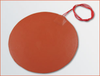
Description: Silicone Rubber is the most versatile rubber based dielectric used to produce flexible surface heaters. Both etched foil and wire wound element designs are offered. The application determines the choice. Fiberglass reinforced Silicone Rubber Heaters are thin and
- Maximum Operating (Sheath) Temperature: 428 F
- Maximum Operating Temperature: 428 F
- Heater Type: Air Heater, Flexible Heater, Radiant Flat Panel Heater, Radiant Heater, Radiant Reflective Process Heater, Strip Heater
- Features: Electric, Other
-
Supplier: Ellsworth Adhesives
Description: Dow DOWSIL™ 3-6559 Cure Accelerator is a one component, concentrated additive solution that is used with Dow SILASTIC™ moldmaking silicones to increase speed of cure. 0.45 kg Bottle.
- Applications: Adhesives / Sealants, Elastomers / Rubbers, Plastics / Composites
- Function: Curing Agent ( Hardener / Curative)
- Form & Features: Liquid / Solution
-
Supplier: ASTM International
Description: 1.1 This specification covers fully cured silicone rubber-coated glass fabric in sheet form, full-width rolls, and tapes to be used as electrical insulation.
-
Supplier: Epoxies Etc...
Description: 50-1225 is a low viscosity, room temperature curing, RTV silicone potting and encapsulating compound. When cured, this material forms a soft, highly flexible, flame retardant, and thermally conductive package.
- Viscosity: 32,000 cP
- Use Temperature: -85 to 410 F
- Thermal Conductivity: 1.7307348 W/m-K
- Tensile Strength (Break): 850 psi
-
Supplier: Trelleborg Sealing Solutions Americas
Description: Benefits of Silicone Silicone is an extremely versatile material that lends itself to a broad range of application conditions. As a liquid raw material, silicone offers advantages in processing that render it a premier choice of material for technical components in high volumes.
- Chemical System: Silicone
-
Supplier: Bucan Electric Heating Devices, Inc.
Description: rapid and uniform. Despite being thin and flexible, silicone rubber heaters are rugged and maintain dimensional stability, due to the fiberglass grid that reinforces the silicone sheets that encapsulate the heating elements of these heaters. Silicone rubber heaters
-
Supplier: ASTM International
Description: This specification covers fully cured silicone rubber-coated glass fabric in sheet form, full-width rolls, and tapes to be used as electrical insulation. The glass fabric and the silicone rubber shall be of good commercial quality and shall be such as to produce a
-
Supplier: Ellsworth Adhesives
Description: XIAMETER™ RTV-4133-M2 Curing Agent for use with SILASTIC™ RTV Base Rubber products. Dow SILASTIC™ M-3 RTV Silicone Rubber is an addition cured (platinum catalyzed); high durometer silicone rubber. Curing agent only. 20.4 kg Pail.
- Applications: Adhesives / Sealants, Elastomers / Rubbers, Plastics / Composites
- Function: Curing Agent ( Hardener / Curative)
- Form & Features: Liquid / Solution
-
Supplier: Newark, An Avnet Company
Description: RTV SILICONE RUBBER, 1PINT KIT, INCLUDES CURE AGENT RTV9891
-
Supplier: ASTM International
Description: These test methods cover procedures for testing fully cured silicone rubber-coated glass fabric and tapes to be used for electrical insulation. The test procedures for the following test methods are detailed: (1) breaking strength, (2) breaking strength after creasing, (3)
-
Supplier: Benchmark Thermal Corp.
Description: Silicone Rubber Heaters Silicone Rubber heaters have wire-wound or etched foil heating circuits laminated between thin layers of fiberglass-reinforced, high-temperature insulation, silicone rubber. The thin profile transfers heat quickly because the actual
- Maximum Operating (Sheath) Temperature: -70 to 450 F
- AC Voltage Required: 115 volts
- Watt Density: 2.5 to 10 W/in²
- Length: 5 to 12 inch
-
Supplier: Watson-Marlow Fluid Technology Group
Description: Pumpsil is widely used for single-use biopharm applications, as well as pH control and media feed in fermentation, accurate metering, transfer and filtration. Absolute traceability with laser-etched part number, lot number and use-by-date. Fully documented biocompatibility and comprehensive
- Wall Thickness: 0.06299216 to 0.18897648 inch
- Temperature Range: -4 to 176 F
- Features: Coiled / Spiral
- Application: Medical / Pharmaceutical
-
Supplier: Techsil Limited
Description: ThreeBond 3164 is a UV-curing solvent free silicone which combines the quick curing speed of UV adhesives with the excellent temperature resistance of silicone sealants. Portions directly exposed to UV rays cure in seconds whilst other areas cure by moisture in the air. After curing
- Features: Rubber Based / Elastomeric, UV / Radiation Cured (EB, Light)
- Chemical System: Silicone
-
Supplier: Chemence Inc.
Description: KS715 is a fast curing, high strength, silicone RTV adhesive rubber product engineered for applications requiring fast development of physical properties and excellent adhesion. When cured, the elastomer resists weathering, ozone, moisture, UV and high temperatures. KS715 works
- Viscosity: 500,000 cP
- Industry: Building / Construction, OEM / Industrial
- Substrate Compatibility: Ceramic / Glass, Metal, Plastic
- Features: Die Bonding Adhesive / Compound
-
Supplier: Techsil Limited
Description: RTV630 is a room temperature molding compound from Momentive which cures to a high strength silicone rubber. This medium viscosity grade forms thin, light-weight molds with excellent durability. The high tear resistance and inherent release ability of this grade make it well suited to
- Use Temperature: -76 to 399.2 F
- Type: Elastomer / Rubber
- Features: Molding Resin
- Chemical System: Silicone
-
Supplier: SAE International
Description: This specification covers an elastomeric silicone insulating and sealing compound, supplied as a two-component system. The compound may be either an addition- or a condensation-cure type.
-
Supplier: SAE International
Description: This specification covers an elastomeric silicone insulating and sealing compound, supplied as a two-component system. The compound may be either an addition- or a condensation-cure type.
-
Supplier: Techsil Limited
Description: Addisil 6100 is a heat curable, one-component silicone adhesive sealants which will bond to many substrates without the use of a primer. It cures rapidly at elevated temperatures, however has a very long working time at room temperature and will not cure completely until exposed to elevated
- Features: Rubber Based / Elastomeric
- Chemical System: Silicone
-
Supplier: CableOrganizer.com, Inc.
Description: What's special about this silicone rubber tape? Silicone and rubber compound bonds to itself to create an electrically insulating, watertight wrap Begins setting in only minutes; cures to a void-free, unbreakable bond in 24 hours Protects against electrical shock (up to
-
Supplier: Techsil Limited
Description: Techsil® RTV27844 is a clear liquid, which cures at room temperature to a high strength silicone rubber with the addition of a curing agent. Once cured, RTV27844 has a hardness of 44 shore A, with 120% elongation, and a 1,406 refractive index. RTV27844 is supplied as a complete
- Features: Encapsulating / Potting, Rubber Based / Elastomeric
- Chemical System: Silicone
-
Supplier: SAE International
Description: This specification covers an elastomeric silicone insulating and sealing compound, supplied as a two-component system. The compound may be either an addition- or a condensation-cure type.
-
Supplier: Trelleborg Sealing Solutions Americas
Description: of platinum cured silicones and peroxide cured silicones. One of our material scientists will help you determine if the on-spec requirements are the best choice for the application, or if an alternative off-spec material choice will provide a higher level of quality,
- Features: East Asia / Pacific Only, North America, Northeast US Only, Other, Southwest US Only, United States Only
- Supplier Capability: High Volume Production, Prototype, Tool / Mold Making
- Molding Type: Injection Molding, Liquid Injection Molding (LIM)
-
Supplier: Allied Electronics, Inc.
Description: Excellent elastomer cures to a tough rubbery solid. Resists weathering, vibration and exposure to oil, moisture, ozone and temperatures from sub-zero to 400°F. Tack-free 10 min.








Find Suppliers by Category Top
Featured Products Top
-
 applications. CHT formulates silicones using different cure mechanisms, each producing its own unique cure profile and physical properties in the adhesive. We manufacture both 1 and 2-part materials using Acetoxy, Alkoxy, Acetone, Oxime and Addition (heat) cure systems. Our laboratory technicians will (read more)
Browse Elastomers and Rubber Compounds Datasheets for CHT USA Inc. -
A and LG30A easily dispense in a liquid form that will cure at room temperature or can be dramatically accelerated with exposure to temperatures up to 100°. The mixed components cure into a flexible gel that is highly thermally conductive while exhibiting extremely low stress on delicate board (read more)
Browse Elastomers and Rubber Compounds Datasheets for Fujipoly® America Corp. -
CHT’s AS1803 is a white, non-corrosive, neutral cure 1-part RTV silicone adhesive sealant. This product will not corrode copper or its alloys and is designed for use with electronic components. It is part of CHT's range of Acetone cure products which are all solvent free. AS1803 exhibits (read more)
Browse Silicone Adhesives and Sealants Datasheets for CHT USA Inc. -
Highly Comfortable, Non-Flammable, Isolation and High Heat Conducting Gel materials. Gap filler materials are supplied in a fully cured state and remain pliable, easy conforming to minute surface irregularities. ?The basic Gap Filler Pad series (read more)
Browse Elastomers and Rubber Compounds Datasheets for Fujipoly® America Corp. -
encapsulation, these optically clear silicones feature non-yellowing catalyst systems providing UV resistance even throughout long-term exposure. General Attributes: UV resistant - non yellowing Addition cure materials Low viscosities Choice of heat cure or (read more)
Browse Silicone Adhesives and Sealants Datasheets for CHT USA Inc. -
As a silicone, MasterSil 910Med delivers high flexibility and has an elongation of 400-600%. This imparts reliable thermal cycling and mechanical shock resistance. Bond strength to metals, composites, glass ceramics, rubbers, plastics and other silicone substrates is excellent. It is serviceable (read more)
Browse Silicone Adhesives and Sealants Datasheets for Master Bond, Inc. -
gaps forming which will reduce performance. These products can also be used to form gaskets which will not only transfer heat but also form a seal against moisture and other environmental contaminants. Silicone adhesives utilise two basic chemistries; condensation cure (RTV) systems which will (read more)
Browse Silicone Adhesives and Sealants Datasheets for CHT USA Inc. -
weight that enables higher hardness without the use of fillers. What Is FFKM? An Inside Look FFKM is an enhanced version of FKM, a class of fluorinated carbon-based synthetic rubber known as fluoroelastomers. Derived from tetrafluoroethylene and perfluoroalkyl vinyl ether (read more)
Browse Elastomers and Rubber Compounds Datasheets for AGC Chemicals Americas, Inc. -
National Sanitation Foundation (NSF-51) for food equipment materials* Conforms to 3-A Sanitary Standards for Number 18-03 (Multiple Use Rubber and Rubber-Like Materials) Free of BPA, latex and phthalates; RoHS compliant Peroxide-cured (read more)
Browse Plastic Tubing Datasheets for NewAge Performance Products | NAPP -
AS1802 1 Part Non-Corrosive Neutral Cure Adhesive Sealant (Electronic Grade) This is a non-corrosive, neutral cure, 1-part, RTV (Room Temperature Vulcanising) silicone adhesive sealant. It is (read more)
Browse Electrical and Electronic Resins Datasheets for CHT USA Inc.
Conduct Research Top
-
Characterization and Modeling of the Curing Process of Silicone Rubber
Characterization and Modeling of the Curing Process of Silicone Rubber
-
A Dummies Guide to the Application of Electronic Grade Silicone Sealant
consistency when applied. When it cures, it leaves a robust and stronger rubber-like material after it dries under the right humidity and temperature. Once fully dry, the silicone sealant usually achieves the feel of a flexible and durable solid rubber.
-
The Time-Temperature-Transformation Diagram
An informative presentation of the curing incorporating the degree of cure is the Time-Temperature-Transformation (TTT) diagram, developed by Enns and Gillham. It can be used to relate the material properties of thermosets, such as Liquid Silicone Rubber (LSR), as a function of time and processing
-
Dow Corning helps a customer solve their customers' problems
ST Services manufactures meter/mix dispensing equipment that their customers. use for molding silicone rubber medical products. Founded in 1995, they sell. about $1 million worth of equipment a year. Part of their customers' process. involves pumping uncured liquid silicone through pressurized
-
Seaming Technique for Chemically Resistant, Reusable, Vacuum Bag Material
, it is important to consider the performance and application of vacuum bag components used in said resin transfer molding methods -- commonly referred to as VARTM TM and CARTM TM. It is standard practice to use a pure silicone rubber vacuum bag for resin transfer molding because silicone has
-
Importance of Hardness Testing
Measuring hardness is a simple yet powerful test to ensure proper curing and evaluate the performance of adhesive materials. The hardness scales for epoxy and silicone formulations range from rigid to flexible. Commonly used hardness scales are A and D. Shore A is used for softer materials, whereas