
Last Updated: November 6, 2024 Reviewed by: Scott Orlosky, consulting engineer
Description
Integral disconnect switches are devices used to isolate electrical circuits by interrupting the flow of electricity. These switches are integral to the equipment they serve, meaning they are built into the machinery or system rather than being a separate, standalone component. They are designed to ensure safety during maintenance and repair by providing a means to completely disconnect electrical power from the equipment.
Working Principle
The working principle of an integral disconnect switch involves the mechanical operation of a switch to open or close an electrical circuit. When the switch is in the "off" position, it physically separates the electrical contacts, thereby interrupting the flow of electricity and isolating the circuit. This ensures that no electrical current can pass through, making it safe for technicians to perform maintenance or repairs. Some integral disconnect switches may also include features such as lockout mechanisms to prevent accidental re-energization.
Applications
Integral disconnect switches are commonly used in various industrial and commercial applications. They are often found in electric motors, industrial machinery, agricultural vehicles, and electrical appliances such as heaters and air conditioners. These switches are essential for ensuring the safety of personnel working on these devices by providing a reliable means to disconnect power.
Advantages
One of the primary advantages of integral disconnect switches is their ability to enhance safety by providing a clear and reliable method to isolate electrical circuits. This is particularly important in industrial settings where machinery and equipment require regular maintenance. Additionally, because these switches are built into the equipment, they save space and reduce the need for additional components. They also simplify the process of disconnecting power, making it more convenient for operators and technicians.
Limitations
Despite their advantages, integral disconnect switches have some limitations. They may not be suitable for all types of electrical systems, particularly those with high fault currents. Non-fusible disconnect switches, for example, do not protect against short circuits and are only recommended for systems with fault currents of less than 5kA or where a dedicated fuse is present upstream. Additionally, the integration of the switch into the equipment can make it more challenging to replace or upgrade the switch without affecting the entire system.
Considerations
When selecting an integral disconnect switch, several factors need to be considered to ensure it meets the specific requirements of the application. These factors include the current rating, operating voltage, horsepower rating, and short-circuit interrupt capacity. It is also essential to consider the number of poles and the type of fuse used, if applicable. Compliance with relevant standards and certifications, such as those from the International Electrotechnical Commission (IEC) or the National Electrical Manufacturers Association (NEMA), is also crucial to ensure safety and reliability.
-
Supplier: Radwell International
Description: POWER DISCONNECT SWITCH, 30A, 3 POLE, 600V, FOR MOUNTING INTEGRAL TO HEATER, USE WITH SERIES 500 CEILING HEATERS ONLY. FREE 2 YEAR RADWELL WARRANTY
- Type: Fusible
-
Supplier: Littelfuse, Inc.
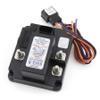
Description: for installation in a battery box or on vehicles carrying hazardous loads. Available with integral holes to accept lockout/tagout. No need to purchase additional hardware. Corrosion-resistant plastic case ingress protected to IP67/IP69K dustproof and waterproof ratings Can be installed where
- Current Rating: 300 amps
- Operating Voltage: 32 volts
- Power: DC
-
Supplier: Littelfuse, Inc.
Description: for installation in a battery box or on vehicles carrying hazardous loads. Available with integral holes to accept lockout/tagout. No need to purchase additional hardware. Corrosion-resistant plastic case ingress protected to IP67/IP69K dustproof and waterproof ratings Can be installed where
- Current Rating: 600 amps
- Operating Voltage: 32 volts
- Power: DC
-
-
Supplier: Littelfuse, Inc.
Description: for installation in a battery box or on vehicles carrying hazardous loads. Available with integral holes to accept lockout/tagout. No need to purchase additional hardware. Corrosion-resistant plastic case ingress protected to IP67/IP69K dustproof and waterproof ratings Can be installed where
- Current Rating: 300 amps
- Operating Voltage: 32 volts
- Power: DC
-
Supplier: Littelfuse, Inc.
Description: for installation in a battery box or on vehicles carrying hazardous loads. Available with integral holes to accept lockout/tagout. No need to purchase additional hardware. Corrosion-resistant plastic case ingress protected to IP67/IP69K dustproof and waterproof ratings. Can be installed where
- Current Rating: 600 amps
- Operating Voltage: 32 volts
- Power: DC
-
Supplier: Allied Electronics, Inc.
Description: Mounting Options 12 to 30 VDC Operation Cabled and Quick Disconnect Models Available Low Power Consumption; < 2 Watts
-
Description: devices of these disconnectors and earthing switches and their auxiliary equipment. NOTE Disconnectors in which the fuse forms an integral part are not covered by this document
-
Description: switches and their auxiliary equipment. Additional requirements for disconnectors and earthing switches in enclosed switchgear and controlgear are given in IEC 60298, IEC 60466 and IEC 60517. Note: Disconnectors in which the fuse forms an integral part are not covered by this
-
Supplier: Allied Electronics, Inc.
Description: Series DC11 is designed for screw-on or snap-in panel mounting, and has a switch in-rush rating of 100 A.
-
Supplier: Allied Electronics, Inc.
Description: Series DC11 is designed for screw-on or snap-in panel mounting, and has a switch in-rush rating of 100 A.
-
Supplier: Allied Electronics, Inc.
Description: Series DC11 is designed for screw-on or snap-in panel mounting, and has a switch in-rush rating of 100 A.
-
Supplier: Interpower
Description: Int'l Current Rating: 10A Int'l Voltage Rating: 250VAC N.A. Current Rating: 10A N.A. Voltage Rating : 115/250VAC Temperature Rating: -25ºC to 40ºC Operating Frequency: 50/60Hz Class: Class I Quick Disconnects: 3/6.3mm Power Inlet: yes Access Outlet: no Sheet Style: C14 Switch: yes Fuse: no
- Voltage Rating: 250 volts
- Current Rating: 10 amps
- Operating Temperature: -25 to 40 C
- Power Type: AC Power Connector
-
Supplier: Radwell International
Description: ULTRASONIC SENSOR, TEACH MODE, RANGE: 50-500 MM, INPUT: 12-30 VDC, OUTPUT: PNP, EURO INTEGRAL QUICK-DISCONNECT, (73156). FREE 2 YEAR RADWELL WARRANTY
- Sensor Technology: Ultrasonic Linear Position Sensor/Switch
-
Supplier: Radwell International
Description: ILLUMINATED TOUCH SENSOR, K50 PRO TOUCH, WITH IO-LINK SERIES, RGB TOUCH SENSOR, 18-30 V DC, POLYCARBONATE, MULTICOLOR, 4-PIN M12 INTEGRAL QUICK DISCONNECT, (806180). FREE 2 YEAR RADWELL WARRANTY
- Switch Type: Touch-sensitive Switch
-
Supplier: UL Standards & Engagement
Description: switchboard, or the like. These switches are manually operable by means of external handles and are intended to be employed in accordance with the national installation codes listed in Annex A, Ref. No. 1. 1.4 These requirements cover enclosed switches with or without provision for
-
Supplier: Radwell International
Description: PHOTOELECTRIC SWITCH, EZ-BEAM S18 SERIES, POLARIZED RE, TRO, 2 METER RANGE, 20-250 VAC INPUT, SPST - SOLID-STATE OUTPUT, DARK OPERATE, MICRO 4-PIN INTEGRAL QUICK DISCONNECT, (33452). FREE 2 YEAR RADWELL WARRANTY
- Features: Photoelectric Sensors
-
Supplier: LAPP
Description: EPIC® ALUPRES Wall Mounting Interlocked Switched Socket Outlets in Aluminum Alloy. Characteristics: Heavy duty aluminum alloy modular enclosure for superior strength and heat resistance. Incorporates a heavy duty safety interlocked disconnect-rated switch for direct switching of motor loads.
- Voltage Rating: 480 volts
- Current Rating: 60 amps
- Operating Temperature: -25 to 50 C
- Dielectric Withstanding Voltage: 3 kilovolts
-
Supplier: CSA Group
Description: switchboard, or the like. These switches are manually operable by means of external handles and are intended to be employed in accordance with the national installation codes listed in Annex A, Ref. No. 1. 1.4 These requirements cover enclosed switches with or without provision for
-
Supplier: Rolair Systems
Description: On/Off Switch, Dual Element Air Cleaner, Electronic Ignition, Low Oil Control STANDARD EQUIPMENT : Regulator w/Air Line Pressure Gauge, Universal Quick Disconnect w/Plug, 4 oz. Crankcase Pre-filled with Oil, 110/135 PSI Operating Pressure, Automatic Engine Throttle for Economy and Long
- Flow Capacity: 4.6 SCFM
- Horse Power: 4 to 4.5 HP
- Power Source: Gasoline
- Features: Integral Filter
-
Supplier: UL Standards & Engagement
Description: Circuit breakers, b) Fused circuit breakers, c) Fused switches having an interrupting rating not less than 12 times their ampere rating, or d) Fused switches having integral means to prevent disconnecting at levels of fault current exceeding the contact interrupting rating of
-
Supplier: Chromalox
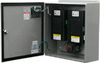
Description: 10” (25.4 cm) Touch Screen HMI 40 Amps/Loop @ 100 – 600 VAC 2 Loops to 72 Loops NEMA 4 or NEMA 4X Enclosure SCR Control Optional Wireless Temperature Sensing Integral Circuit Panel with Circuit Breakers Optional Main Disconnect Soft Start Feature Full Communications and Enhanced Data
- Current: 40 amps
- Voltage: 100 to 600 volts
- Operating Temperature: -40 to 104 F
- Supply Voltage: AC Voltage
-
Supplier: Chromalox
Description: 10” or 7” Touch Screen HMI. -EXT panels have no HMI. 40 Amps/Loop @ 100 – 600 VAC 2 Circuits to 72 Circuits NEMA 4 or NEMA 4X Enclosure SCR Control Optional Wireless Temperature Sensing Integral Circuit Panel with Circuit Breakers Optional Main Disconnect Soft Start Feature Full
- Current: 40 amps
- Voltage: 100 to 600 volts
- Operating Temperature: -40 to 104 F
- Supply Voltage: AC Voltage
-
Supplier: CITEL SURGE PROTECTION
Description: The MLPC is a economical, compact SPD for LED Drivers. The SPD protects any 120-277Vac single phase driver from the effects of lightning and switching transients. The unit is installed in series with the load and turns off the LED when maintenance is required and has an LED indicator for power
- Maximum Surge Current: 10,000 amps
- Operating Temperature: -40 to 185 F
- Voltage Protection Rating (VPR): 1,500 volts
- Nominal Discharge Current: 5 kA
-
Supplier: Waytek, Inc.
Description: Supports Simple Battery Charge Management if connected to an engine ignition line. Can also support simple electrical system connect/disconnect when connected to ignition line. Egis Mobile Electric 7422B Dual Output Relay Category: Battery Chargers Manufacturer: Egis Mobile Electric Connect
- Input Voltage: 8 to 18 volts
- Output Voltage: 8 to 18 volts
-
Supplier: ASCO Power Technologies
Description: robustness is the best solution for any environment; large or small! FEATURES: UL 1449 Third Edition Listed 100kA – 500kA per phase ratings Type 1 SPD – All UL required OCP & Safety Coordination included inside & can be installed line-side or load-side of main disconnect 20kA Inominal (In)
- Maximum Surge Current: 100,000 amps
- Operating Temperature: -13 to 140 F
- Nominal Discharge Current: 10 kA, 20 kA
- Features: 4-Wire, Audible Alarm, Graphical Display, Integral Disconnect, MOV, NC/NO Dry Contacts, NEMA Enclosure, Other, Remote Alarm Contacts, SPD, Self-Diagnostics, Sine Wave Tracking, Surge Counter, Thermal Fusing, Visual Indicators / LEDs, Wye
-
Supplier: ASCO Power Technologies
Description: UL 1449 Third Edition Listed 600kA – 1,000kA per phase ratings Type 1 SPD - All UL required OCP & Safety Coordination included inside & can be installed line-side or load-side of main disconnect 20kA Inominal (In) (most models) 200kA SCCRs (most models) UL 96A Lightning Protection Master
- Maximum Surge Current: 800,000 amps
- Operating Temperature: -13 to 140 F
- Nominal Discharge Current: 20 kA
- Features: 4-Wire, Audible Alarm, Graphical Display, Integral Disconnect, MOV, NC/NO Dry Contacts, NEMA Enclosure, Other, Remote Alarm Contacts, SPD, Self-Diagnostics, Sine Wave Tracking, Surge Counter, Thermal Fusing, Visual Indicators / LEDs, Wye
-
Supplier: ASCO Power Technologies
Description: UL 1449 Third Edition Listed Directly Connected, Discrete Protection Elements Between All Possible Modes 600kA – 1,000kA per phase ratings Type 1 SPD - All UL required OCP & Safety Coordination included inside & can be installed line-side or load-side of main disconnect 20kA Inominal (In)
- Maximum Surge Current: 900,000 amps
- Operating Temperature: -13 to 140 F
- Mode of Protection: 10-Mode
- Nominal Discharge Current: 20 kA
-
Supplier: MCG SURGE PROTECTION
Description: remote relay contacts. Filtering standard on all XT models. Low impedance, internal high current disconnect switch 20 Year No-Nonsense Warranty. Lifetime Replaceable Modules.
- Maximum Surge Current: 200,000 amps
- AC Energy Absorption: 54,000 joules
- Operating Temperature: -40 to 158 F
- Features: 120, 120/240, 2-Wire, 208, 220, 240, 277, 3-Wire, 346, 380, 4-Wire, 480, 600, Audible Alarm, Computer Rooms, Delta, Integral Disconnect, MOV, Medical Facilities, NC/NO Dry Contacts, NEMA Enclosure, Other, Remote Alarm Contacts, SPD, Self-Diagnostics, Surge Counter, Visual Indicators / LEDs
-
Supplier: Lift Products, Inc.
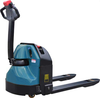
Description: 24V Curtis travel controller Integral AGM batteries Quick disconnect power cut off One piece power head cover Electric disc brakes Poly load & drive wheels Thumb control travel function Lift & lower buttons Steel loop stability bars Battery discharge indicator Key switch Belly button
- Cart / Truck Type: Pallet Truck / Pallet Jack
-
Supplier: SCHURTER Inc
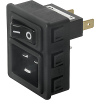
Description: Description Panel mount: Snap-in version front side 2 Functions: Appliance Inlet Protection class I, Circuit breaker type TA35 1 pole Quick connect terminals 6.3 x 0.8 mm Characteristics Unwired Switch non-illuminated or illuminated Suitable for use in equipment according to IEC/UL 62368-1 Other
- Voltage Rating: 250 volts
- Current Rating: 10 to 20 amps
- Operating Temperature: -25 to 60 C
- Dielectric Withstanding Voltage: 2.5 kilovolts
-
Supplier: CITEL SURGE PROTECTION
Description: CITEL model DS150E is a heavy duty AC Surge Protection Device (SPD) for high exposure applications such as direct lightning strikes, capacitor bank switching and large inductive loads. The DS150E is a single pole device that incorporated a multi-varistor circuit. It offers unmatched mechanical
- Operating Temperature: -40 to 185 F
- Voltage Protection Rating (VPR): 600 to 1,500 volts
- Features: 120, 220, 277, 480, Delta, Integral Disconnect, MOV, Other, SPD, Thermal Fusing, Wye
- Nominal Discharge Current: 20 kA
-
Supplier: Lift Products, Inc.
Description: drive motor 24V ZAPI travel controller Integral AGM batteries Internal 120v charger Quick disconnect power cut off Water resistant power head cover Electromagnetic brake Anti-roll back Neutral braking Cylinder has chrome plated rods Pressure compensated lowering Poly load & drive
- Cart / Truck Type: Pallet Truck / Pallet Jack
-
Supplier: SCHURTER Inc
Description: Description Panel mount: Screw-on or snap-in mounting front side 3 Functions: Appliance Inlet protection class I or II, Circuit breaker type TA35 2-pole, Line filter in standard and medical version Quick connect terminals 6.3 x 0.8 mm Unique Selling Proposition With sealing: IP54 under load, IP67
- Voltage Rating: 250 volts
- Current Rating: 0.0005 amps
- Operating Temperature: -25 to 60 C
- Dielectric Withstanding Voltage: 1.7 kilovolts
-
Supplier: UL Standards & Engagement
Description: 1.1 These requirements cover fused power-circuit devices to be employed in accordance with the National Electrical Code. 1.2 Fused power-circuit devices, as covered by these requirements, are considered to be either bolted pressure contact switches or high-pressure butt-type contact
-
Supplier: Lift Products, Inc.
Description: speed for tight turning Handle with safety reversing switch and horn Maintenance free AGM integral battery pack Built-in automatic 110VAC charger Battery discharge indicator Emergency power disconnect Key switch to limit access to approved personnel Lift cylinder is hard chrome Pump
- Type: Stacker / Walkie












Find Suppliers by Category Top
More Information Top
 Indicates content that may require registration and/or purchase.

-
Dead Tank Circuit Breaker Design Techniques
hybrid circuit breaker with integral disconnecting switches has been widely accepted as a means for reducing the space required for the construction of substations and reducing the number of insulators exposed to atmospheric pollution.
-
Lineman's and Cableman's Handbook, Twelfth Edition > Substations
Models are available with and without integral disconnect switches .
-
Plant Maintenance Product | ABB's ACS350 General Machinery Drive features UL Type 4X (IP66) protection | Plant Services
The ACS350 UL Type 4X (IP66) offers an optional integral disconnect switch when there is a need to isolate the motor and enable a safe working environment for maintenance and servicing.
-
Linac Coherent Light Source II (LCLS-II) Conceptual Design Report
VFD and integral disconnect switch for chilled pumps will be provided as required.
-
Wash-Down (UL Type 4X, IP66 Protection) Now Built Into ABB’s General Machinery Drive
The ACS350 UL Type 4X (IP66) offers an optional integral disconnect switch , when there is a need to isolate the motor and enable a safe working environment for maintenance and servicing.
-
Wash-Down (UL Type 4X, IP66 Protection) Now Built Into ABB’s General Machinery Drive
The ACS350 UL Type 4X (IP66) offers an optional integral disconnect switch , when there is a need to isolate the motor and enable a safe working environment for maintenance and servicing.
-
Solid-state distribution current limiter and circuit breaker: application requirements and control strategies
LIMITED BY INTEGRAL DISCONNECT SWITCH LIFE .