
Products & Services
See also: Categories | Featured Products | Technical Articles | More Information-
Supplier: Automation24, Inc.
Description: The advanced PID Controller PID330-0-0-01-CU from Selec has dual 4 digit LED display, Thermocouple (J,K,T,R,C,B,N,L,U,W,Platinal)/RTD (pt100), single input (DC) -5 to 56mV, 0 to 10V, 0 to 20mA (Selectable), Relay outputs, PID and ON/OFF control, PID Autotune, Supply voltage
- Control: Limit / Set Point Control, PID Control
- Standards and Compliance: Other
- Form Factor: Panel / Chassis Mount
- Temperature: RTD / Thermistor Controller
-
Supplier: Automation24, Inc.
Description: The advanced PID Controller PID500-0-0-01-CU from Selec has dual 4 digit LED display, Thermocouple (J,K,T,R,C,B,N,L,U,W,Platinal)/RTD (pt100), single input (DC) -5 to 56mV, 0 to 10V, 0 to 20mA (Selectable), Relay or SSR outputs, PID and ON/OFF control, PID Autotune, Supply
- Control: Limit / Set Point Control, PID Control
- Standards and Compliance: Other
- Form Factor: Panel / Chassis Mount
- Temperature: RTD / Thermistor Controller
-
Description: TC-4300 PID Temperature Control Input Voltage: 85 - 264 VAC, 24 VDC Environment: 0 - 50 °C operating temprature, 20 - 85 percent RH, none-condensing Installation: Behind Panel Mounted Operating Mode: ON/OFF or PID; Ramp and soak programmable Outputs: Out 1=logic output for SSR;
-
-
Supplier: Tempco Electric Heater Corporation
Description: PCT-3000 Series TEC-220 Programmable PID Temperature Control
- Interface: Knobs / Switches / Meter
- Control: PID Control
- Form Factor: Panel / Chassis Mount
- Temperature: Thermocouple Controller
-
Supplier: FineTek
Description: PID+Fuzzy Temperature Controller The 76 series programmable temperature controller is FineTek's high-end controller. Equipped with a 14 bit analog/ digital converter core processor and with FUZZY and improved PID calculation microprocessor, the controller is capable of
- Interface: Digital Front Panel
- Control: Fuzzy Logic, PID Control
- Temperature: RTD / Thermistor Controller
-
Supplier: Newark, An Avnet Company
Description: PID TEMPERATURE CONTROLLER; Thermocouple Type:-; Operating Temperature Max:55°C; Operating Temperature Min:0°C; Temperature Accuracy ±:-; Output Voltage Max:264VAC; Output Voltage Min:-; Product Range:2100 Series RoHS Compliant: NA
-
Supplier: Newark, An Avnet Company
Description: PID TEMPERATURE CONTROLLER; Thermocouple Type:B, J, K, N, R, S, T; Operating Temperature Max:55°C; Operating Temperature Min:0°C; Temperature Accuracy ±:-; Output Voltage Max:240VAC; Output Voltage Min:120V; Product Range:-;
-
Supplier: Automation24, Inc.
Description: The single set point temperature controller TC513AX-CU from Selec has a single 3 digit LED display, PID and ON/OFF control, Thermocouple (J,K,T,R,S)/RTD (Pt100) inputs, relay contact (SPDT) control output, field selectable control output (relay or SSR), 85-270 V AC/DC, °C/°F
- Control: Limit / Set Point Control, PID Control
- Standards and Compliance: Other
- Form Factor: Panel / Chassis Mount
- Temperature: RTD / Thermistor Controller
-
Supplier: Automation24, Inc.
Description: The dual set point temperature controller TC344AX-CU from Selec has a dual 4 digit LED display, PID and ON/OFF control, Thermocouple (J,K,T,R,S)/RTD (Pt100) inputs, relay contact (SPDT) control output, field selectable control output (relay or SSR), 85-270 V AC/DC, °C/°F Selectable,
- Control: Limit / Set Point Control, PID Control
- Standards and Compliance: Other
- Form Factor: Panel / Chassis Mount
- Temperature: RTD / Thermistor Controller
-
Supplier: Newark, An Avnet Company
Description: PID TEMPERATURE CONTOLLER - 48X48MM UNIT, PID CONTROL, 85-264 VAC, HEATING OUTPUT, FITTED UNCONFIGURED,
-
Supplier: DigiKey
Description: UNIVERSAL PID CONTROLLER WITH IN
- Interface: Digital Front Panel
- Control: Limit / Set Point Control, PID Control
- Form Factor: Panel / Chassis Mount
- Control Signal: Switch / Relay Output
-
Supplier: Quarktwin Technology Ltd.
Description: Temperature Controller 90 ~ 270VAC/DC Panel Mount
- Standards and Compliance: RoHS Compliant
- Features: Temperature Controller
- Temperature: Thermocouple Controller
-
Supplier: Newark, An Avnet Company
Description: TEMPERATURE CONTROLLER 85-264VAC RELAY PID HEATING
-
Supplier: Allied Electronics, Inc.
Description: Controller, Temperature, Digital, 1/16 Din Anolog,ON/OFF or PID
-
Supplier: Minco
Description: variation of PID, On/Off, or Alarm control. Auto-tune feature estimates PID coefficients for s everal control types. 32-bit microprocessor executes both PID loops simultaneously at individually configurable rates u p to 25 times/second. Addressable Modbus protocol allows for
- Number of Inputs: 2 inputs
- Number of Control Outputs: 2 outputs
- Form Factor: Circuit Board
- Control: Limit / Set Point Control, PID Control
-
Supplier: Watlow®
Description: All Watlow® multi-loop time/temperature controllers offer auto-tuning which automatically sets PID control parameter for optimum system performance. Watlow's multi-loop controllers feature manual settings permitting on-off, P, PI or PID control modes. With up to 32 control
-
Supplier: Allied Electronics, Inc.
Description: The Red-Lion T48 is a temperature control unit with a fast (100 ms) sampling time and numerous options for relay outputs. The Allied Electronics, Inc. offering includes a range of T48's capable of accepting ten different types of inputs with a dual 4-digit display for instant data recognition
-
Supplier: OMEGA Engineering, Inc.
Description: The CN9000A digital temperature controllers feature high accuracy and reliability, and the sophisticated PID with approach control for optimal control during start-up and steady-state operation. These units are well suited for a broad range of applications, and are easy to install and
- Control Signal: Analog Voltage, Current Loop, Pulse / Frequency, Switch / Relay Output
- Type: DC Voltage Input
- Features: Datalogger, Rate Indication / Control
- Interface: Digital Front Panel
-
Supplier: OMEGA Engineering, Inc.
Description: The CN8100 Series may be ordered as either a PID or On/Off controller or as a Limit Safety Device. The ¼ DIN models are low cost and ideal for OEM or replacement applications. They are microprocessor-based and accurate to ±0.3% FS. As a separate safety feature to your control application, the
- Number of Inputs: 1 inputs
- Number of Control Outputs: 1 outputs
- Accuracy: 0.3 ±% FS
- Temperature: Cooling Control, Heating Control, RTD / Thermistor Controller, Thermocouple Controller
-
Supplier: Interstate Plastics, Inc.
Description: Overview The Leister DIODE PID offers electronically regulated welding temperature and an external air supply, making it perfect for mobile installation work. Features Temperature electronically regulated and digitally displayed Electronic heating element protection Adaptor tube
- Features: 115 / 120V 60 Hz, 208-230 / 240V 60 Hz, 50 Hz / International Power, Single-phase
- Equipment Type: Gun / Iron / Torch
- Process Capability: Plastic Welder, Welding Equipment
-
Supplier: Red Lion Controls, Inc.
Description: PID Control Main Control Output - Relay Accepts TC and RTD Accepts 0-10 V, 0/4-20 mA or 0-50 mV Signals On Demand Auto-Tuning of PID Settings 2 User Programmable Function Buttons Dual Relay Alarms 1/16 DIN Size Controllers Meet IP65 Requirements 100 to 240 VAC Power Input
- Control: PID Control
- Control Signal: Switch / Relay Output
-
Supplier: Red Lion Controls, Inc.
Description: PID Control Main Control Output - Solid State Relay Accepts TC and RTD Accepts 0-10 V, 0/4-20 mA or 0-50 mV Signals On Demand Auto-Tuning of PID Settings 2 User Programmable Function Buttons Dual Relay Alarms 1/8 DIN Size Controllers Meet IP65 Requirements 100 to 240 VAC Power Input
- Control: PID Control
- Control Signal: Serial / Digital
-
Supplier: Red Lion Controls, Inc.
Description: PID Control Main Control Output - Relay Accepts TC and RTD Accepts 0-10 V, 0/4-20 mA or 0-50 mV Signals On Demand Auto-Tuning of PID Settings 2 User Programmable Function Buttons Dual Relay Alarms 1/8 DIN Size Controllers Meet IP65 Requirements 100 to 240 VAC Power Input
- Control: PID Control
- Control Signal: Switch / Relay Output
-
Supplier: Red Lion Controls, Inc.
Description: PID Control Main Control Output - 0 to 10 VDC Accepts TC and RTD Accepts 0-10 V, 0/4-20 mA or 0-50 mV Signals On Demand Auto-Tuning of PID Settings 2 User Programmable Function Buttons Dual Relay Alarms 1/16 DIN Size Controllers Meet IP65 Requirements 100 to 240 VAC Power Input
- Control Signal: Analog Voltage
- Control: PID Control
-
Supplier: Leister USA
Description: Temperature electronically regulated and digitally displayed Electronic heating element protection Adaptor tube with heat protection Push-fit and screw-on nozzles for round and profile welding rods Air supply provided by the ROBUST or MINOR blowers Suitable for mobile assembling applications
- Output Power Capability: DC Output
- Equipment Type: Gun / Iron / Torch
- Process Capability: Plastic Welder, Welding Equipment
-
Supplier: RS Components, Ltd.
Description: WIKA 14158880 PID Temperature Controller
- Number of Inputs: 2 inputs
- Number of Control Outputs: 4 outputs
- Interface: Digital Front Panel
- Standards and Compliance: Other, RoHS Compliant
-
Supplier: Azbil Corporation
Description: available. The SDC series features PID controllers with full multi-range input, digital indication, and the new Ra-PID (RationaLOOP PID) and Just-FITTER algorithms. The product lineup includes a diversity of models. SDC15/25/26/35/36 models have a maximum of 2 control outputs,
- Control: PID Control
-
Supplier: Leister USA
Description: Temperature electronically regulated and digitally displayed Electronic heating element protection Adaptor tube with heat protection Push-fit and screw-on nozzles for round and profile welding rods Air supply provided by the ROBUST or MINOR blowers Suitable for mobile assembling applications
-
Supplier: Autec Power Inc.
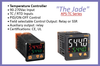
Description: “The Jade” is a temperature controller. It features an input voltage of 90-270Vac. It’s 4+4 digits, 7-segment LED dual display is perfect to help set the desired temperature. “The Jade” comes equipped with TC / RTD Inputs, PID/ON-OFF Control, and °C/°F Selectable making it an
- AC Input Voltage: 90 to 270 volts
-
Supplier: Sifam Tinsley UK
Description: Features • Universal measuring input • Binary input control • Set point value: fixed value, programmed or from an additional input • On/off , PID, PID step-by-step control (valve control) or PID of heating-cooling type • Soft start • 8 types of alarms • Function of bistable
- Number of Zones (if applicable): 1 zones
- Interface: Computer Programmable, Digital Front Panel, Ethernet / Networkable, Knobs / Switches / Meter
- Temperature: Heating Control
- Control: Limit / Set Point Control, PID Control
-
Supplier: Radwell International
Description: DISCONTINUED BY MANUFACTURER, TEMPERATURE CONTROLLER, PID WITH AUTOTUNE, DIGITAL DISPLAY, ALARM LEDS. FREE 2 YEAR RADWELL WARRANTY
-
Supplier: Nanmac Corporation
Description: The H34-540 Series is 1/16 DIN or 1/4 DIN temperature controller with auto tuning PID control capabilities. One of four user programmable set points may be selected. For PID control in the form of time proportional relay on/off output, time proportional voltage pulse, or 4-20
- Features: Temperature Controller
-
Supplier: Tempco Electric Heater Corporation
Description: Design Features 1/16 DIN size – 48 mm × 48 mm Fuzzy Logic PID heat and cool control PID Control – Auto-tuning on cold or warm start Short panel depth – only 3-7/8" (86 mm) required Universal programmable sensor input Highly versatile – 6 types of inputs available Optional relay alarm
- Type: Current Loop (Transmitter) Input, DC Voltage Input
- Form Factor: DIN Rail
- Interface: Digital Front Panel
- Control: Fuzzy Logic, PID Control









Find Suppliers by Category Top
Featured Products Top
-
 measurement channels to a maximum of 16 with optional 3726 scanner Dedicated input for ultra-low temperature control Powerful impedance measurement capabilities such as quadrature measurements Multiple PID controllable outputs with up to 10 W of heater power available Latest generation front panel for ease of use 3-year standard warranty (read more)
Browse Temperature Controllers Datasheets for Lake Shore Cryotronics, Inc. -
application. Always check your controller proportional-integral-derivative (PID) settings to ensure set points do not exceed the temperature rating of the heater. At the same time, you will want to check to make sure temperature sensors (read more)
Browse Industrial Heaters Datasheets for Backer Marathon, Inc. -
. Digital PID temperature control ensures reliable performance up to 450°F. Includes 5 ft heating and cooling zones, durable plated components, and operates on 110V with no compressed air required. Optional conveyors, casters, coding systems, and custom configurations available (read more)
Browse Sealing Machines Datasheets for All Packaging Machinery Corporation -
Features are Essential ? Temperature Control System: Prioritize equipment with PID intelligent control for automatic temperature and humidity adjustment. ? Data Recording: Support for data export (e.g., RS485/RS232 interface) for easy traceability of test (read more)
Browse Environmental Test Chambers and Rooms Datasheets for Guangdong Atmars Industry Co., Limited -
Advanced Features Including Integral PID Control, Alarms, Counters, Timers, PWMs, and more Up to 8 PID Loops with ReDAQ® Shape Software Wide Range 7-34VDC Input Power –40°C to +85°C Industrial Operating Temperature (read more)
Browse Data Acquisition Systems and Instruments Datasheets for Dataforth Corporation -
Heat transfer systems or also known as thermal transfer systems or Temperature Control Units, are designed to provide indirect heat to processes using a thermal transfer fluid. Thermal Transfer fluids include water, glycol, water-glycol mixtures, and thermal oils. Heat (read more)
Browse Fluid Heat Transfer Systems Datasheets for Gaumer Process -
. Seals are made by the use of special heavy duty wear-resistant laminated Teflon bands. • Digital Temperature Control with PID Autotune maintains consistent heat and assures consistently hermetic seals. • Unit is designed with 5” long heating zone and 5” (read more)
Browse Sealing Machines Datasheets for All Packaging Machinery Corporation -
equipment consists of modules such as the chamber body, control system, refrigeration/dehumidification system, heating/humidification system, and air duct system. It supports rapid temperature changes (linear rate up to (read more)
Browse Environmental Test Chambers and Rooms Datasheets for Guangdong Atmars Industry Co., Limited -
monitor the internal temperature in real time and provide feedback to the control system, ensuring accurate temperature control. Temperature Controller: Employs a microcomputer control system with a PID control algorithm, enabling rapid and precise temperature adjustment. Users (read more)
Browse Environmental Test Chambers and Rooms Datasheets for Guangdong Atmars Industry Co., Limited -
. Produces consistent seal widths of 1/8", 1/4", or 3/8" using heavy-duty, wear-resistant laminated Teflon bands. Digital temperature control with PID autotune ensures precise heat (read more)
Browse Closing Machines Datasheets for All Packaging Machinery Corporation
Conduct Research Top
-
AN122 Introduction to PID Control
PID controllers are used in most automatic process control applications in industry. They can regulate flow, temperature, pressure, level, and many other industrial process variables. This Application Note reviews the design of PID controllers and explains the P, I, and D. control modes used
-
Implementing a PID Controller Using a PIC18 MCU
Continuous processes have been controlled by feedback loops since the late 1700's. In 1788, James Watt used a flyball governor on his steam engine to regulate its speed. The Taylor Instrument Company implemented the first fully functional Proportional, Integral and Derivative (PID) controller
-
Optimizing Industrial and Robotic Control Systems Using PID Tuning
for heavy vehicles, temperature and fluidic systems in manufacturing and refinement processes, and even industrial motion control systems. A century later, the critical impact of PID algorithms is felt by power, industrial, and automation engineers all over the world, giving rise to a new generation
-
PID with Fuzzy Logic Adaptive Control-The Best of Both Worlds
Proportional integral derivative (PID) control is a well established way of driving a system towards a target position or level. It's practically ubiquitous as a means of controlling temperature, and finds application in myriad chemical and scientific processes as well as automation. PID control
-
Applying Inverters to Centrifugal Compressors in HVAC Chillers (.pdf)
built-in logic which may be tied into the existing starter. A modification may be required from the chiller manufacturer to allow proper operation with a VFD. You may need to bypass the control logic of the existing chiller and use temperature or pressure feedback and PID to optimize speed control
-
An Innovative Cabling Concept Improves Reliability for Multi-Axis Stage Systems
driving force, causing an undesirable temperature rise. 2. The bend resistance of the cables is not constant. The result is stick-slip plus randomly distributed effects that make high precision positioning more complicated. 3. Moving cables generate particles and tend to outgas which is undesirable
More Information Top
 Indicates content that may require registration and/or purchase.

-
Industrial Instrumentation and Control Systems II
Fuzzy PID Temperature Control System of Reaction Kettle Based on PLC .
-
Application of PID controller in controlling refrigerator temperature
Abstract - This paper presents the comparison of performances between a PID temperature controller and a conventional on-off temperature controller for home-applied refrigerator.
-
Mechatronics, Robotics and Automation
The simulation results show that the Smith predictive adaptive Fuzzy- PID temperature control algorithm has the fast response, high precision temperature controlling and strong robust properties, and it can provide a reference for the intelligent temperature control system design of microchip level …
-
PID Control in the Third Millennium
Seki, H., Ogawa, M., Ohshima, M.: Retuning PID temperature controller for an unstable gas- phase polyolefin reactor.
-
Advances in Mechanics Engineering
As an example, this paper illustrates the design and implementation of the fuzzy PID temperature controller.
-
Advances in Neural Networks – ISNN 2007
Self-tuning PID Temperature Controller Based on Flexible Neural Network . . . . . . . . . . . . . . . . . . . . . . . . . . . . . . . . . . . . . . . . . . . . . . . . . . . . . . . .
-
Silicon microgyroscope temperature prediction and control system based on BP neural network and Fuzzy-PID control method
The block diagram of the Fuzzy- PID temperature control system. .
-
A Novel Cascade Temperature Control System for a High-Speed Heat-Airflow Wind Tunnel
For examples, a cascade neural- PID temperature control system for controlling the temperature of superheated steam boiler steam was devel- oped in [15]; an optimal robust minimum-order observer was designed in [16] for high-precision steam temperature control; a back-propagation …
-
Harmony Search Algorithm
PID Temperature Control System Theory and Principle Analysis .
-
Machinery Electronics and Control Engineering II
Weighted Multiple Model Adaptive Control Based on ADRC H. WANG and W.C. Zhang Application of PLC in Intelligent Control of Heating Pipe Network Y.F. Ma Precisie PID Temperature Control Based on LabVIEW H.Y. Wang, X. Lu and J. Tian …