
-
Supplier: Hottinger Brüel & Kjær A/S
Description: The Dytran series 3133 is an ultra-miniature hermetically sealed IEPE triaxial accelerometer, weighing just 0.8 grams, and was designed to mount in spaces inaccessible to other types of accelerometers. TEDS models are available within the series. Available with sensitivities
- Acceleration: 1,000 g
- Frequency Range: 1 to 6,000 Hz
- Operating Temperature: -67 to 320 F
- Sensor Mounting: Adhesive Base
-
Supplier: OMEGA Engineering, Inc.
Description: OMEGA's model ACC301 triaxial accelerometer is ideal for lightweight single-point monitoring vibration in three (X-Y-Z) planes. This accelerometer has a low noise floor and a wide frequency range of up to 10 kHz. The ACC301 accelerometer weighs only 10 grams, yet its
- Acceleration: 500 g
- Frequency Range: 3 to 10,000 Hz
- Minimum Accuracy: 5 +/-% FS
- Maximum Shock: 500 g
-
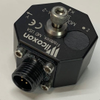
Supplier: Wilcoxon Sensing Technologies
Description: 3-axis accelerometer, triaxial vibration sensor, 100 mV/g sensitivity, ±10% tolerance, case isolated, side exit 4 pin Bendix #PC01A-8-4P connector, 1/4-28 captive mounting screw, positioning pin to ensure repeatable measurements
- Acceleration: 50 g
- Frequency Range: 2 to 2,000 Hz
- Operating Temperature: -58 to 248 F
- Sensor Outputs: Acceleration
-
-
Supplier: Kistler Group
Description: Type 8766A... is an IEPE triaxial accelerometer designed for high temperature applications. Type 8766A... accelerometer uses Kistler’s PiezoStar shear element design which provides a wide operating frequency range and extremely low sensitivity to temperature changes, as shown in
- Acceleration: 50 to 1,000 g
- Frequency Range: 0.5 to 20,000 Hz
- Maximum Shock: 5,000 g
- Maximum Vibration: 1,000 to 2,000 g
-
Supplier: Wilcoxon Sensing Technologies
Description: 3-axis accelerometer, triaxial vibration sensor, 100 mV/g sensitivity, ±10% tolerance, case isolated, side exit 4 pin Bendix #PC01A-8-4P connector, 1/4-28 captive mounting screw
- Acceleration: 50 g
- Frequency Range: 2 to 2,000 Hz
- Operating Temperature: -58 to 248 F
- Sensor Outputs: Acceleration
-
Supplier: Hottinger Brüel & Kjær A/S
Description: For use in submersible applications,offshore wind turbines,automotive road load,triaxial vibration measurements of machines and structures that are immersed in various fluids
- Acceleration: 100 g
- Frequency Range: 1.4 to 3,000 Hz
- Operating Temperature: -67 to 212 F
- Sensor Mounting: Adhesive Base
-
Supplier: Hottinger Brüel & Kjær A/S
Description: The Dytran series 3713 is an IEPE triaxial accelerometer with a sensitivity range from 1- 10 mV/g. The series includes models with Transducer Electronic Data Sheet (TEDS; per ) capabilities. The sensor features case isolation, quartz shear sensing elements, packaged in a rugged
- Acceleration: 1,000 g
- Frequency Range: 1 to 3,000 Hz
- Operating Temperature: -319 to 302 F
- Features: Other
-
Supplier: Hottinger Brüel & Kjær A/S
Description: The Dytran model 3443C is a triaxial, charge mode vibration monitoring accelerometer, designed to reliably operate in temperatures up to +500°F (+260°C). Ideal for use in a variety of vibration monitoring applications including: engine vibration studies, exhaust system analysis, and
- Frequency Range: 3 to 5,000 Hz
- Operating Temperature: -94 to 500 F
- Features: Other
- Sensor Technology: Piezoelectric
-
Supplier: PCB Piezotronics, Inc.
Description: Low Outgassing, Triaxial, high sensitivity, ceramic shear ICP® accel., 500 mV/g, 0.5 to 3k Hz, titanium hsg, 4-pin conn. This accelerometer features low out-gassing construction that is ideal for use in thermal vacuum chambers for environmental testing.
- Acceleration: 10 g
- Frequency Range: 0.3 to 4,000 Hz
- Maximum Shock: 5,000 g
- Operating Temperature: -65 to 176 F
-
Supplier: PMC Engineering LLC
Description: KAA3 Series of triaxial (3 axis) accelerometers offer a compact and rugged solution for the motorsport and automotive testing industries with integral signal conditioning to give a standard signal of 0.5V to 4.5V which is ideal for most data acquisition systems. Supply of 5V or 8-16V.
- Acceleration: 2 to 200 g
- Frequency Range: 0 to 1,500 Hz
- Minimum Accuracy: 0.3 +/-% FS
- Operating Temperature: -65 to 250 F
-
Supplier: Wilcoxon Sensing Technologies
Description: 3-axis accelerometer, triaxial vibration sensor, 100 mV/g sensitivity, ±10% tolerance, case isolated, side exit 4 pin Bendix #PC01A-8-4P connector, 10-32 captive mounting screw
- Acceleration: 50 g
- Frequency Range: 2 to 2,000 Hz
- Operating Temperature: -58 to 248 F
- Sensor Outputs: Acceleration
-
Supplier: Columbia Research Labs, Inc.
Description: The Columbia Models SA-102MFTB and SA-302MFTA are precision miniature force balance accelerometers designed to operate from +24 to +32 VDC aircraft power. The high level output signal and inherent self-regulation qualities of the servo loop design make these accelerometers excellent
- Acceleration: -35 to 35 g
- Frequency Range: 100 Hz
- Minimum Accuracy: 0.05 +/-% FS
- Maximum Shock: 100 g
-
Supplier: PCB Piezotronics, Inc.
Description: Low Outgassing, 1 V/g titanium triaxial accelerometer .86" cube 0.3 Hz to 3000 Hz, base model 356B18 This accelerometer features low out-gassing construction that is ideal for use in thermal vacuum chambers for environmental testing.
- Acceleration: 5 g
- Frequency Range: 0.3 to 5,000 Hz
- Maximum Shock: 5,000 g
- Operating Temperature: -20 to 170 F
-
Supplier: PMC Engineering LLC
Description: KAT Series of low bandwidth accelerometers offer a compact and rugged solution for the motorsport and automotive testing industries with integral signal conditioning to give a standard signal of 0.5V to 4.5V which is ideal for most data acquisition systems. The low bandwidth sensor eliminates
- Acceleration: 2 to 10 g
- Frequency Range: 0 to 20 Hz
- Minimum Accuracy: 1 +/-% FS
- Operating Temperature: -5 to 214 F
-
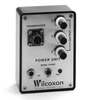
Supplier: Wilcoxon Sensing Technologies
Description: Battery powered 3-channel power unit for use with triaxial sensors, powers one Wilcoxon 993 series triaxial accelerometers and AC couples the output, BNC receptacle outputs (x, y, z), portable and lightweight, LED battery test condition light, Wilcoxon LA704B line adapter
-
Supplier: DigiKey
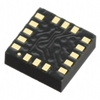
Description: Accelerometer X, Y, Z Axis ±2g, 4g, 6g, 8g, 16g 1.56Hz ~ 800Hz 16-LGA (3x3)
- Acceleration: 2 to 16 g
- Frequency Range: 1.56 to 800 Hz
- Operating Temperature: -40 to 185 F
- Sensor Outputs: Acceleration
-
Supplier: Rieker, Inc.
Description: The B1, B2, and B3 sensors are capacitive spring mass accelerometers with integrated sensor electronics. Requiring very low power consumption these are characterized by a high degree of longterm stability. Resonant peaks are minimised by means of a special gas-dynamic damping in the primary
- Acceleration: -50 to 50 g
- Frequency Range: 0 to 550 Hz
- Operating Temperature: -40 to 185 F
- Sensor Outputs: Acceleration
-
Supplier: Rieker, Inc.
Description: The BDK Series are dynamic accelerometers that measure vibration and acceleration of any object over a wide frequency range without the influence of gravity. All models are supplied with a ratiometric type analog output. Features Single Supply Input Very Low Power Consumption Hysteresis Free
- Acceleration: -3 to 3 g
- Frequency Range: 1 to 300 Hz
- Maximum Shock: 10,000 g
- Operating Temperature: -40 to 185 F
-
Supplier: New Yorker Electronics Co., Inc.
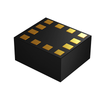
Description: Accelerometer, 3-Axis, 14-bit, LGA-12
- Measurement Axes: Triaxial
-
Supplier: Richardson RFPD
Description: 3-Axis, ±2 g/±4 g/±8 g/±16 g Digital Accelerometer
- Acceleration: 16 g
- Measurement Axes: Triaxial
-
Supplier: Marposs Corp
Description: DESCRIPTION All sensors are based on a piezoelectric or MEMS (Micro-Electro-Mechanical Systems) measuring principle, equipped with a standard IEPE interface and are adapted to different applications together with Artis systems. All sensors can be connected to the Artis monitoring systems CTM,
- Measurement Axes: Biaxial, Single Axis, Triaxial
- Sensor Technology: MEMS, Piezoelectric
- Device Category: Sensor / Transducer
-
Supplier: PCB Piezotronics, Inc.
Description: 5-socket M12 connector (pinouts for triaxial accelerometer, X, Y, Z, GND, center socket not used) to 5-pin quick-disconnect plug with 3 feet of 4-conductor, polyurethane jacket
-
Supplier: TE Connectivity
Description: Nonlinearity (PCTFSO) : ±2 Overall Acceleration Range (±) (GFORCE) : 25 - 500 Sensitivity (MVG) : 2.5 Sensitivity Range (MVG) : 2.5 - 50 Product Type Features Accelerometer Type : 3-Wire Voltage Vibration Sensor Type : AC Response Embedded Accelerometers Signal Characteristics
- Acceleration: 500 g
- Frequency Range: 2 to 2,000 Hz
- Operating Temperature: -4 to 176 F
- Measurement Axes: Triaxial
-
Supplier: OMEGA Engineering, Inc.
Description: centers. OMEGA's Model ACC-PS4 is an ac powered, triaxial, high performance accelerometer power supply for use with the ACC301 triaxial accelerometer. The ACC-PS4 will power the triaxial accelerometer and output the signal from all three axes. This
- DC Output Voltage: 10 volts
- AC Input Voltage: 115 volts
- Number of Outputs: 1 #
- Type: AC/DC Adapter, DC Power Supply
-
Supplier: TE Connectivity
Description: Features Accelerometer Type : Wireless Vibration Sensor Type : Wireless Accelerometers Signal Characteristics Frequency Band (MHZ) : 868 Frequency Response (HZ) : 2 to 15000 Usage Conditions Operating Temperature Range : -40 - 80 DEGC [-40 - 176 DEGF ]
- Frequency Range: 2 to 15,000 Hz
- Operating Temperature: -40 to 176 F
- Measurement Axes: Triaxial
- Features: Wireless
-
Supplier: Columbia Research Labs, Inc.
Description: The Columbia Models SA-102MFTB and SA-302MFTA are precision miniature force balance accelerometers designed to operate from +24 to +32 VDC aircraft power. The high level output signal and inherent self-regulation qualities of the servo loop design make these accelerometers excellent
- Acceleration: -50 to 50 g
- Frequency Range: 50 to 350 Hz
- Minimum Accuracy: 0.1 +/-% FS
- Maximum Shock: 1,000 g
-
Supplier: Silicon Designs, Inc.
Description: SDI's Models 2460 and 2466 Low Cost Three-Axis MEMS DC Accelerometers are rugged plug-and-play measurement devices that provide reliable performance in most zero-to-medium frequency commercial and industrial applications, particularly where extremely low noise, and long-term stability are
- Acceleration: 2 to 400 g
- Frequency Range: 0 to 4,200 Hz
- Maximum Shock: 2,000 to 5,000 g
- Operating Temperature: -67 to 257 F
-
Supplier: SignalQuest, Inc.
Description: processing, the SQ-XLD series accelerometer makes an ideal platform for real time monitoring or prototyping accelerometer systems. Function Miniature, low-cost, serial accelerometer Real-time data acquisition performance using a low cost serial cable Simple menu-driven PC
- Acceleration: 1.7 to 70 g
- Frequency Range: 10,000 to 1,000 Hz
- Minimum Accuracy: 2.5 +/-% FS
- Maximum Shock: 500 g
-
Supplier: Columbia Research Labs, Inc.
Description: The Model 7001 and 7001HT Piezoelectric Accelerometers are excellent choices for general-purpose shock and vibration measurement work, and are especially well suited for testing of small specimens. They are designed for the measurement of medium frequency, moderate to high-level shock and
- Acceleration: 1,000 g
- Frequency Range: 2 to 8,000 Hz
- Minimum Accuracy: 5 +/-% FS
- Maximum Shock: 5,000 g
-
Supplier: OMEGA Engineering, Inc.
Description: OMEGA's ACC-PS3A is an AC-powered, single-channel, high-performance accelerometer power supply. This low-cost unit features low noise and a rugged aluminum housing with 4 easily accessible mounting holes on 121 x 44 mm (4.75 x 1.75") centers. OMEGA's ACC-PS4A is an AC-powered,
- DC Output Voltage: 10 volts
- AC Input Voltage: 230 volts
- Type: DC Power Supply
- Form Factor: Desktop / Free Standing
-
Supplier: Silicon Designs, Inc.
Description: SDI's 1-axis Model 2012 and 3-axis Model 2422 MEMS DC Test & Measurement Accelerometer Modules are designed for applications in which the power supply may be limited, or if only a steady +5V DC excitation is available or preferred.
- Acceleration: 2 to 400 g
- Frequency Range: 0 to 4,200 Hz
- Maximum Shock: 2,000 to 5,000 g
- Operating Temperature: -67 to 257 F











Find Suppliers by Category Top
Featured Products Top
-
 The accelerometers of the PCE-VDL series are available in two versions. The accelerometer PCE-VDL 16I contains sensors for the following physical units: temperature, humidity, air pressure, light and 3-axis acceleration. The PCE-VDL 24I has 3-axis acceleration and the max. sampling (read more)
Browse Accelerometers Datasheets for PCE Instruments / PCE Americas Inc. -
motion control, as well as test instrumentation. Force-rebalance closed-loop MEMS accelerometer with quartz sensors -equivalent performances at a fraction of their size (<0.8 cm3 vs <10 cm3), weight (<1.4 g vs 50 g) and price (2-3 times cheaper (read more)
Browse Accelerometers Datasheets for Tronics Microsystems -
-assisted train localization and e-VTOL AHRS.. Force-rebalance closed-loop MEMS accelerometer with quartz sensors -equivalent performances at a fraction of their size (<0.8 cm3vs <10 cm3), weight (<1.4 g vs 50 g) and price (2-3 times cheaper (read more)
Browse Accelerometers Datasheets for Tronics Microsystems -
The accelerometer is ideal for maintenance workers to quickly check vibrating parts, machines and systems. This vibration meter shows the vibration acceleration, vibration velocity and vibration displacement directly on the display. You can use the device to quickly and reliably detect machine (read more)
Browse Accelerometers Datasheets for PCE Instruments / PCE Americas Inc. -
The accelerometer has a measuring range of 0 ... 200 m/s² for acceleration. In addition to acceleration, the vibration meter can also measure speed, displacement, frequency and an ISO 18016-3 measurement. During the vibration measurement, an FFT view is simultaneously displayed on the (read more)
Browse Accelerometers Datasheets for PCE Instruments / PCE Americas Inc. -
Accelerometers are commonly used for determining the tilt or inclination of industrial assets and systems. By measuring the projection of the gravity vector on the sensitive axis of the sensor, one can easily determine the inclination angle of the system. (read more)
Browse Accelerometers Datasheets for Tronics Microsystems
More Information Top
 Indicates content that may require registration and/or purchase.

-
Effect of varying accelerometry criteria on physical activity: The look ahead study
The RT3 triaxial accelerometer (StayHealthy, Monrovia, CA) was selected for use in the Look AHEAD Trial.
-
Comparison of Two Objective Monitors for Assessing Physical Activity and Sedentary Behaviors in Bariatric Surgery Patients
Methods We compared PA estimates from the Stayhealthy RT3 triaxial accelerometer (RT3) and the Sensewear Pro2 Armband (SWA) at both the group and individual partici- pant level.
-
http://eprints.nottingham.ac.uk/2304/1/Hendrickbackpain.pdf
Krasnoff JB, Kohn MA, Choy FKK, Doyle J, Johansen K, Painter PL: Interunit and intraunit reliability of the RT3 triaxial accelerometer .
-
Predictors of dietary change among those who successfully lost weight in phase I of the W eight L oss M aintenance T rial
Validation of the RT3 triaxial accelerometer for the assessment of physical activ- ity.
-
Measurement of energy expenditure by activity monitors
Validation of the RT3 triaxial accelerometer for the assessment of physical activity.
-
Daily physical activity assessment with accelerometers: new insights and validation studies
Estimating energy expenditure with the RT3 triaxial accelerometer .
-
Accelerometry-assessed sedentary behaviour and physical activity levels during the segmented school day in 10–14-year-old children: the HAPPY study
2004) Valida- tion of the RT3 triaxial accelerometer for the assessment of phys- ical activity.
-
Physical Activity‐Related Energy Expenditure With the RT3 and TriTrac Accelerometers in Overweight Adults
Vali- dation of the RT3 triaxial accelerometer for the assessment of physical activity.
-
Physical Activity Patterns Using Accelerometry in the National Weight Control Registry
Validation of the RT3 triaxial accelerometer for the assessment of physical activity.
-
Associations between cardiorespiratory fitness, physical activity and clustered cardiometabolic risk in children and adolescents: the HAPPY study
2004) Valida- tion of the RT3 triaxial accelerometer for the assessment of phys- ical activity.